Love this? Save it for later!
Share the inspiration with your friends
I want crispy, spicy, saucy chicken right now. Not the kind that arrives lukewarm from delivery, all sad and soggy. The kind that cracks when you bite into it, the kind that makes your fingers sticky and your eyes water just a little. I have the chicken wings in the fridge. I have gochujang paste left over from that bibimbap phase last month. I do not have any takeout menus handy, and honestly, that’s a good thing.
This craving hits hard and often. It’s the one that makes me rummage through the pantry at 7 PM on a Tuesday, convinced there is a batch of these crispy spicy Korean fried chicken wing bites hiding in my future. And there is. It just takes about an hour of active kitchen time and a whole lot of paper towels.
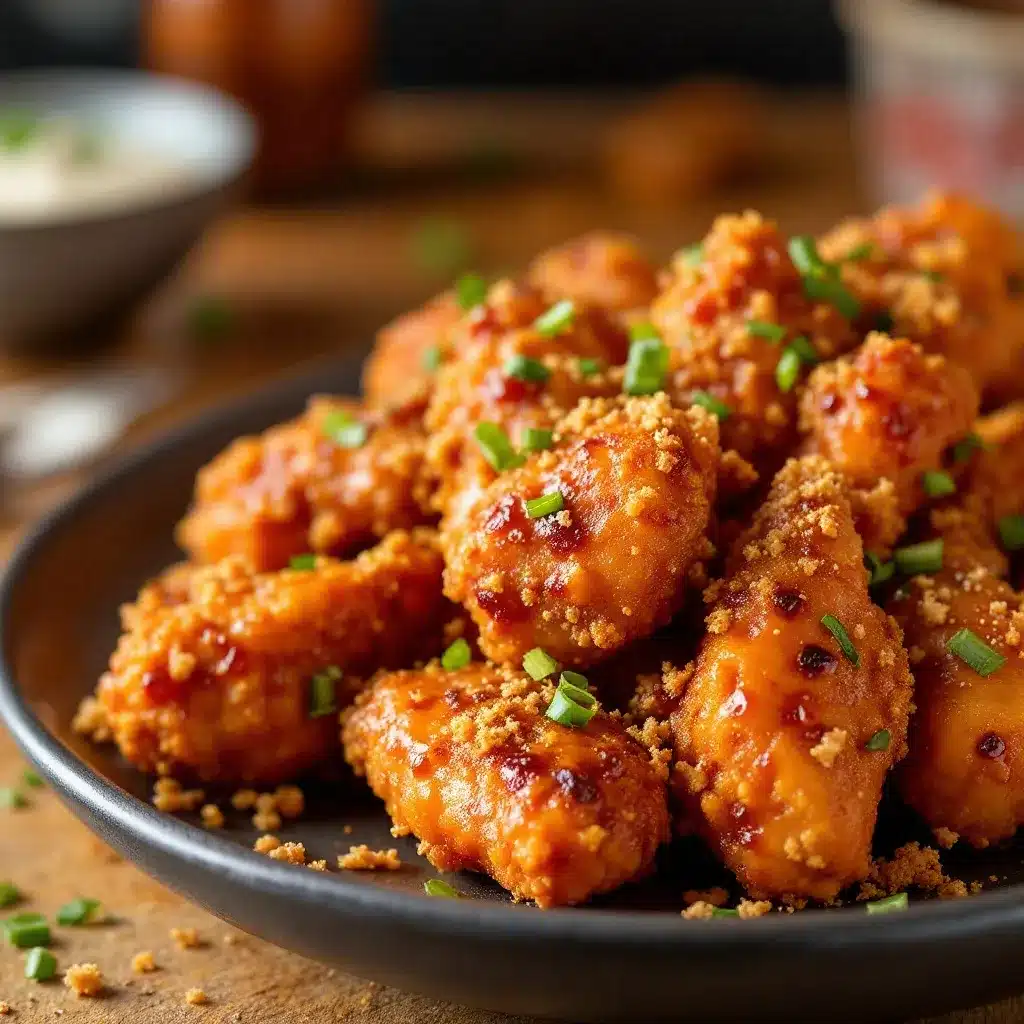
Korean fried chicken is different. It’s double-fried, which means it stays crunchy even after it’s been tossed in that sticky, sweet, fiery sauce. No sad, limp skin here. Just shatteringly crisp edges clinging to tender, juicy meat. I’ve tested this method about six times now, tweaking the cornstarch ratio and the sauce heat level. This version hits the sweet spot between “wow, that’s good” and “I need another glass of milk.” It’s the kind of recipe that feels like a special occasion but uses ingredients you can grab at any regular grocery store. And once you make it, you won’t want the delivery version ever again.
Why You’ll Love This Recipe
Let me tell you why this particular version is worth the fry. I’ve made enough mediocre fried chicken in my life to know the difference between “good” and “I’m keeping this recipe forever.” This one is the latter.
- Seriously Crispy, Even After Saucing: The double-fry technique is not a gimmick. First fry cooks the chicken through. Second fry at a higher temp creates that ultra-crunchy shell that holds up against the gochujang glaze. No sogginess here, even hours later.
- Bold, Balanced Heat: The sauce uses gochujang (Korean chili paste), honey, soy sauce, and garlic. It’s spicy, but it’s also sweet, salty, and deeply savory. It hits every part of your tongue, not just the heat receptors.
- Perfect for Game Day or Movie Night: These wing bites are built for sharing. They’re the star of any spread, right alongside a loaded nacho bar or a big bowl of creamy chorizo queso.
- Better Than Takeout: Honestly, most delivery fried chicken is a disappointment by the time it arrives. Fresh out of your own fryer, this is on another level. You control the spice, the salt, and the crunch.
- Uses Simple, Findable Ingredients: No obscure Asian market trips required for the base recipe. Gochujang is widely available now, and everything else is a pantry staple. I’ve even included a gochujang substitute if you need it.
This isn’t just another fried chicken recipe. It’s the one that makes you close your eyes after the first bite. It’s comfort food reimagined—crispier, spicier, and infinitely more satisfying than anything you can order in a cardboard box.
What Ingredients You Will Need
This recipe relies on a short list of powerful ingredients. The magic happens in the technique, not in a long, complicated shopping list. Here’s what you need and why each one matters.
For the Chicken
- 2 lbs chicken wingettes and drumettes (about 20-24 pieces): These are the “party wings” already cut into flats and drums. You can buy whole wings and cut them yourself, but the pre-cut ones save time and effort. Pat them very dry with paper towels—moisture is the enemy of crispiness.
- 1 teaspoon fine sea salt: Seasons the chicken from the inside out.
- ½ teaspoon black pepper: Just a little background warmth.
- 1 cup cornstarch: This is the secret to the shatteringly crisp coating. Cornstarch creates a lighter, crunchier crust than all-purpose flour. Do not substitute with flour alone; the texture will be completely different.
- ¼ cup all-purpose flour: A small amount of flour helps the cornstarch stick and adds a tiny bit of structure. I use unbleached all-purpose.
- ½ teaspoon baking powder: This creates tiny bubbles in the coating, making it even airier and crispier. Make sure it’s aluminum-free to avoid any metallic aftertaste.
- Neutral oil for frying: Use about 4-6 cups, enough for the chicken to float freely. I use peanut oil for its high smoke point, but vegetable, canola, or avocado oil all work well.
For the Spicy Gochujang Sauce
- 3 tablespoons gochujang (Korean chili paste): The heart and soul of the dish. It’s thick, fermented, and deeply savory with a slow-building heat. I prefer the brand Chung Jung One for its balanced flavor.
- 3 tablespoons honey: Provides sweetness to balance the heat and helps the sauce cling to the chicken. You can substitute with brown sugar or maple syrup, but honey gives the best sticky texture.
- 2 tablespoons low-sodium soy sauce: Adds saltiness and umami depth. Use tamari for a gluten-free option.
- 2 cloves garlic, minced: Fresh garlic is non-negotiable here. The pungent, aromatic kick is essential. Do not use the jarred stuff.
- 1 tablespoon rice vinegar: A splash of acidity cuts through the richness of the fried chicken and brightens the whole sauce. Apple cider vinegar works in a pinch.
- 1 tablespoon toasted sesame oil: This adds that unmistakable nutty, savory note that makes Korean food so addictive. Do not skip it.
- 1 teaspoon grated fresh ginger (optional but recommended): Adds a warm, zippy undertone that complements the garlic beautifully.
For Garnish
- 1 tablespoon toasted sesame seeds: For crunch and visual appeal.
- 2 green onions, thinly sliced: Adds a fresh, sharp contrast to the rich, sticky chicken.
Equipment Needed
You do not need a deep fryer for this recipe. A heavy-bottomed pot or Dutch oven works perfectly. Here is what I use and recommend.
- Large Dutch oven or heavy-bottomed pot (5-6 quart): Holds heat steady and prevents drastic temperature drops when you add the chicken. My go-to is a Lodge enameled cast iron pot.
- Deep-fry thermometer: Absolutely essential. Guessing the oil temperature is the number one reason fried chicken fails. A clip-on candy/fry thermometer costs about $10 and saves you from soggy or burnt chicken.
- Wire rack set inside a baking sheet: This is where the fried chicken rests after its first fry. The rack keeps it elevated so air circulates around it, preventing steam from softening the crust. No paper towels needed for this method.
- Large mixing bowls: One for tossing the chicken with the dry coating, one for the sauce.
- Spider strainer or slotted spoon: For safely lowering and removing chicken from the hot oil. A spider strainer is ideal because it lets excess oil drip off quickly.
- Tongs: For handling the hot chicken during the tossing and saucing process.
- Small saucepan: For making the sauce. A non-stick pan makes cleanup easier.
If you do not have a Dutch oven, a deep, heavy stainless steel pot works. Just be careful with temperature control, as thinner pots can have hot spots. A budget-friendly alternative is a cast iron skillet, but you will need to fry in smaller batches to maintain the oil temperature.
Preparation Method
This method looks long, but it is straightforward. Read through once before you start. The active cooking time is about 45 minutes, and the results are absolutely worth every minute.
Step 1: Prep the Chicken
Pat the wing pieces completely dry with paper towels. This cannot be overstated—excess moisture will make the coating slide off and prevent crispiness. Place the dried wings in a large bowl. Season with the salt and pepper, tossing to coat evenly. Let them sit at room temperature for 15 minutes while you prepare the dry coating and sauce.
Step 2: Make the Dry Coating
In a separate large bowl, whisk together the cornstarch, all-purpose flour, and baking powder. This mixture should look like a fine, powdery blend. Set aside.
Step 3: Make the Sauce
In a small saucepan over medium-low heat, combine the gochujang, honey, soy sauce, minced garlic, rice vinegar, sesame oil, and grated ginger if using. Whisk constantly until the sauce is smooth, bubbling gently, and slightly thickened, about 2-3 minutes. Do not let it boil aggressively. Remove from heat and set aside. The sauce will thicken further as it cools.
Step 4: First Fry (The Cooking Fry)
Heat the oil in your Dutch oven to 325°F (163°C). Use the deep-fry thermometer to monitor the temperature closely. While the oil heats, take the seasoned wings and toss them in batches into the dry coating mixture. Use your hands to press the coating firmly onto each piece. Shake off any excess and place the coated wings on a plate or wire rack. Do not let them sit for more than a few minutes before frying, or the coating will get gummy.
Carefully lower 6-8 wing pieces into the hot oil using the spider strainer. Do not overcrowd the pot; the temperature will drop too much. Fry for 8-10 minutes, turning occasionally with the spider, until the chicken is cooked through and pale golden. The internal temperature should reach 165°F (74°C). Transfer the wings to the wire rack set over a baking sheet. Do not season them yet. Repeat with all remaining wings. Let all the wings rest on the rack for at least 10 minutes. This rest period is critical—it allows the interior to finish cooking gently and the exterior to set.
Step 5: Second Fry (The Crispiness Fry)
Increase the oil temperature to 375°F (190°C). This is the crucial second fry that creates the legendary crunch. Carefully lower the first batch of rested wings back into the hot oil. Fry for 2-3 minutes, until they turn a deep, rich golden brown and the coating sounds shatteringly crisp when you tap it with the spider. Transfer back to the wire rack. Repeat with all remaining wings.
Step 6: Sauce and Serve
Place the freshly fried wings in a large, clean bowl. Pour the warm gochujang sauce over the top. Use tongs or a large spoon to toss the wings gently but thoroughly, ensuring every piece is coated in that glossy, sticky sauce. Transfer to a serving platter. Sprinkle immediately with toasted sesame seeds and sliced green onions. Serve hot. The crunch will last for about 20-30 minutes, so eat them while they are at their peak.
Cooking Tips & Techniques
I have made every mistake in the book with fried chicken. Here is what I learned so you do not have to.
- Do not skip the drying step. I once got lazy and only patted the wings once. The coating slid off in sheets during the first fry. It was a mess. Dry them thoroughly, then dry them again.
- Keep the oil temperature steady. Invest in a good thermometer. If the oil drops below 300°F (149°C), the chicken will absorb oil and become greasy instead of crispy. Fry in small batches to maintain the heat.
- The rest between fries is non-negotiable. That 10-minute rest allows steam to escape from the chicken, drying out the coating. When it hits the hot oil again, it crisps up instantly. Skipping this step gives you a decent crust, but not an amazing one.
- Double coat for extra crunch (optional). If you want an even thicker, crunchier shell, dip the seasoned wings in a thin batter (1 egg whisked with ¼ cup water) before tossing in the dry coating. This creates a craggier, more textured crust. I prefer the lighter, cleaner cornstarch coating for this recipe, but both work.
- Season the chicken, not just the sauce. The salt and pepper on the raw chicken are essential. Without it, the meat inside will taste bland, and the sauce cannot fix that.
Variations & Adaptations
This recipe is a fantastic base. Here are some ways to make it your own.
- Make it Gluten-Free: Substitute the all-purpose flour with an equal amount of rice flour or a gluten-free all-purpose blend. The cornstarch is already gluten-free. Use tamari instead of soy sauce in the glaze.
- Make it Milder (or Much Hotter): Reduce the gochujang to 2 tablespoons and add 1 tablespoon of ketchup for a kid-friendly version. For serious heat, add 1-2 teaspoons of gochugaru (Korean chili flakes) or a minced fresh bird’s eye chili to the sauce.
- Try an Oven-Baked Version: For a lighter take, coat the wings as directed and place them on a wire rack set over a baking sheet. Spray generously with cooking oil. Bake at 425°F (218°C) for 25-30 minutes, flipping halfway, until golden and crispy. It is not as shatteringly crisp as the fried version, but it is still very good and much less messy.
- Swap the Protein: This coating and sauce work beautifully on chicken thighs (cut into bite-sized pieces), chicken breast tenders, or even cauliflower florets for a vegetarian option. Adjust cooking times accordingly.
- Add a Soy-Ginger Glaze Twist: I once made a batch where I added an extra tablespoon of soy sauce and a teaspoon of gochugaru to the sauce, then finished with a squeeze of lime juice. The acidity cut through the richness perfectly. It was a happy accident.
Serving & Storage Suggestions
These wings are best enjoyed immediately, but here is how to handle leftovers like a pro.
- Serving Temperature: Serve hot, straight from the tossing bowl. The sauce is sticky and the crust is at its peak crunch for the first 15-20 minutes.
- Presentation: Pile the wings on a large platter. Garnish with extra sesame seeds, sliced green onions, and a few lime wedges on the side for squeezing over the top. A small bowl of extra sauce on the side is always appreciated.
- What to Serve With It: These wings are fantastic with cold beer, chilled soju, or a crisp coleslaw to cut the heat. A side of steamed rice or easy honey garlic chicken thighs (for a different kind of chicken night) would also be great. For a full spread, add fun appetizers like mummy hot dogs for a party theme.
- Storage: Store leftover wings in an airtight container in the refrigerator for up to 3 days. The sauce will soften the crust, but the flavor will still be excellent.
- Reheating: The best way to revive leftover wings is in an air fryer at 375°F (190°C) for 3-4 minutes, or in a 400°F (204°C) oven on a wire rack for 8-10 minutes. Microwaving will make them soggy, so avoid it.
- Flavor Development: Interestingly, the sauce flavor deepens and becomes more complex after a day in the fridge. The heat mellows slightly, and the garlic and ginger meld together. Cold leftovers are surprisingly delicious straight from the fridge, like a savory, spicy snack.
Nutritional Information & Benefits
These wings are a treat, but they are not devoid of redeeming qualities. Here is a rough estimate per serving (about 5-6 wing pieces).
- Calories: Approximately 450-550
- Protein: 28-32g (high-quality protein from chicken)
- Fat: 28-35g (mostly from frying oil, but chicken skin also contributes)
- Carbohydrates: 25-30g (mostly from cornstarch and honey)
- Fiber: 1g
- Sugar: 12-15g (from honey and gochujang)
Health Benefits: Chicken wings are a good source of protein and essential B vitamins, including niacin and B6. Gochujang is a fermented food, which means it contains probiotics that can support gut health (though cooking reduces their potency). Garlic and ginger are both known for their anti-inflammatory and immune-supporting properties. While this is not a health food, it is a balanced indulgence when enjoyed in moderation. I pair it with a big vegetable side or a fresh salad to round out the meal.
Dietary Considerations: This recipe can be made gluten-free (see variations). It is dairy-free and nut-free (sesame oil is a seed, not a tree nut). It is not suitable for low-carb or keto diets due to the cornstarch coating and honey in the sauce.
Allergens: Soy (from soy sauce) and sesame (from sesame oil and seeds).
Conclusion
This is the fried chicken recipe that changed my mind about making it at home. It is not difficult, just a little patient. The double-fry method feels like a secret weapon, and once you taste that first bite—crunchy, sticky, spicy, sweet—you will understand why I keep a jar of gochujang in my fridge at all times.
I love that this recipe is a blank canvas for your own heat tolerance and flavor preferences. Want it sweeter? Add more honey. Want it fiery? Toss in extra chili flakes. The base technique is bulletproof, and the sauce is endlessly adaptable.
I would love to hear how these turn out for you. Did you add extra garlic? Did you serve them with a side of pickled radish? Drop a comment below and let me know your twist. And if you make them for a party, tag me in your photos—I want to see that glorious, sticky, golden-brown pile of wings. Happy frying!
Frequently Asked Questions
Can I use boneless chicken thighs or breasts instead of wings?
Absolutely. Cut boneless, skinless chicken thighs or breasts into 1.5-inch bite-sized pieces. Follow the same coating and frying instructions, but reduce the first fry time to 6-7 minutes and the second fry to 2 minutes. Always check internal temperature reaches 165°F (74°C).
Why did my coating fall off during frying?
This usually happens for one of three reasons: the chicken was too wet when coated, the oil was not hot enough (below 325°F/163°C), or the coating was not pressed firmly onto the meat. Pat the chicken very dry, make sure your oil is at the correct temperature, and press the cornstarch mixture into the chicken firmly with your hands.
Can I make this recipe in an air fryer?
Yes, with some adjustments. Coat the wings as directed, spray generously with oil, and air fry at 375°F (190°C) for 20-25 minutes, flipping halfway through. The crust will be crispy but not quite as shatteringly crunchy as the double-fried version. Toss with the sauce after cooking.
Is gochujang very spicy?
Gochujang has a moderate, slow-building heat. It is not as immediately fiery as fresh chilies or cayenne pepper. The honey and soy sauce in the glaze balance the spice significantly. If you are sensitive to heat, start with 2 tablespoons and taste the sauce before adding more.
How do I store leftover gochujang paste?
Gochujang keeps almost indefinitely in the refrigerator. Transfer it to an airtight container and it will stay good for 6-12 months. The color may darken slightly, but the flavor will remain vibrant. Do not freeze it; the texture can become grainy.
Pin This Recipe!
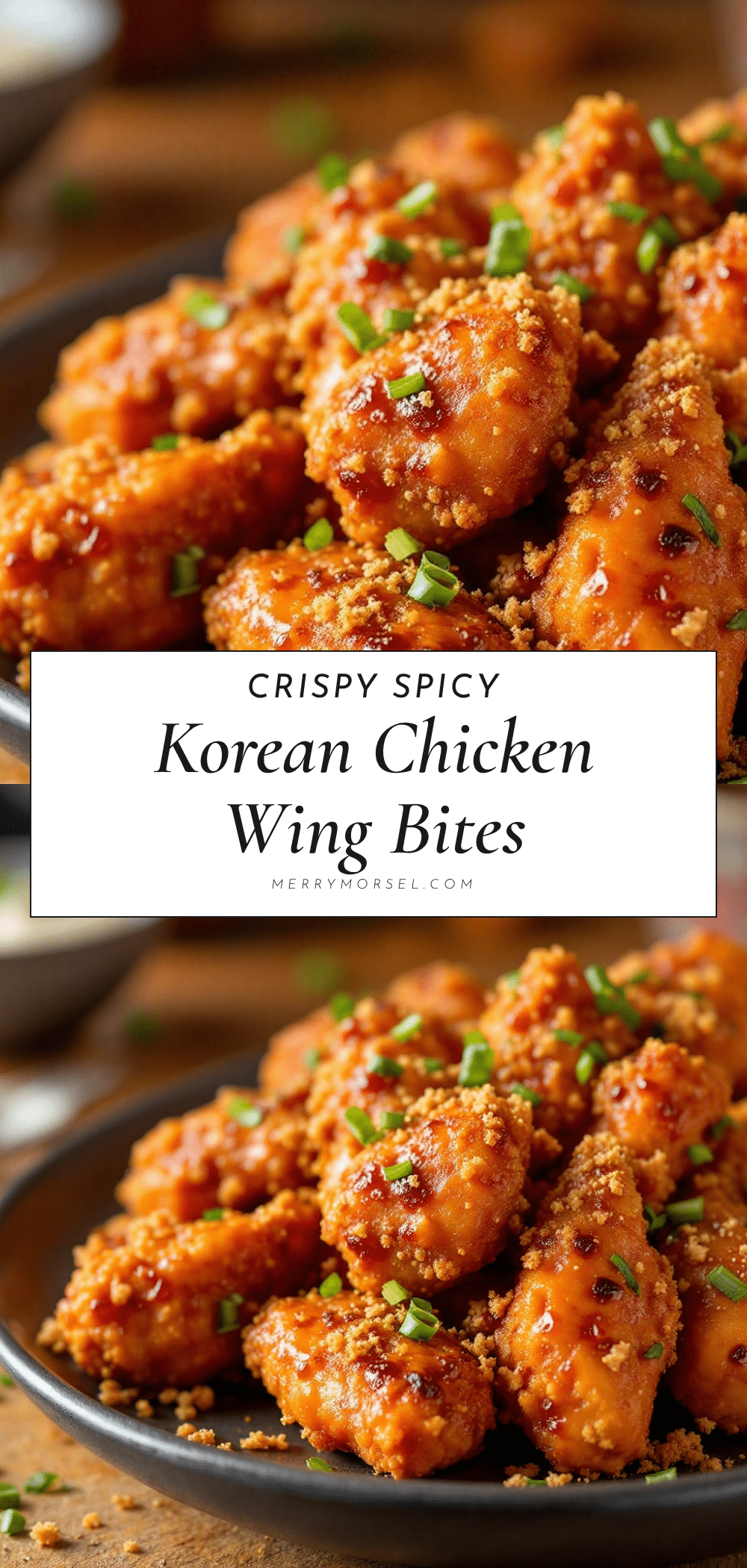
Crispy Spicy Korean Fried Chicken Wing Bites (Easy Recipe!)
Shatteringly crispy double-fried chicken wings tossed in a sticky, sweet, and fiery gochujang glaze. This easy recipe delivers better-than-takeout Korean fried chicken with bold, balanced heat and a crunch that lasts.
- Prep Time: 15 minutes
- Cook Time: 30 minutes
- Total Time: 45 minutes
- Yield: 4 servings 1x
- Category: Appetizer
- Cuisine: Korean
Ingredients
- 2 lbs chicken wingettes and drumettes (about 20–24 pieces)
- 1 teaspoon fine sea salt
- ½ teaspoon black pepper
- 1 cup cornstarch
- ¼ cup all-purpose flour
- ½ teaspoon baking powder (aluminum-free)
- Neutral oil for frying (peanut, vegetable, canola, or avocado oil; about 4-6 cups)
- 3 tablespoons gochujang (Korean chili paste)
- 3 tablespoons honey
- 2 tablespoons low-sodium soy sauce
- 2 cloves garlic, minced
- 1 tablespoon rice vinegar
- 1 tablespoon toasted sesame oil
- 1 teaspoon grated fresh ginger (optional but recommended)
- 1 tablespoon toasted sesame seeds (for garnish)
- 2 green onions, thinly sliced (for garnish)
Instructions
- Pat the wing pieces completely dry with paper towels. Place in a large bowl and season with salt and pepper, tossing to coat evenly. Let sit at room temperature for 15 minutes.
- In a separate large bowl, whisk together the cornstarch, all-purpose flour, and baking powder. Set aside.
- In a small saucepan over medium-low heat, combine gochujang, honey, soy sauce, minced garlic, rice vinegar, sesame oil, and grated ginger (if using). Whisk constantly until smooth, bubbling gently, and slightly thickened, about 2-3 minutes. Remove from heat and set aside.
- Heat oil in a Dutch oven to 325°F (163°C). Toss the seasoned wings in batches into the dry coating mixture, pressing firmly onto each piece. Shake off excess and place on a plate or wire rack.
- Carefully lower 6-8 wing pieces into the hot oil. Fry for 8-10 minutes, turning occasionally, until cooked through and pale golden (internal temperature 165°F/74°C). Transfer to a wire rack set over a baking sheet. Repeat with remaining wings. Let all wings rest on the rack for at least 10 minutes.
- Increase oil temperature to 375°F (190°C). Lower the rested wings back into the hot oil in batches. Fry for 2-3 minutes until deep golden brown and shatteringly crisp. Transfer back to the wire rack. Repeat with remaining wings.
- Place freshly fried wings in a large clean bowl. Pour warm gochujang sauce over the top and toss gently but thoroughly to coat. Transfer to a serving platter and sprinkle immediately with toasted sesame seeds and sliced green onions. Serve hot.
Notes
Do not skip the drying step or the 10-minute rest between fries—both are critical for maximum crunch. Keep oil temperature steady by frying in small batches. For a gluten-free version, substitute all-purpose flour with rice flour and use tamari instead of soy sauce. Leftovers can be stored in an airtight container in the refrigerator for up to 3 days; reheat in an air fryer at 375°F (190°C) for 3-4 minutes or in a 400°F (204°C) oven on a wire rack for 8-10 minutes.
Nutrition
- Serving Size: 5-6 wing pieces
- Calories: 500
- Sugar: 13
- Sodium: 800
- Fat: 31
- Saturated Fat: 6
- Carbohydrates: 27
- Fiber: 1
- Protein: 30
Keywords: Korean fried chicken, crispy chicken wings, gochujang chicken, spicy chicken wings, double-fried chicken, game day appetizer, Korean chicken bites