Love this? Save it for later!
Share the inspiration with your friends
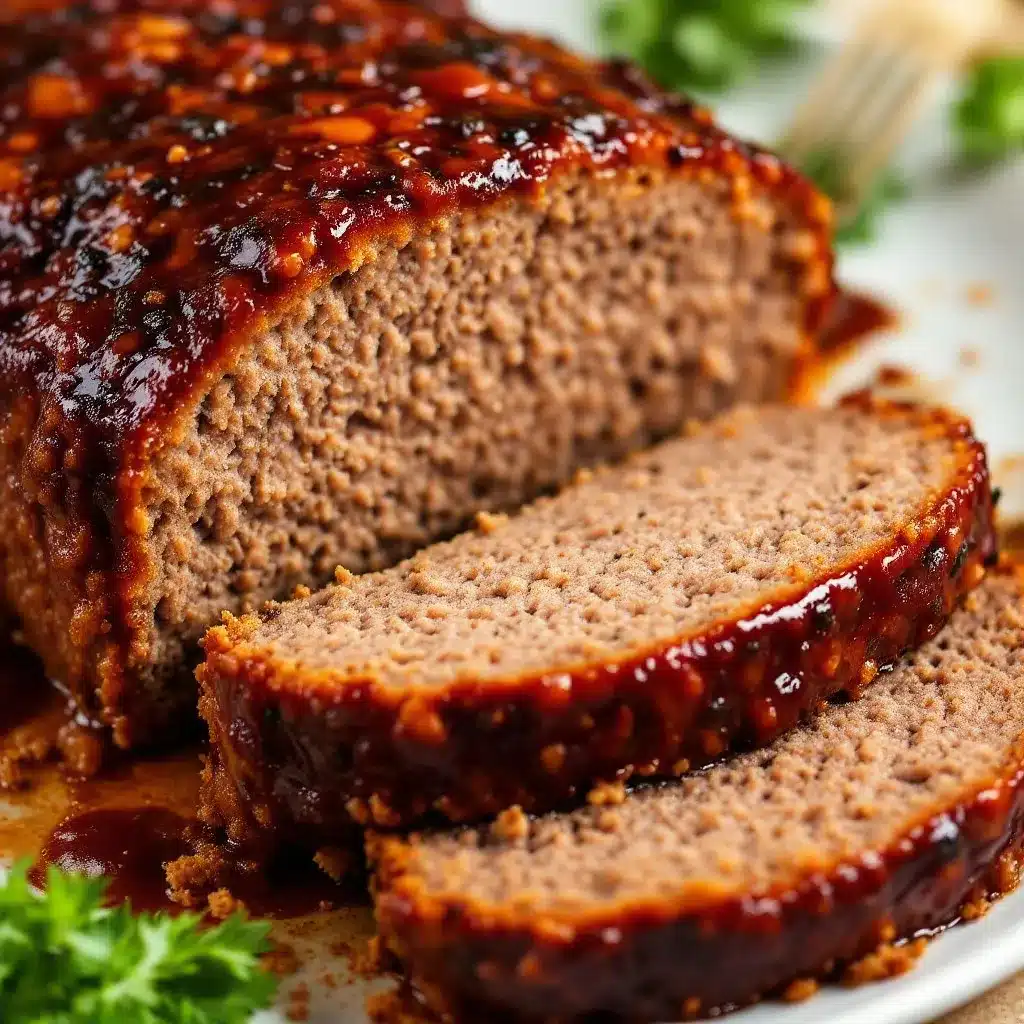
The pan came out of the oven, and the smell—sweet and savory all tangled together—filled the whole kitchen. My husband, who had been working late, walked through the door and just stopped. “What is that?” he asked, already peeking over my shoulder. I hadn’t even told him I was testing a new recipe. That’s the thing about this Classic Meatloaf with Brown Sugar Glaze. It announces itself. The glaze is sticky and dark, catching the kitchen light, and the edges of the meatloaf are caramelized just so. It was the third time that month someone had asked for the recipe, and honestly, I wasn’t surprised anymore.
I used to think meatloaf was a little… boring. You know, the kind of dinner your grandma made that was fine, but nothing to write home about. Then I started playing around with the glaze. A simple brown sugar glaze, tangy from a splash of vinegar and a little mustard, completely changed the game. It turns a humble loaf of ground meat into something you actually look forward to. The glaze doesn’t just sit on top—it bakes down into the meat, keeping it moist and adding this sweet-savory crust that’s honestly addictive. I’ve made this for potlucks, for Sunday dinners, and for those nights when you just need a meal that feels like a hug. It never fails.
This isn’t a complicated recipe, and that’s the beauty of it. You don’t need fancy ingredients or special skills. You just need a bowl, a pan, and a little patience while it bakes. The result? A dinner that tastes like you spent hours in the kitchen, when really, the oven does most of the work. That’s the kind of recipe I love sharing—one that makes you look good without the stress. And trust me, when you pull that glazed loaf out of the oven, you’ll feel like a pro.
Why You’ll Love This Recipe
Let me tell you why this Classic Meatloaf with Brown Sugar Glaze has earned a permanent spot in my dinner rotation. I’ve tested this recipe more times than I can count—tweaking the meat blend, adjusting the glaze ratio, and even trying different pan shapes. What I landed on is the version I genuinely believe is the best. It’s the one my family asks for by name.
- Quick & Easy: This comes together in about 15 minutes of active prep. The oven does the rest. Perfect for busy weeknights when you want something hearty without hovering over the stove.
- Simple Ingredients: You probably have most of these in your pantry right now. Ground beef, breadcrumbs, eggs, ketchup, brown sugar—no fancy grocery trips required.
- Perfect for Any Occasion: Sunday supper, weekday dinner, or even a holiday gathering. It’s comfort food that fits any table.
- Crowd-Pleaser: Kids love the sweet glaze. Adults love the savory, juicy meat. It’s one of those rare dishes that makes everyone happy.
- Unbelievably Delicious: The brown sugar glaze isn’t just a topping—it bakes into the meatloaf, creating a caramelized crust that’s sweet, tangy, and deeply savory. It’s next-level comfort food.
What makes this recipe different from all the others? It’s the glaze, honestly. Most meatloaf recipes treat the topping as an afterthought—a quick smear of ketchup and you’re done. But this brown sugar glaze is the star. It’s thick, it’s glossy, and it caramelizes in the oven to create a crust that’s almost candied. Paired with the tender, juicy meatloaf underneath, it’s a combination that works every single time. I’ve tried making it with just ketchup, and it’s not the same. Trust me on this one.
This is the kind of meal that makes you close your eyes after the first bite. It’s comfort food reimagined—familiar, but somehow better than you remember. Perfect for impressing guests without the stress, or turning a simple Tuesday night into something memorable. If you love hearty, satisfying dinners, you’ll also enjoy this easy crockpot balsamic pulled pork for another set-it-and-forget-it meal.
What Ingredients You Will Need
This recipe uses simple, everyday ingredients to deliver big flavor. Nothing fancy here—just smart combinations that work. Here’s what you’ll need:
For the Meatloaf
- Ground beef (80/20 blend): 2 pounds. I prefer 80/20 for the best balance of flavor and moisture. Too lean, and the meatloaf can dry out. If you use a leaner blend, consider adding a tablespoon of olive oil.
- Breadcrumbs: 1 cup, plain or Italian-style. Panko works great too for a lighter texture. If you’re gluten-free, use crushed pork rinds or gluten-free breadcrumbs.
- Milk: ½ cup, whole milk preferred. It keeps the meatloaf tender. You can use any milk you have on hand, or even unsweetened almond milk in a pinch.
- Eggs: 2 large, lightly beaten. They bind everything together. No egg? Use ¼ cup of unsweetened applesauce as a substitute.
- Onion: 1 medium yellow onion, finely diced. I like to sauté it for a minute before adding it to the mix—it softens the flavor and prevents crunchy bits in the meatloaf.
- Garlic: 3 cloves, minced. Fresh is best, but 1 teaspoon of garlic powder works in a pinch.
- Ketchup: ¼ cup. Adds a touch of sweetness and acidity to the meat mixture. I use Heinz, but any brand works.
- Worcestershire sauce: 2 tablespoons. This is the secret weapon for depth of flavor. Don’t skip it—it adds that umami punch that makes meatloaf taste like it simmered all day.
- Dried thyme: 1 teaspoon. Earthy and slightly floral, it complements the beef beautifully. You can use 1 tablespoon of fresh thyme if you have it.
- Salt and black pepper: 1 teaspoon salt, ½ teaspoon pepper, or to taste. Season generously—meatloaf needs it.
For the Brown Sugar Glaze
- Brown sugar: ½ cup, packed. Light or dark brown sugar works, but dark gives a deeper, more molasses-like flavor.
- Ketchup: ½ cup. This is the base of the glaze. It provides body and tang.
- Apple cider vinegar: 1 tablespoon. Cuts through the sweetness and balances the glaze. White vinegar works too, but apple cider adds a subtle fruitiness.
- Dijon mustard: 1 tablespoon. Adds a gentle heat and tang. Yellow mustard works, but Dijon is smoother.
- Worcestershire sauce: 1 teaspoon. A little extra depth for the glaze. You can skip it, but I like the complexity it adds.
I recommend using a good-quality ketchup for the glaze—it really does make a difference. I’ve tried generic brands, and the glaze came out a little thin. Stick with a thicker ketchup for the best texture. If you’re out of brown sugar, you can make your own by mixing ½ cup of white sugar with 1 tablespoon of molasses. It works perfectly.
Equipment Needed
You don’t need a lot of fancy tools for this recipe. Here’s what you’ll need:
- Large mixing bowl: For combining the meatloaf ingredients. I use a sturdy ceramic bowl, but any large bowl works.
- Loaf pan (9×5-inch): The classic shape. If you don’t have one, you can shape the meatloaf free-form on a lined baking sheet. It’ll cook a little faster, so check the temperature earlier.
- Parchment paper or aluminum foil: Line the pan for easy cleanup. Trust me, you don’t want to scrub caramelized glaze off a pan.
- Small saucepan: For making the glaze. You can also whisk it together in a bowl and microwave it for 30 seconds.
- Whisk: To combine the glaze ingredients smoothly.
- Measuring cups and spoons: For accuracy. I’ve eyeballed the glaze before, and it’s never as good.
- Meat thermometer: Essential for knowing when the meatloaf is done. The USDA recommends 160°F for ground beef. I’ve used a cheap instant-read thermometer for years, and it works perfectly.
- Basting brush (optional): For spreading the glaze evenly. A spoon works just fine too.
If you’re new to meatloaf, don’t stress about having the perfect loaf pan. I’ve made this in a round cake pan, a cast-iron skillet, and even a muffin tin for individual servings. Each shape changes the cooking time a little, but the flavor stays the same. For a quick and easy weeknight dinner that’s just as forgiving, try this easy one-pan honey garlic chicken—it uses similar pantry staples.
Preparation Method
Let’s get cooking. This method is straightforward, but I’ve included all the little details that make the difference between a good meatloaf and a great one.
- Preheat your oven to 350°F (175°C). Line a 9×5-inch loaf pan with parchment paper, leaving some overhang on the sides. This makes lifting the meatloaf out so much easier later. If you don’t have parchment, grease the pan well with butter or cooking spray.
- Make the brown sugar glaze. In a small saucepan over medium heat, combine ½ cup packed brown sugar, ½ cup ketchup, 1 tablespoon apple cider vinegar, 1 tablespoon Dijon mustard, and 1 teaspoon Worcestershire sauce. Whisk until the sugar dissolves and the mixture is smooth, about 2-3 minutes. Don’t let it boil—just warm it enough to combine. Remove from heat and set aside. Taste it. You should get sweet, tangy, and a little savory all at once. If it’s too sweet for you, add another splash of vinegar.
- Sauté the aromatics. Heat a small skillet over medium heat with a drizzle of oil. Add the finely diced onion and cook for 3-4 minutes until softened and translucent. Add the minced garlic and cook for 30 seconds more, until fragrant. Let this cool for a few minutes—you don’t want hot onions cooking the eggs when you mix everything together. I learned this the hard way after ending up with scrambled egg bits in my meatloaf.
- Combine the meatloaf ingredients. In a large mixing bowl, add 2 pounds of ground beef (80/20), 1 cup breadcrumbs, ½ cup milk, 2 lightly beaten eggs, the sautéed onion and garlic, ¼ cup ketchup, 2 tablespoons Worcestershire sauce, 1 teaspoon dried thyme, 1 teaspoon salt, and ½ teaspoon black pepper. Use your hands to gently mix everything together. Don’t overmix—overworking the meat makes it tough. Mix just until everything is evenly distributed. You should still see small flecks of onion and herbs.
- Test the seasoning. This is a trick I picked up from a chef friend. Pinch off a small piece of the meat mixture, flatten it into a patty, and cook it in a skillet for a minute on each side. Taste it. Does it need more salt? More pepper? Adjust the seasoning before you bake the whole loaf. It takes two minutes and saves you from a bland dinner.
- Shape the meatloaf. Transfer the meat mixture to the prepared loaf pan. Gently press it into an even shape, making sure there are no air pockets. Don’t pack it down too hard—you want it to hold together, but not be dense. The top should be slightly domed in the center.
- Apply the first layer of glaze. Pour about half of the brown sugar glaze over the top of the meatloaf. Use a basting brush or the back of a spoon to spread it evenly, letting some drip down the sides. Reserve the remaining glaze for later.
- Bake the meatloaf. Place the pan on a baking sheet (to catch any drips) and bake at 350°F for 45 minutes. After 45 minutes, remove the meatloaf from the oven and carefully pour off any excess fat that has collected in the pan. Use a spoon or a turkey baster—just be careful, the pan is hot. This step keeps the meatloaf from getting greasy.
- Apply the second layer of glaze. Spread the remaining glaze over the top of the meatloaf. Return it to the oven and bake for another 15-20 minutes, or until the internal temperature reaches 160°F when measured with a meat thermometer inserted into the center. The glaze should be bubbly and dark, with caramelized edges.
- Rest the meatloaf. This is crucial. Remove the meatloaf from the oven and let it rest in the pan for 10-15 minutes. The temperature will continue to rise a few degrees, and the juices will redistribute. If you slice it immediately, it will fall apart. Use the parchment paper to lift the meatloaf out of the pan, then transfer it to a cutting board. Slice into 1-inch thick pieces and serve with any extra glaze from the pan spooned over the top.
The whole process takes about 1 hour and 15 minutes from start to finish, but most of that is hands-off baking time. The result is a juicy, tender meatloaf with a glossy, caramelized crust that’s absolutely irresistible.
Cooking Tips & Techniques
After making this recipe dozens of times, I’ve picked up a few tricks that make the process smoother and the results more consistent. Here are my best tips:
- Don’t skip the milk. The milk-soaked breadcrumbs create what’s called a panade—a paste that keeps the meatloaf incredibly moist. If you skip the milk, the breadcrumbs will just absorb moisture from the meat, leaving it dry. I’ve tried it both ways, and the difference is noticeable.
- Use a gentle hand. Overmixing is the number one mistake I see. Treat the meat mixture like you’re making biscuits—mix just until combined. The more you handle it, the tougher the meatloaf gets.
- Let it rest. I know it’s tempting to slice right into it, but resting is non-negotiable. The meatloaf needs time to set so the slices hold their shape. I’ve ruined more than one meatloaf by rushing this step.
- Check the temperature early. Ovens vary, so start checking the internal temperature at the 55-minute mark. Insert the thermometer into the center of the loaf. You’re looking for 160°F. If it’s not there yet, give it another 5-10 minutes.
- Line your pan. Parchment paper with overhang makes cleanup a dream. The glaze gets sticky and caramelized, and scrubbing it off a pan is no fun. Trust me on this one.
- Double the glaze. If you’re a glaze lover like me, make 1.5 times the glaze recipe. You’ll have extra to serve on the side. It’s also amazing on roasted vegetables or as a dipping sauce for the leftovers.
I once forgot to add the eggs to the mixture. The meatloaf held together okay, but it was a little crumbly. If that happens to you, don’t panic—just serve it in slices and call it “rustic.” Nobody will complain when it tastes this good.
Variations & Adaptations
This recipe is incredibly versatile. Here are some ways to make it your own:
- Turkey Meatloaf: Swap the ground beef for ground turkey or chicken. Use 93/7 lean turkey to keep it moist. You may need to add an extra tablespoon of olive oil to compensate for the lower fat content. The cooking time stays about the same.
- Gluten-Free: Use gluten-free breadcrumbs or crushed pork rinds instead of regular breadcrumbs. The texture will be slightly different, but the flavor is still fantastic. I’ve made this for gluten-sensitive friends, and it disappeared just as fast.
- Spicy Kick: Add 1-2 tablespoons of sriracha or a teaspoon of red pepper flakes to the glaze. The heat pairs beautifully with the sweetness of the brown sugar. I like to serve it with pickled jalapeños on the side for extra heat.
- Cheese-Stuffed: Press half the meat mixture into the pan, make a shallow well down the center, and fill it with shredded cheddar or mozzarella. Top with the remaining meat mixture and bake as directed. The melted cheese center is a fun surprise.
- BBQ Twist: Replace the ketchup in the glaze with your favorite barbecue sauce. Use a smoky or hickory-flavored sauce for the best results. This version is amazing on a sandwich the next day.
- Vegetable Boost: Grate a carrot or a zucchini into the meat mixture. It adds moisture and a little extra nutrition without changing the flavor much. Squeeze the grated zucchini in a paper towel to remove excess water first.
I’ve tried the turkey version multiple times, and it’s my go-to when I want a lighter dinner. The key is not to overcook it—turkey meatloaf dries out faster than beef. Check the temperature at 50 minutes, and pull it at 160°F. For another hearty dinner that’s easy to adapt, check out this garlic butter herb-crusted salmon—it’s ready in 20 minutes.
Serving & Storage Suggestions
This Classic Meatloaf with Brown Sugar Glaze is best served warm, straight from the oven. The glaze is sticky and glossy, and the meat is tender and juicy. Here’s how to serve and store it:
Serving: Slice the meatloaf into 1-inch thick pieces and arrange them on a platter. Spoon any extra glaze from the pan over the top. I like to serve it with mashed potatoes and a simple green vegetable, like roasted green beans or steamed broccoli. The creamy potatoes soak up the extra glaze beautifully. A side of easy dilly green bean refrigerator pickles adds a tangy crunch that cuts through the richness.
Storage: Leftover meatloaf keeps well in the refrigerator for up to 4 days. Store it in an airtight container, or wrap it tightly in plastic wrap and then foil. The glaze will soften a bit, but the flavor stays great.
Reheating: The best way to reheat meatloaf is in the oven. Place slices on a baking sheet, cover loosely with foil, and warm at 300°F for 10-15 minutes. This prevents the glaze from burning and keeps the meat moist. You can also microwave individual slices for 1-2 minutes, but the texture won’t be as good. For a quick lunch, I sometimes slice the cold meatloaf and pan-fry it in a little butter until crispy on the outside—it’s like a whole new dish.
Freezing: This meatloaf freezes beautifully. Let it cool completely, then wrap it tightly in plastic wrap, then foil, and place it in a freezer bag. It will keep for up to 3 months. To thaw, move it to the refrigerator overnight. Reheat in the oven at 300°F until warmed through. You can also freeze individual slices for quick lunches—just wrap each slice in plastic wrap and store them together in a bag.
Flavor Development: Here’s a little secret—the leftovers are often better than the first dinner. The flavors meld together overnight, and the glaze soaks into the meat a little more. I’ve been known to make this recipe specifically for meatloaf sandwiches the next day. A slice of cold meatloaf on toasted bread with a little extra glaze and some pickles? Perfection.
Nutritional Information & Benefits
Here’s the estimated nutritional breakdown for one serving (based on 8 servings per recipe):
- Calories: ~380
- Protein: 28g
- Fat: 18g
- Carbohydrates: 24g
- Fiber: 1g
- Sugar: 16g
- Sodium: 650mg
This recipe provides a good amount of protein, which helps keep you full and satisfied. The ground beef is a source of iron and B vitamins, including B12, which supports energy levels. The onions and garlic add antioxidants and compounds that support immune health. While the brown sugar glaze adds some sugar, it’s balanced by the savory elements of the meatloaf. If you’re watching your sugar intake, you can reduce the brown sugar to ¼ cup—the glaze will be less thick, but still tasty.
For a lower-carb option, serve the meatloaf with cauliflower mash instead of potatoes. It’s also naturally gluten-free if you use gluten-free breadcrumbs. This recipe is not suitable for a dairy-free diet as written, but you can substitute the milk with unsweetened almond milk and use dairy-free breadcrumbs.
Conclusion
This Classic Meatloaf with Brown Sugar Glaze is the kind of recipe that earns a permanent spot in your dinner rotation. It’s simple enough for a busy weeknight, but impressive enough for company. The brown sugar glaze transforms a humble dish into something special—sweet, tangy, and caramelized in all the right ways. I love that I can make it with ingredients I already have, and that the leftovers are just as good (if not better) the next day.
I hope you give this recipe a try. Don’t be afraid to make it your own—swap the meat, adjust the glaze, or add your favorite seasonings. Cooking is about making food that makes you happy, and this meatloaf does exactly that. When you make it, I’d love to hear how it turned out. Leave a comment below and let me know what you thought. Did you add a twist? Serve it with something unexpected? Share your version—I read every comment, and I love seeing how you make these recipes your own.
Happy cooking, friends. This one’s a keeper.
Frequently Asked Questions
Can I make this meatloaf ahead of time?
Absolutely. You can assemble the meatloaf up to 24 hours in advance and keep it covered in the refrigerator. Just add the glaze right before baking. You may need to add 5-10 minutes to the baking time since you’re starting from cold.
Why is my meatloaf dry?
The most common cause is overcooking. Use a meat thermometer and pull the meatloaf at 160°F. Also, make sure you’re using 80/20 ground beef—leaner blends dry out faster. The milk-soaked breadcrumbs also help keep it moist, so don’t skip that step.
Can I use ground pork or a meatloaf mix?
Yes! A blend of beef, pork, and veal is traditional for meatloaf. Ground pork adds extra moisture and richness. If you use a mix, the cooking time stays about the same. Just make sure the internal temperature reaches 160°F.
How do I prevent the meatloaf from sticking to the pan?
Line your loaf pan with parchment paper, leaving overhang on the sides. This makes lifting the meatloaf out easy and cleanup even easier. If you don’t have parchment, grease the pan well with butter or cooking spray, but the glaze can still stick.
Can I double this recipe?
Yes, but you’ll need two loaf pans. Don’t try to fit double the mixture into one pan—it won’t cook evenly. Bake both pans at the same time, and check the temperature at the 55-minute mark. You can also freeze one for later.
Pin This Recipe!
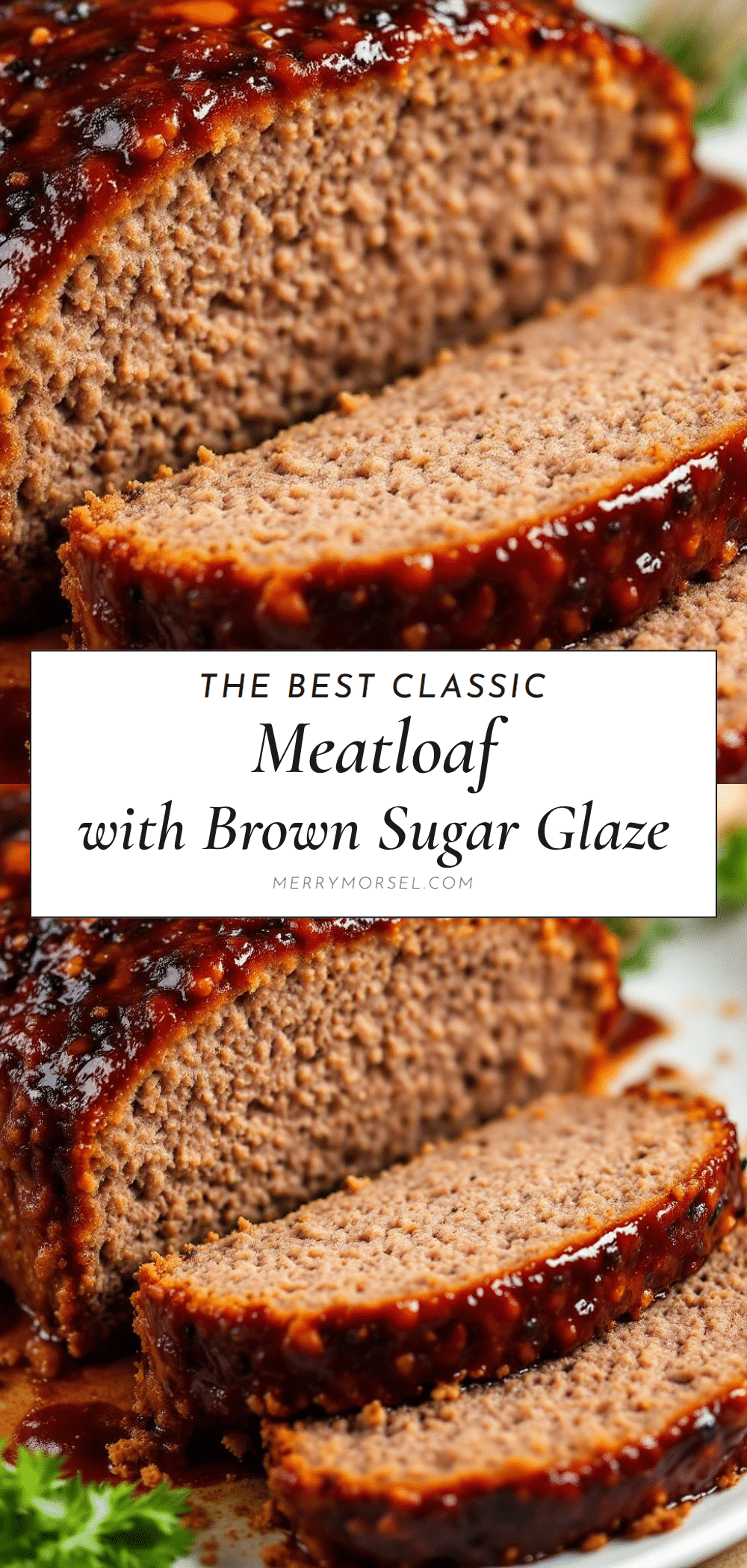
Classic Meatloaf with Brown Sugar Glaze: Easy Homemade Dinner
This Classic Meatloaf with Brown Sugar Glaze is a simple, crowd-pleasing dinner that transforms a humble loaf of ground meat into something special. The sweet and tangy glaze caramelizes in the oven, creating a sticky, dark crust that keeps the meatloaf moist and flavorful.
- Prep Time: 15 minutes
- Cook Time: 1 hour
- Total Time: 1 hour 15 minutes
- Yield: 8 servings 1x
- Category: Main Course
- Cuisine: American
Ingredients
- 2 pounds ground beef (80/20 blend)
- 1 cup breadcrumbs (plain or Italian-style)
- ½ cup whole milk
- 2 large eggs, lightly beaten
- 1 medium yellow onion, finely diced
- 3 cloves garlic, minced
- ¼ cup ketchup
- 2 tablespoons Worcestershire sauce
- 1 teaspoon dried thyme
- 1 teaspoon salt
- ½ teaspoon black pepper
- ½ cup packed brown sugar
- ½ cup ketchup
- 1 tablespoon apple cider vinegar
- 1 tablespoon Dijon mustard
- 1 teaspoon Worcestershire sauce
Instructions
- Preheat your oven to 350°F (175°C). Line a 9×5-inch loaf pan with parchment paper, leaving some overhang on the sides.
- Make the brown sugar glaze: In a small saucepan over medium heat, combine ½ cup packed brown sugar, ½ cup ketchup, 1 tablespoon apple cider vinegar, 1 tablespoon Dijon mustard, and 1 teaspoon Worcestershire sauce. Whisk until the sugar dissolves and the mixture is smooth, about 2-3 minutes. Remove from heat and set aside.
- Sauté the aromatics: Heat a small skillet over medium heat with a drizzle of oil. Add the finely diced onion and cook for 3-4 minutes until softened and translucent. Add the minced garlic and cook for 30 seconds more, until fragrant. Let cool for a few minutes.
- Combine the meatloaf ingredients: In a large mixing bowl, add the ground beef, breadcrumbs, milk, beaten eggs, sautéed onion and garlic, ¼ cup ketchup, 2 tablespoons Worcestershire sauce, dried thyme, salt, and black pepper. Use your hands to gently mix everything together until just combined. Do not overmix.
- Test the seasoning: Pinch off a small piece of the meat mixture, flatten it into a patty, and cook it in a skillet for a minute on each side. Taste and adjust seasoning if needed.
- Shape the meatloaf: Transfer the meat mixture to the prepared loaf pan. Gently press it into an even shape, making sure there are no air pockets. Do not pack it down too hard.
- Apply the first layer of glaze: Pour about half of the brown sugar glaze over the top of the meatloaf. Use a basting brush or the back of a spoon to spread it evenly, letting some drip down the sides. Reserve the remaining glaze.
- Bake the meatloaf: Place the pan on a baking sheet and bake at 350°F for 45 minutes. After 45 minutes, remove the meatloaf from the oven and carefully pour off any excess fat that has collected in the pan.
- Apply the second layer of glaze: Spread the remaining glaze over the top of the meatloaf. Return it to the oven and bake for another 15-20 minutes, or until the internal temperature reaches 160°F when measured with a meat thermometer inserted into the center.
- Rest the meatloaf: Remove the meatloaf from the oven and let it rest in the pan for 10-15 minutes. Use the parchment paper to lift the meatloaf out of the pan, then transfer it to a cutting board. Slice into 1-inch thick pieces and serve with any extra glaze from the pan spooned over the top.
Notes
Don’t skip the milk—it creates a panade that keeps the meatloaf moist. Use a gentle hand when mixing to avoid tough meatloaf. Let the meatloaf rest for 10-15 minutes before slicing to allow juices to redistribute. Line your pan with parchment paper for easy cleanup. Double the glaze if you love extra to serve on the side.
Nutrition
- Serving Size: 1 slice (1/8 of reci
- Calories: 380
- Sugar: 16
- Sodium: 650
- Fat: 18
- Saturated Fat: 7
- Carbohydrates: 24
- Fiber: 1
- Protein: 28
Keywords: classic meatloaf, brown sugar glaze, easy meatloaf, homemade meatloaf, comfort food, ground beef recipe, weeknight dinner