Love this? Save it for later!
Share the inspiration with your friends
It was 4:30 PM on a Tuesday, the kind of gray afternoon where the light gives up before dinner does. I had promised the kids soft, warm treats for their after-school snack, but the pantry was looking sad. No chocolate chips. No fancy sprinkles. Just a half-empty bottle of apple cider I’d bought for a cocktail party that never happened and a stick of butter sitting out to soften. Honestly, I almost ordered takeout. You know how it goes—when the house is loud and your energy is low, the last thing you want is to be standing over a mixing bowl.
But then I smelled it. The cider had reduced to this thick, amber syrup, smelling like autumn in a jar. I poured it into the creamed butter and sugar, and suddenly the kitchen didn’t feel like a chore anymore. It felt like a hug. These best soft apple cider cookies with brown butter glaze weren’t just a backup plan; they became the thing that saved my afternoon. The house filled with that nutty, caramelized scent that makes everyone stop what they’re doing and look toward the oven. My kids didn’t even care that they weren’t chocolate chip. They just wanted the ones with the sticky, sweet glaze that drips down your wrist.
That’s the thing about baking when you’re rushing. You stop trying to be perfect and start being creative. The glaze isn’t just decoration; it’s the soul of the cookie. It soaks into the warm crumb, turning it into something tender and cake-like rather than crisp and dry. I’ve made dozens of variations since that chaotic Tuesday, but this one sticks. It’s the one I make when I need comfort. It’s the one I bring to potlucks when I’m nervous about bringing something “too sweet.” It’s balanced. It’s real. And it tastes like the season is finally here, even if the calendar says otherwise.
Why You’ll Love This Recipe
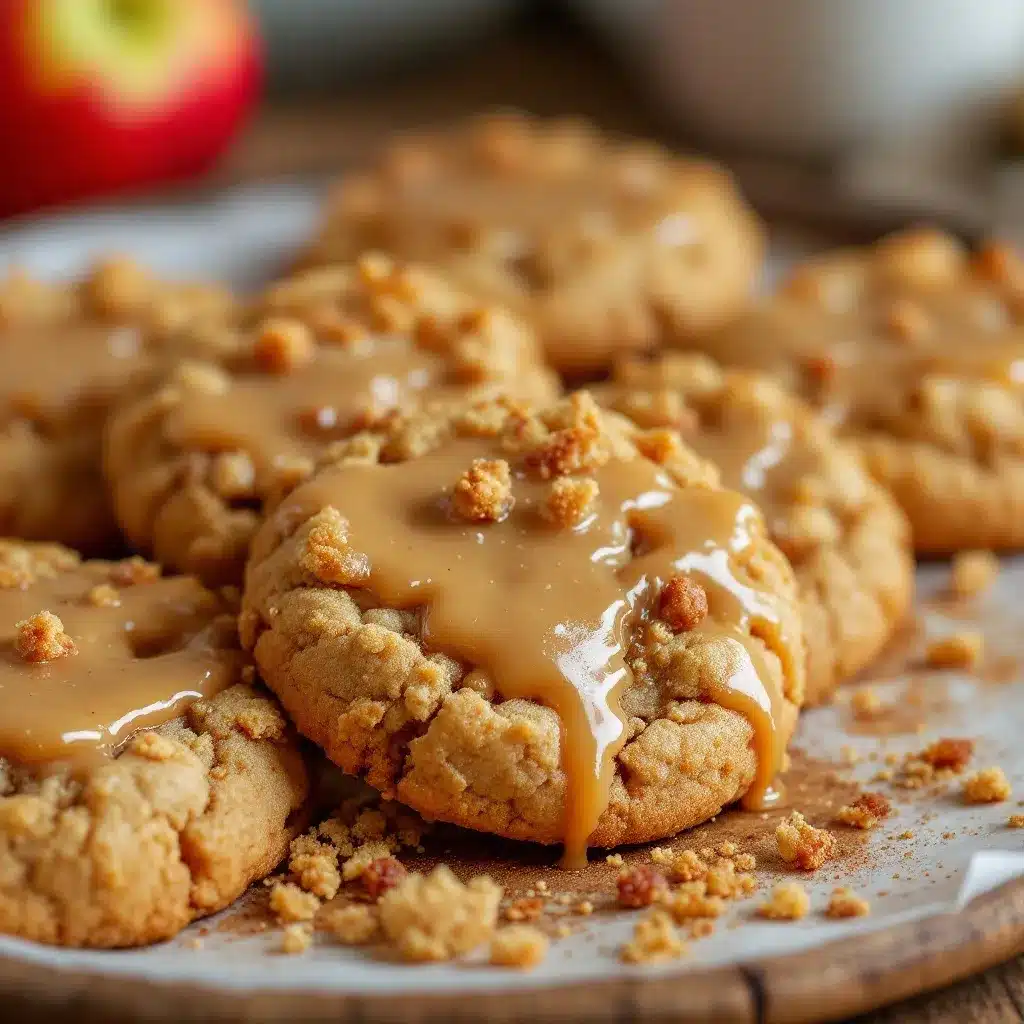
Let’s be honest, most apple cider cookies out there are dry. They’re crisp, they’re hard, and they crumble everywhere if you look at them wrong. I spent years testing different ratios of flour to liquid, trying to find that sweet spot where you get the flavor without the dental work. This version? It’s different. It’s soft. It’s pillowy. And that brown butter glaze? It’s not just a drizzle; it’s a coating that hardens slightly but stays chewy. It’s the kind of texture that makes you close your eyes after the first bite.
- Quick & Easy: Yes, you have to reduce the cider, but that’s mostly hands-off time while it simmers. The actual cookie assembly is faster than most standard sugar cookie recipes, making it perfect for busy weeknights or last-minute cravings.
- Simple Ingredients: No fancy grocery trips needed. You likely already have the butter, flour, sugar, and spices in your kitchen. The cider is the star, and it’s easy to find in the fall.
- Perfect for Fall Entertaining: Great for cozy dinners, holiday mornings, or just because it’s Tuesday. They look elegant enough for a dinner party but are simple enough for a school bake sale.
- Crowd-Pleaser: Always gets rave reviews from kids and adults alike. The flavor is familiar but elevated, hitting that nostalgia button without being cloying.
- Unbelievably Delicious: The texture and flavor combo is next-level comfort food. The nuttiness of the brown butter pairs perfectly with the tart-sweet apple notes.
What makes this recipe stand out is the technique. We aren’t just dumping apple juice into dough. We are reducing the cider to concentrate the flavor, then using that reduction to add moisture and depth. Plus, browning the butter for the glaze adds a layer of complexity that plain powdered sugar glaze just can’t match. It’s not just another version of an apple cookie—it’s your best version. It’s the one that will have your neighbors asking for the recipe before you even finish plating them.
What Ingredients You Will Need
This recipe uses simple, wholesome ingredients to deliver bold flavor and satisfying texture without the fuss. The key here is quality. Since there aren’t many ingredients, each one needs to pull its weight. I recommend using unsalted butter so you can control the salt level, and high-quality apple cider that tastes good on its own. If your cider is overly sweet, you might need to adjust the sugar in the dough slightly, so taste it first.
For the Cookies
- Unsalted butter, softened (1 cup or 226g) – I prefer Kerrygold for its rich color and flavor.
- Granulated sugar (1 ½ cups or 300g) – Provides structure and crisp edges.
- Light brown sugar, packed (½ cup or 100g) – Adds moisture and a hint of caramel.
- Egg, large, room temperature (1) – Helps bind the dough and adds richness.
- Vanilla extract (1 tsp) – Use a pure extract, not imitation, for better aroma.
- Reduced apple cider (¼ cup or 60ml) – See note below on how to make this.
- All-purpose flour (2 ½ cups or 315g) – The base of the cookie.
- Baking powder (1 tsp) – For lift and softness.
- Baking soda (½ tsp) – Helps with browning and spread.
- Salt (½ tsp) – Balances the sweetness.
- Ground cinnamon (1 tsp) – Warmth and spice.
- Ground nutmeg (¼ tsp) – Adds depth; don’t skip it.
- Ground ginger (¼ tsp) – A little kick for complexity.
For the Brown Butter Glaze
- Unsalted butter (¼ cup or 57g) – Same brand as above, consistency matters.
- Powdered sugar, sifted (1 ½ cups or 180g) – Sifting is non-negotiable to avoid lumps.
- Vanilla extract (½ tsp) – For flavor.
- Salt (a pinch) – Cuts the sweetness.
If you can’t find good cider, you can use apple juice, but you’ll need to reduce it longer to get the same intensity. For a gluten-free option, you can swap the all-purpose flour for a 1:1 gluten-free blend, though the texture may be slightly more cake-like. Use almond flour for a nuttier flavor, but keep in mind it absorbs moisture differently, so you may need to add a tablespoon more flour.
Equipment Needed
You don’t need a fancy kitchen to make these, but having the right tools makes life easier. A medium saucepan is essential for reducing the apple cider. I use a stainless steel one because it heats evenly and doesn’t react with the acidic cider. A large mixing bowl is needed for the dough, and a separate smaller bowl for the glaze.
A stand mixer or hand mixer will save you arm fatigue when creaming the butter and sugars, but you can absolutely do this by hand if you’re strong. A whisk is crucial for the glaze to ensure it’s smooth. I also recommend using a silicone baking mat on your baking sheets. It prevents sticking better than parchment paper and makes cleanup a breeze. If you don’t have one, parchment paper works fine, just ensure it’s flat and not wrinkled.
A cooling rack is important so the cookies don’t get soggy from steam. For the glaze, a small spoon or a piping bag works well for drizzling. I personally like using a small spoon for a rustic, homemade look. Keep your tools clean and organized; baking is as much about prep as it is about cooking.
Preparation Method
- Reduce the Apple Cider (15-20 minutes): Start by pouring 2 cups of apple cider into a medium saucepan. Bring it to a boil over medium-high heat, then reduce to a simmer. Let it bubble away until it reduces to exactly ¼ cup. This concentrates the flavor. Let it cool completely before using. If you rush this, your cookies might be too wet.
- Cream the Butter and Sugars: In a large bowl, beat the softened butter, granulated sugar, and brown sugar together until light and fluffy. This takes about 2-3 minutes with a mixer. You want the mixture to look pale and airy. This step incorporates air, which helps the cookies stay soft.
- Add Wet Ingredients: Add the room temperature egg and vanilla extract. Mix until combined. Then, add the cooled, reduced apple cider. Mix again. The mixture might look slightly curdled; that’s normal. Just keep mixing until it’s smooth.
- Combine Dry Ingredients: In a separate bowl, whisk together the flour, baking powder, baking soda, salt, cinnamon, nutmeg, and ginger. Sifting this mixture helps prevent lumps and ensures even distribution of spices.
- Make the Dough: Gradually add the dry ingredients to the wet ingredients, mixing on low speed. Stop as soon as the flour disappears. Do not overmix, or your cookies will be tough. The dough should be soft and slightly sticky.
- Chill the Dough (Optional but Recommended): If your kitchen is warm, chill the dough for 30 minutes. This prevents the cookies from spreading too much. If you’re in a rush, you can skip this, but they might be thinner.
- Scoop and Bake: Preheat your oven to 350°F (175°C). Scoop tablespoon-sized balls of dough onto a lined baking sheet, spacing them 2 inches apart. Bake for 10-12 minutes. The edges should be just starting to turn golden, but the centers should still look soft and puffy. They will firm up as they cool.
- Make the Brown Butter Glaze: While cookies bake, melt the ¼ cup butter in a small saucepan over medium heat. Swirl constantly. The butter will foam, then clear, and you’ll see brown bits at the bottom. It will smell nutty. Remove from heat immediately and let it cool for 5 minutes. Whisk in the powdered sugar, vanilla, and salt until smooth. If it’s too thick, add a teaspoon of milk or cider. If too thin, add more sugar.
- Glaze the Cookies: Let the cookies cool on the baking sheet for 5 minutes, then transfer to a wire rack. Drizzle the warm glaze over the slightly warm cookies. The glaze will set as it cools, creating that delicious sticky shell.
Cooking Tips & Techniques
Browning butter is an art form. The difference between perfect brown butter and burnt butter is about 30 seconds. Once you see the brown bits, take it off the heat immediately. The pan retains heat, so it will keep cooking even after you remove it from the stove. If you burn it, the glaze will taste bitter, and you’ll have to start over. Trust your nose more than your eyes.
Another common mistake is overbaking. These cookies are supposed to be soft. If you wait until they are firm in the center, they will dry out. Pull them when they look slightly underdone. The residual heat will finish cooking them on the hot pan. I’ve lost count of how many times I’ve pulled them too early and had to put them back in, only to have them turn into crackers. Find that sweet spot.
Also, make sure your butter is softened correctly. It should be cool to the touch but leave a fingerprint when pressed. If it’s melted, your cookies will spread too much. If it’s too hard, you won’t incorporate enough air. Room temperature is key.
Multitasking is your friend here. Start reducing the cider as soon as you get home from work. While it simmers, you can prep your dry ingredients. By the time the cider is done, you’re ready to mix. This workflow makes the whole process feel effortless.
Variations & Adaptations
Want to change things up? Try adding ½ cup of chopped pecans or walnuts to the dough for a crunchy texture. I love the contrast of the nuts against the soft cookie. You can also add ½ cup of dried cranberries or chopped apples for extra fruitiness. If you’re feeling festive, add a pinch of cardamom instead of nutmeg for a different aromatic profile.
For a dairy-free version, use vegan butter in the cookies and glaze, and ensure your powdered sugar is vegan (some brands use bone char). The texture might be slightly different, but the flavor will still be great. For a gluten-free option, use a high-quality 1:1 gluten-free flour blend. Add an extra ¼ cup of flour if the dough feels too wet.
I once tried making these with pear cider instead of apple cider. It was surprisingly good, with a milder, sweeter flavor. It’s a great way to use up whatever cider you have on hand. You can also skip the glaze entirely and dust them with cinnamon sugar after baking for a simpler treat.
Serving & Storage Suggestions
These cookies are best served at room temperature, allowing the glaze to set completely. They pair wonderfully with a hot cup of coffee or tea. I also like serving them with a glass of cold milk or even a splash of the apple cider they’re made with. For a dessert plate, add a scoop of vanilla ice cream or a dollop of whipped cream.
To store, keep them in an airtight container at room temperature for up to 3 days. If your kitchen is humid, they might get sticky, so you can refrigerate them, but let them come to room temperature before eating for the best texture. They also freeze well. Freeze the unbaked dough balls on a sheet pan, then transfer to a bag. Bake from frozen, adding 1-2 minutes to the bake time. The glaze should be added after baking and cooling.
Over time, the flavors meld and deepen. The second day, these cookies are actually better. The glaze softens slightly and soaks into the cookie, creating a fudge-like layer. It’s a nice surprise if you can wait that long.
Nutritional Information & Benefits
Each cookie contains approximately 180 calories, with 8g of fat, 26g of carbohydrates, and 2g of protein. The apple cider adds a small amount of vitamins and antioxidants, though most of the sugar is from the added sugars. The brown butter adds flavor without needing extra sugar, which helps balance the sweetness. These cookies are not a health food, but they are a treat made with real ingredients. Enjoy them as part of a balanced diet, and don’t feel guilty about having two or three.
Conclusion
These best soft apple cider cookies with brown butter glaze are more than just a recipe; they’re a reminder that simple ingredients can create something magical. Whether you’re baking for your family, bringing them to work, or just craving a taste of fall, these cookies will deliver. They are soft, flavorful, and utterly addictive. I hope you try them and find your own version of that perfect Tuesday afternoon. Customize them with your favorite nuts or spices, and make them your own. I’d love to hear how they turn out for you, so please leave a comment below or share a photo. Happy baking!
FAQs
Can I use apple juice instead of apple cider?
Yes, but you’ll need to reduce it longer. Apple juice is thinner and less flavorful. Simmer it until you get ¼ cup to ensure you have enough intensity.
Why did my cookies spread too much?
This usually happens if the butter was too soft or melted. Make sure your butter is cool to the touch but soft. Chilling the dough for 30 minutes also helps.
Can I freeze the baked cookies?
Yes, freeze them in an airtight container for up to 2 months. Thaw at room temperature before glazing, or glaze them before freezing for a ready-to-eat treat.
How do I know when the butter is browned?
Look for golden-brown bits at the bottom of the pan and smell a nutty, toasted aroma. It happens quickly, so watch it closely.
Can I make the dough ahead of time?
Yes, you can chill the dough in the fridge for up to 3 days or freeze it for up to 2 months. Let it come to room temperature before scooping and baking.
Pin This Recipe!
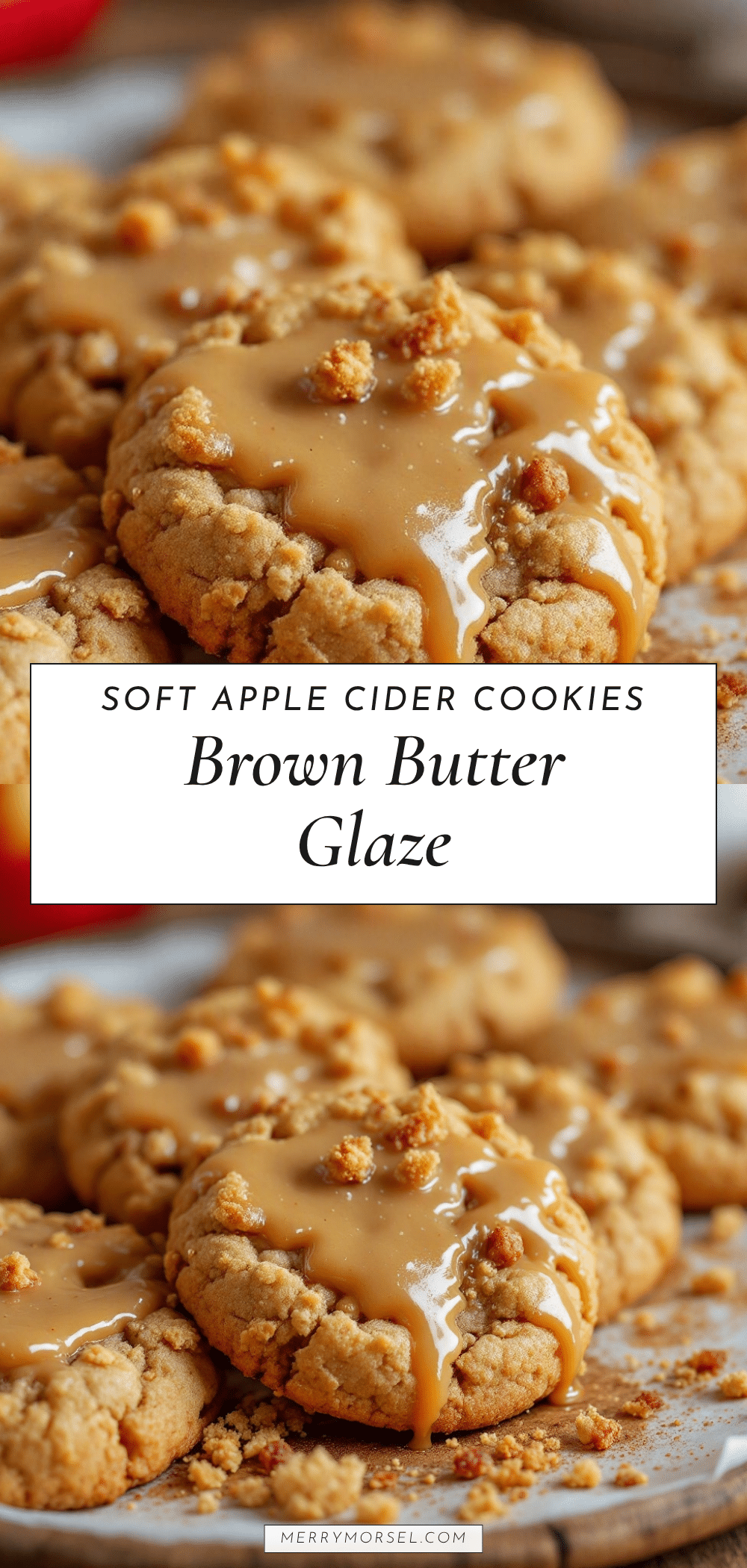
Soft Apple Cider Cookies with Brown Butter Glaze

Soft, pillowy apple cider cookies made with reduced cider and brown butter, topped with a sticky, sweet brown butter glaze. These cookies are perfect for fall entertaining or a cozy weeknight treat.
- Prep Time: 30 minutes
- Cook Time: 30 minutes
- Total Time: 1 hour
- Yield: 24 cookies 1x
- Category: Dessert
- Cuisine: American
Ingredients
- 2 cups apple cider (for reduction)
- 1 cup unsalted butter, softened (for cookies)
- 1 ½ cups granulated sugar
- ½ cup light brown sugar, packed
- 1 large egg, room temperature
- 1 tsp vanilla extract
- ¼ cup reduced apple cider (cooled)
- 2 ½ cups all-purpose flour
- 1 tsp baking powder
- ½ tsp baking soda
- ½ tsp salt
- 1 tsp ground cinnamon
- ¼ tsp ground nutmeg
- ¼ tsp ground ginger
- ¼ cup unsalted butter (for glaze)
- 1 ½ cups powdered sugar, sifted
- ½ tsp vanilla extract (for glaze)
- Pinch of salt (for glaze)
Instructions
- Pour 2 cups of apple cider into a medium saucepan. Bring to a boil over medium-high heat, then reduce to a simmer. Simmer until reduced to exactly ¼ cup. Let cool completely.
- In a large bowl, beat 1 cup softened butter, granulated sugar, and brown sugar until light and fluffy (2-3 minutes).
- Add the egg and 1 tsp vanilla extract. Mix until combined. Add the cooled, reduced apple cider and mix until smooth.
- In a separate bowl, whisk together flour, baking powder, baking soda, salt, cinnamon, nutmeg, and ginger.
- Gradually add dry ingredients to wet ingredients on low speed. Mix just until flour disappears. Do not overmix.
- Optional: Chill dough for 30 minutes if kitchen is warm.
- Preheat oven to 350°F (175°C). Scoop tablespoon-sized dough balls onto lined baking sheets, spacing 2 inches apart.
- Bake for 10-12 minutes until edges are golden but centers are still soft.
- While cookies bake, melt ¼ cup butter in a small saucepan over medium heat. Swirl until brown bits form and it smells nutty. Remove from heat and cool for 5 minutes.
- Whisk cooled brown butter, powdered sugar, ½ tsp vanilla, and pinch of salt until smooth. Adjust consistency with milk or cider if needed.
- Let cookies cool on sheet for 5 minutes, then transfer to a wire rack. Drizzle warm glaze over slightly warm cookies.
Notes
Ensure butter is softened correctly (cool to touch but leaves a fingerprint). Do not overbake; cookies should look slightly underdone in the center as they firm up while cooling. Brown butter requires close attention to avoid burning. Dough can be chilled for up to 3 days or frozen for up to 2 months.
Nutrition
- Serving Size: 1 cookie
- Calories: 180
- Sugar: 18
- Sodium: 150
- Fat: 8
- Saturated Fat: 5
- Carbohydrates: 26
- Fiber: 0.5
- Protein: 2
Keywords: apple cider cookies, brown butter glaze, soft cookies, fall baking, easy cookie recipe, autumn treats