Love this? Save it for later!
Share the inspiration with your friends
Honestly, I thought blending roasted squash into a sauce sounded like a lazy shortcut until the first bite completely changed my mind. For years, I stuck to the old rules. You make a red sauce, or you make a cream sauce, or you just toss garlic and oil. Adding pureed vegetable seemed like a way to hide the fact that you didn’t have enough cheese or proper technique. I wanted real pasta, not soup with noodles in it. My friends would laugh if I showed up to a dinner party with a bowl of orange mush on spaghetti. They expected something with depth, something that tasted like effort.
I had tried vegetable-heavy pastas before, and they always turned out watery or bland. The squash would separate from the butter, leaving an oily film on top that looked unappetizing. It felt like a trick. A gimmick for people who didn’t know how to cook. So when I decided to try making a crispy sage brown butter butternut squash pasta, I did it with my arms crossed. I figured I’d fail, maybe scrape it down the sink, and order pizza instead.
The turning point wasn’t a dramatic moment. It was just the smell. I was browning the butter in a large skillet, watching those little milk solids turn golden and nutty. Then I threw in a handful of fresh sage leaves. The kitchen filled with this incredible, earthy aroma that felt like autumn wrapped in a blanket. It didn’t smell like a substitute. It smelled like the real deal. When I tossed the cooked pasta into that golden sauce with the roasted squash puree, the mixture clung to every strand. It wasn’t slimy. It was velvety.
I took a bite, expecting disappointment. Instead, I got this rich, savory flavor that hit me in the best way. The crunch of the fried sage against the soft pasta was perfect. I realized then that this wasn’t a hack. It was a proper, delicious meal. I’ve made it dozens of times since, and it never fails to impress. It’s the kind of dish that makes you forget you’re eating vegetables. You just know it’s comfort food, pure and simple.
Why You’ll Love This Recipe
Let’s be real, not every weeknight dinner has to be a complicated project. This recipe is the perfect balance of ease and elegance. I’ve tested this version many times, tweaking the ratios until the sauce had that perfect coatable consistency. It’s not just another pumpkin pasta twist; it’s the one that actually works without needing a dozen different ingredients you can’t find.
* **Quick & Easy**: The whole thing comes together in about 30 minutes. The squash can be roasted ahead of time, so on busy weeknights, you’re just heating it up and tossing pasta.
* **Simple Ingredients**: You likely have most of this in your pantry. Butter, sage, garlic, squash, and pasta. No fancy grocery trips needed.
* **Perfect for Fall**: This is the ultimate cozy dinner. It feels seasonal and special, perfect for those chilly evenings when you just want to stay inside.
* **Crowd-Pleaser**: Even the pickiest eaters love this. The natural sweetness of the squash balances the savory butter, making it appealing to kids and adults alike.
* **Unbelievably Delicious**: The texture is next-level. The brown butter adds a nutty depth that regular butter just can’t match.
What makes this different is the technique. Most people just melt butter. Here, we brown it. We fry the sage until it’s crisp. We roast the squash to concentrate its flavor. It’s not just boiled veggies mixed with fat. It’s a crafted sauce. This recipe isn’t just good—it’s the kind that makes you close your eyes after the first bite. It’s comfort food reimagined.
What Ingredients You Will Need
This recipe relies on high-quality, simple ingredients because there is nowhere to hide. The flavor of the brown butter and sage needs to shine. I use pantry staples and fresh produce to deliver bold flavor without the fuss. Here is what you need to get started.
* **Butternut Squash**: One medium-sized squash, peeled and cubed. Roasting brings out the natural sweetness. Look for squash that feels heavy for its size.
* **Unsalted Butter**: One cup (2 sticks). This is crucial. You need enough fat to create the brown butter sauce. I recommend high-quality European-style butter for richer flavor.
* **Fresh Sage Leaves**: One large bunch. Fresh is non-negotiable here. Dried sage is too dusty and lacks the aromatic punch needed for frying.
* **Pasta**: One pound of your favorite long pasta. Spaghetti, linguine, or fettuccine all work well. I like the texture of bronze-die pasta because the sauce clings better.
* **Garlic**: Three cloves, minced. Add this towards the end so it doesn’t burn.
* **Parmesan Cheese**: Half a cup, freshly grated. Pre-shredded cheese has anti-caking agents that stop it from melting smoothly.
* **Olive Oil**: Two tablespoons. Used for roasting the squash and frying the sage.
* **Salt and Black Pepper**: To taste. Use flaky sea salt for finishing.
* **Red Pepper Flakes**: Optional, but a pinch adds a nice background heat that cuts through the richness.
For the squash, I prefer roasting it at 400°F (200°C) until it’s tender and slightly caramelized. This concentrates the flavor more than boiling. If you’re short on time, you can use canned pumpkin puree, but the texture will be different. Fresh roasted squash is worth the wait.
Equipment Needed
You don’t need anything fancy to make this. A large sheet pan is essential for roasting the squash evenly. I use a rimmed baking sheet because it keeps the squash from sliding off. A large skillet is the star of the show for the sauce. Cast iron is great for retaining heat, but a stainless steel or non-stick pan works fine too. You’ll need a food processor or blender to puree the squash. A high-speed blender gives the smoothest result, but a hand blender works well if you’re doing it right in the pot. A colander is needed for draining the pasta. Don’t forget a pair of tongs for tossing everything together.
Preparation Method
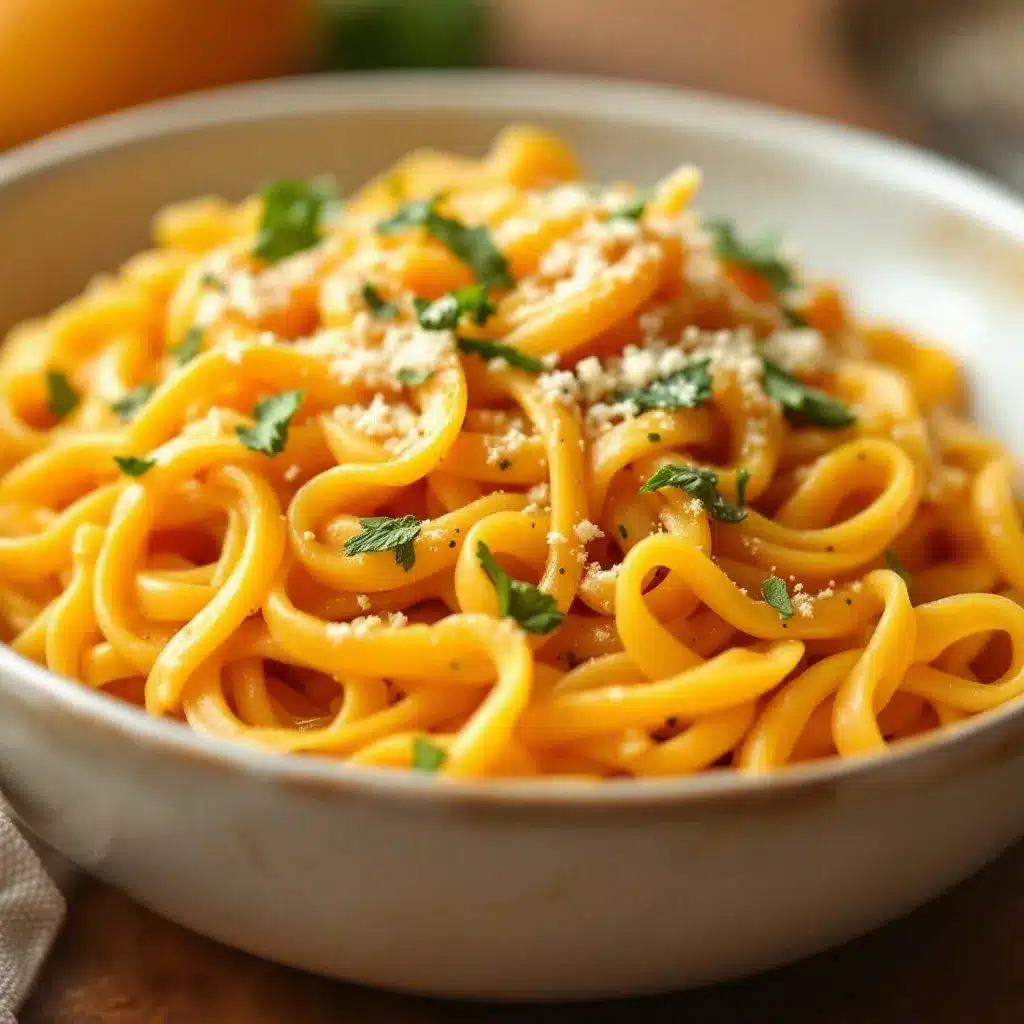
1. **Roast the Squash**: Preheat your oven to 400°F (200°C). Peel the butternut squash and remove the seeds. Cut the flesh into 1-inch cubes. Toss them with olive oil, salt, and pepper. Spread them on a baking sheet. Roast for 25-30 minutes until tender. Let them cool slightly. (Time: 35 minutes)
2. **Puree the Squash**: Transfer the roasted squash to a food processor. Blend until completely smooth. If it’s too thick, add a splash of water or pasta water. You want a silky puree. Set aside. (Time: 5 minutes)
3. **Boil the Pasta**: Bring a large pot of salted water to a boil. Add the pasta and cook according to package directions until al dente. Reserve one cup of starchy pasta water before draining. (Time: 10 minutes)
4. **Make the Brown Butter**: While the pasta cooks, melt the butter in a large skillet over medium heat. Let it melt and then simmer. Watch it closely. The butter will foam, then crackle. Look for golden brown milk solids at the bottom. This takes about 5-7 minutes. Remove from heat immediately once it smells nutty. (Time: 7 minutes)
5. **Fry the Sage**: In the same skillet (if using cast iron) or a separate small pan, heat a little olive oil. Add the sage leaves. Fry for 30-60 seconds until crisp. Remove with a slotted spoon and set on paper towels. (Time: 2 minutes)
6. **Combine Sauce**: Return the brown butter skillet to low heat. Add the minced garlic and cook for 30 seconds until fragrant. Pour in the squash puree. Stir well. Add a splash of pasta water to thin the sauce. (Time: 3 minutes)
7. **Toss and Serve**: Add the drained pasta to the skillet. Toss vigorously to coat. Add the parmesan cheese and toss again. Add more pasta water if needed. Top with crispy sage and serve immediately. (Time: 2 minutes)
How Do I Keep the Sauce From Breaking?
The key is temperature control. If the pan is too hot when you add the puree, the butter can separate. Keep the heat low when combining the sauce elements. Emulsifying with the starchy pasta water helps bind the fat and water together.
Can I Use Fresh Sage Instead of Dried?
Yes, and you should. Fresh sage has essential oils that dry sage lacks. When fried, fresh sage becomes crunchy and flavorful. Dried sage is just powdery and bitter in this application.
Cooking Tips & Techniques
Browning butter is an art form. It goes from perfect to burnt in seconds. If you smell smoke, you’ve waited too long. Burnt butter tastes bitter and ruins the dish. If that happens, start over. It’s worth it.
Another common mistake is overcrowding the sage. If you put too many leaves in the oil, they steam instead of fry. Fry them in small batches for maximum crispiness.
When tossing the pasta, do it directly in the sauce pan. This allows the pasta to finish cooking slightly in the sauce, absorbing more flavor. Don’t just dump sauce on top of noodles in a bowl. That’s a texture mistake.
I also recommend salting your pasta water generously. It should taste like the sea. This seasons the pasta from the inside out.
Variations & Adaptations
You can adapt this recipe to suit your dietary needs or taste preferences.
* **Vegan Option**: Use vegan butter and nutritional yeast instead of parmesan. The flavor is slightly different but still delicious.
* **Gluten-Free**: Use any gluten-free pasta you like. Rice-based or corn-based pastas work well, but watch the cooking time closely as they can get mushy.
* **Protein Boost**: Add crispy bacon bits or grilled chicken. The savory saltiness complements the sweet squash perfectly.
* **Spicy Twist**: Add red pepper flakes to the brown butter. It adds a nice kick that balances the richness.
* **Nutty Finish**: Sprinkle toasted walnuts or pecans on top for extra crunch and earthiness.
I tried adding roasted chestnuts last year, and it was amazing. The texture was nutty and perfect for fall.
Serving & Storage Suggestions
Serve this pasta immediately while the sage is still crisp and the butter is warm. Pair it with a simple green salad with a vinaigrette to cut the richness. A glass of Pinot Noir or Chardonnay goes well with this dish.
Leftovers can be stored in an airtight container in the refrigerator for up to three days. The sauce may thicken when cold. Reheat gently in a pan with a splash of water or milk to loosen it up. Do not microwave, as the butter can separate. The flavors actually develop more over time, becoming deeper and more savory.
Nutritional Information & Benefits
Butternut squash is rich in vitamin A, vitamin C, and fiber. It’s a nutritious way to add vegetables to your meal. The brown butter adds saturated fat, so enjoy in moderation. The parmesan provides calcium and protein. This dish is naturally gluten-free if you use GF pasta, and it can be made dairy-free. It’s a balanced meal that satisfies without weighing you down too much.
Conclusion
This crispy sage brown butter butternut squash pasta is a game-changer. It’s simple, elegant, and deeply satisfying. I hope you give it a try. Customize it with your favorite toppings or proteins. Let me know how it turns out in the comments below. Share your photos on social media—I love seeing your creations. Happy cooking!
FAQs
Can I freeze the squash puree?
Yes, you can freeze the puree for up to three months. Thaw it in the refrigerator before using. The texture may change slightly, but it works fine for sauces.
What type of pasta is best?
Long pasta like spaghetti or linguine works best because the sauce coats the strands evenly. Short pasta like penne also works if you prefer.
How do I know when the butter is browned?
Look for golden brown solids at the bottom of the pan. The butter will smell nutty, like hazelnuts. It takes about 5-7 minutes over medium heat.
Can I use pumpkin puree instead?
You can, but canned pumpkin is wetter than roasted squash. You’ll need to cook it down longer to remove excess moisture. Roasted squash has a better flavor.
Why does my sauce look oily?
The butter likely separated. This happens if the heat was too high. Reheat gently and whisk in a splash of pasta water to emulsify the sauce back together.
Pin This Recipe!
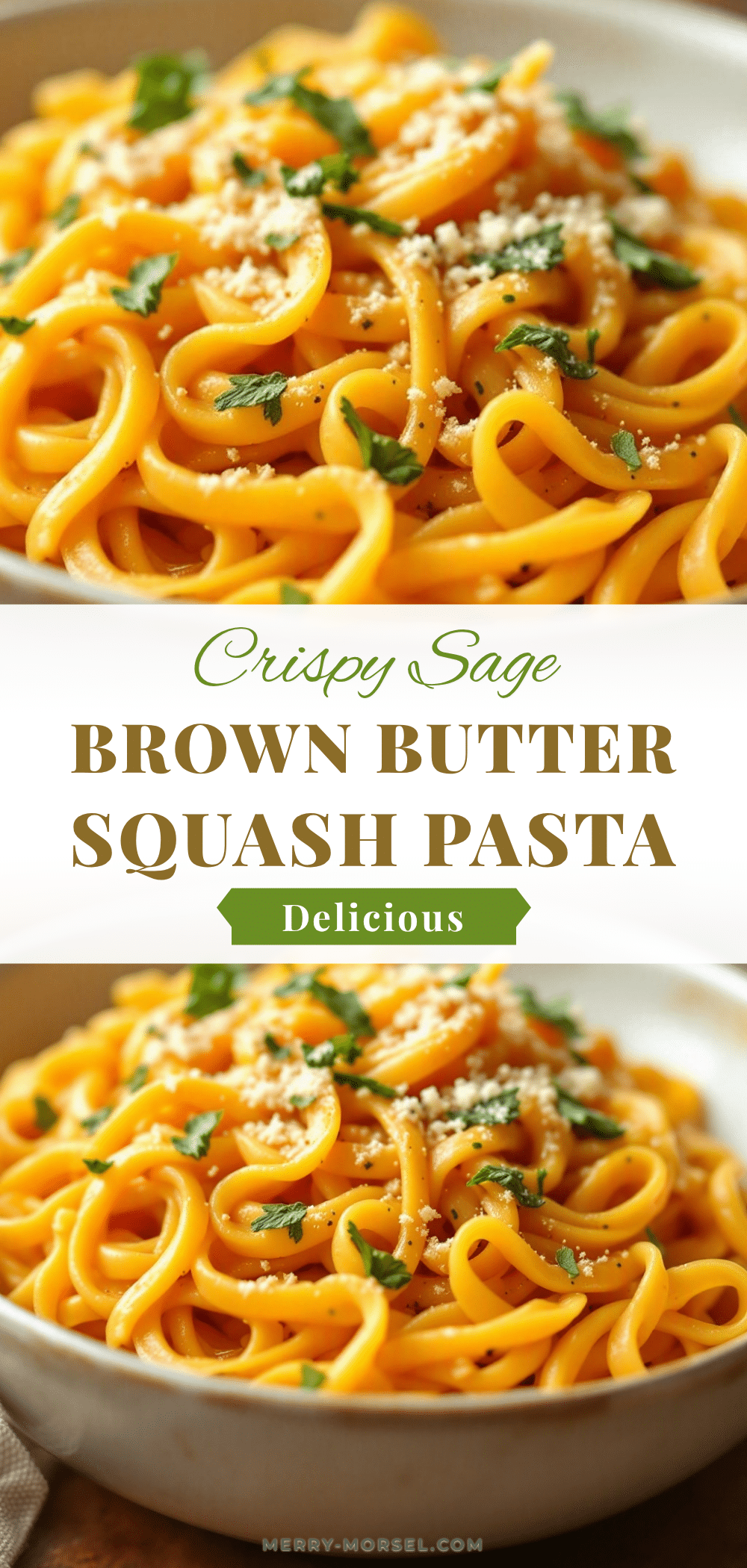
Crispy Sage Brown Butter Butternut Squash Pasta

A velvety, rich pasta dish featuring roasted butternut squash puree emulsified with nutty brown butter and topped with crispy fried sage leaves.
- Prep Time: 15 minutes
- Cook Time: 30 minutes
- Total Time: 45 minutes
- Yield: 4 servings 1x
- Category: Main Course
- Cuisine: Italian
Ingredients
- 1 medium butternut squash, peeled, seeded, and cubed
- 1 cup (2 sticks) unsalted butter
- 1 large bunch fresh sage leaves
- 1 pound long pasta (spaghetti, linguine, or fettuccine)
- 3 cloves garlic, minced
- 1/2 cup freshly grated Parmesan cheese
- 2 tablespoons olive oil
- Salt and black pepper to taste
- Red pepper flakes (optional)
- Pasta water as needed
Instructions
- Preheat oven to 400°F (200°C). Toss squash cubes with olive oil, salt, and pepper, then roast on a baking sheet for 25-30 minutes until tender.
- Puree the roasted squash in a food processor until smooth. Set aside.
- Boil pasta in a large pot of salted water until al dente. Reserve one cup of pasta water before draining.
- Melt butter in a large skillet over medium heat. Cook until milk solids turn golden brown and smell nutty (5-7 minutes). Remove from heat.
- In a separate small pan or the same skillet, fry sage leaves in a little olive oil for 30-60 seconds until crisp. Remove and set on paper towels.
- Return the brown butter skillet to low heat. Add minced garlic and cook for 30 seconds. Pour in squash puree and stir. Thin with pasta water if needed.
- Add drained pasta to the skillet and toss vigorously to coat. Stir in Parmesan cheese. Top with crispy sage and serve immediately.
Notes
Ensure the butter is watched closely to prevent burning. Fry sage in small batches to ensure crispiness. If the sauce separates, reheat gently and whisk in pasta water to emulsify. Leftovers can be stored in the refrigerator for up to three days; reheat gently with a splash of water or milk.
Nutrition
- Serving Size: 1 plate
- Calories: 650
- Sugar: 8
- Sodium: 400
- Fat: 35
- Saturated Fat: 20
- Carbohydrates: 70
- Fiber: 6
- Protein: 18
Keywords: butternut squash pasta, brown butter, crispy sage, fall dinner, vegetarian pasta, easy weeknight dinner, comfort food