Love this? Save it for later!
Share the inspiration with your friends
Third time in a weekend and the edges were still too dark. Honestly, I should have known better. It was 11:45 PM on Saturday, and my kitchen smelled like a orchard had caught fire. I had just pulled the second batch of moist apple cider bundt cake with salted caramel from the oven, and it looked… fine. Not great. Just fine. The center was sinking again. I knew that sinking. It was the look of a cake that had given up halfway through baking because I didn’t trust the oven temperature or maybe because I was distracted by the pot of caramel bubbling on the stove.
Let’s face it, I am not a patient baker. I like things that happen fast, or at least things that happen predictably. But this cake? This cake demanded attention. It demanded I reduce three cups of apple cider down to half a cup of syrupy concentrate. It demanded I whisk eggs until my arm burned. It demanded I not look away from the caramel for a single second because sugar goes from golden to burnt black in the time it takes to blink. And yet, here I was, doing it again on Sunday morning because the first two attempts felt like they were missing something. A soul, maybe. Or maybe just the right balance of tart apple and sweet spice.
The obsession wasn’t about the recipe itself at first. It was about the failure. I kept thinking, “If I just get the cider reduction right, if I just keep the cake moist without adding extra oil, it will work.” I started measuring the reduced cider with a tiny glass measuring cup, staring at the amber liquid like it held the secrets of the universe. I added extra cinnamon. I swapped the milk for buttermilk. I even tried adding a cup of applesauce, which felt like cheating, but hey, desperate times.
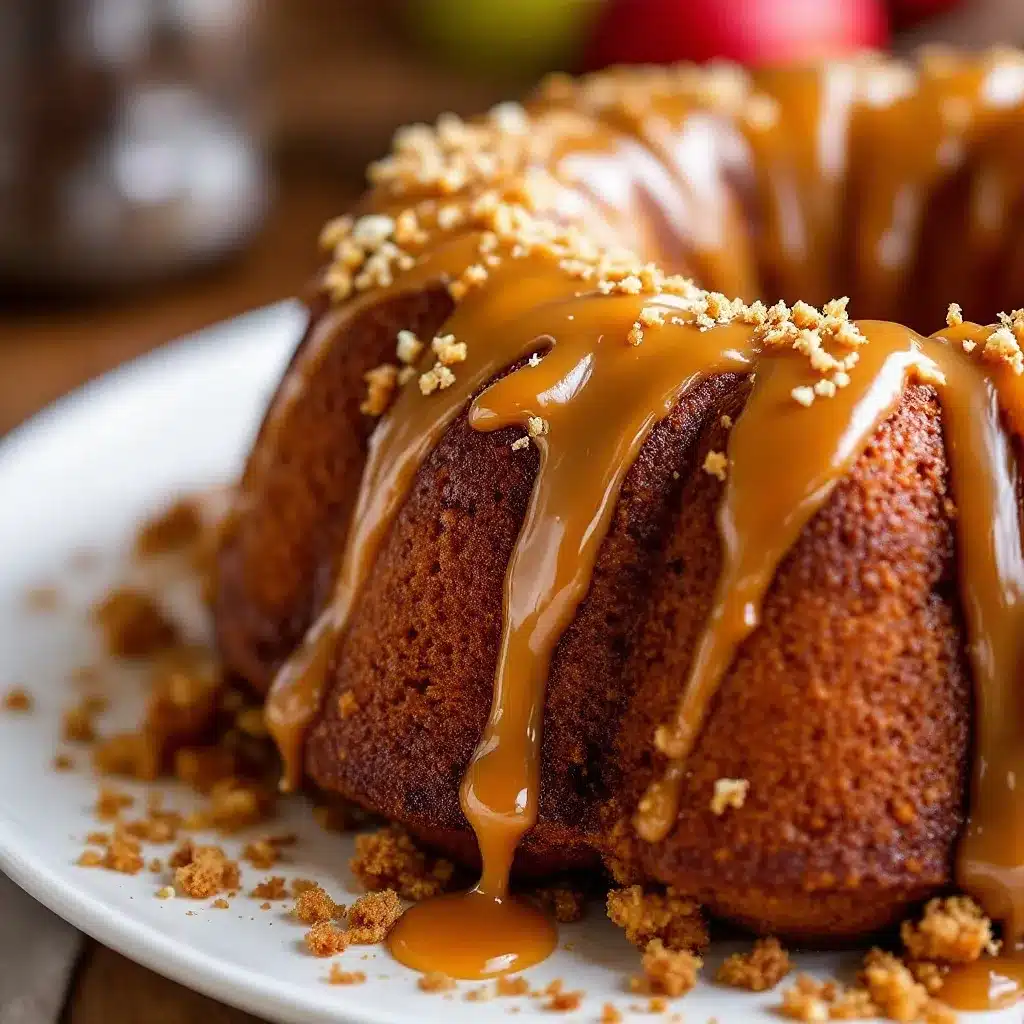
By the time I started the third batch on Sunday afternoon, I was tired. My apron was stained with caramel drips that I couldn’t scrub out. But when I cut into that third cake, the crust cracked just right, and the inside was so tender it practically melted on my tongue. The apple flavor wasn’t just present; it was deep and complex, like you had simmered the whole orchard into the batter. And that salted caramel glaze? It pooled in the nooks and crannies of the bundt shape, salty and sweet and absolutely necessary. I sat at the counter and ate a slice while it was still warm, and I finally understood why people obsess over baking. It’s not just about food. It’s about the stubborn refusal to accept that something can’t be perfect.
Why You’ll Love This Recipe
This isn’t just another fall cake recipe you’ll find buried on page five of a search result. This is the one that makes your house smell like a cozy cabin in Vermont. After testing this moist apple cider bundt cake with salted caramel through three failed attempts and one glorious success, I’ve cracked the code on what makes it special. It’s not magic; it’s technique.
- Quick & Easy Prep: While the cider reduction takes time, the actual mixing is straightforward. It comes together in under 45 minutes of active work, which is perfect for those busy weekend mornings when you want to feel fancy but don’t have hours to spare.
- Simple Ingredients: You likely already have most of this in your pantry. Flour, sugar, butter, apples, and cider. No obscure flours or weird spices you’ve never heard of. It’s wholesome, simple cooking.
- Perfect for Fall Gatherings: Whether it’s a harvest party, a Thanksgiving side dessert, or just a Tuesday night treat, this cake fits every occasion. It looks impressive on the table but is humble enough for a casual slice with coffee.
- Crowd-Pleaser: I’ve served this to picky eaters and food critics alike. The combination of tender crumb and rich caramel is universally loved. Even the kids who usually say “no” to cake will ask for seconds.
- Unbelievably Delicious: The texture is next-level. Thanks to the buttermilk and the reduced cider, the cake stays moist for days. The flavor profile is balanced—tart apples cut by sweet caramel and warm spices.
What makes this different from other bundt cakes? Most recipes use applesauce or dried apples. This one uses actual reduced apple cider, which concentrates the flavor into a syrup that infuses every bite. It’s not just apple flavor; it’s autumn in a slice. It’s the kind of cake that makes you close your eyes and sigh. It’s comfort food reimagined—richer, deeper, but still easy enough for a weeknight.
What Ingredients You Will Need
This recipe relies on high-quality, simple ingredients to deliver bold flavor without complexity. The star is obviously the apple cider, but the supporting cast is just as important. I recommend using unsalted butter so you can control the saltiness, especially since we’re adding salted caramel later. For the flour, all-purpose is standard, but if you want a slightly more tender crumb, you can swap in cake flour. I’ve tested both, and all-purpose works perfectly if you don’t overmix.
- Apple Cider: You’ll need about 3 cups of fresh-pressed apple cider. Look for clear, unfiltered cider if you can find it. It has a more robust flavor than the cloudy kind. (If you can’t find fresh cider, good quality bottled cider works too, but avoid the stuff with added sugar.)
- Unsalted Butter: Softened to room temperature. I prefer Kerrygold or Plugra for their rich flavor. (Adds richness and helps create a tender crumb.)
- Granulated Sugar: White sugar provides structure and helps caramelize. Don’t reduce the amount, or the cake will be dense.
- Eggs: Large eggs, room temperature. This helps them emulsify better with the butter and sugar.
- Buttermilk: Full-fat buttermilk is key for moisture and tang. If you’re out, make a quick substitute with milk and lemon juice. (Use dairy-free coconut yogurt if needed for a vegan option, though the texture will be slightly different.)
- All-Purpose Flour: Spooned and leveled, not scooped. Scooping packs the flour and leads to a dry cake.
- Baking Powder & Baking Soda: Fresh leavening agents are crucial. If your baking powder is older than six months, toss it. (Ensures the cake rises properly.)
- Spices: Cinnamon, nutmeg, and a pinch of allspice. I use McCormick for consistency. (Provides that classic fall warmth.)
- Salt: Kosher salt for the batter, and flaky sea salt for the caramel topping. (Balances the sweetness.)
- Heavy Cream: For the caramel sauce. (Adds smoothness and body to the glaze.)
- Vanilla Extract: Pure vanilla, not imitation. (Enhances the overall flavor profile.)
For the caramel, you’ll need brown sugar for that molasses depth, plus a little corn syrup to prevent crystallization. I’ve tried making caramel without corn syrup, and it’s risky. The corn syrup keeps it smooth. If you’re avoiding corn syrup, you can use honey, but the flavor will shift slightly.
Equipment Needed
You don’t need much, but you do need the right tools. A 12-cup Bundt pan is essential. I recommend a Nordic Ware pan because they distribute heat evenly and release cakes better than cheaper, shiny metal pans. If your pan is older, you might need to grease it thoroughly with baking spray that contains flour.
- Bundt Pan (12-cup): Non-stick or well-seasoned. Avoid fluted pans with intricate details if you’re a beginner, as batter can get stuck. A simpler design is easier to unmold.
- Saucepan: Medium-sized, heavy-bottomed, for reducing the cider and making the caramel. A thick bottom prevents burning.
- Mixing Bowls: One large for dry ingredients, one medium for wet.
- Hand Mixer or Stand Mixer: For creaming the butter and sugar. A stand mixer is easier, but a hand mixer works fine.
- Whisk: For combining dry ingredients and emulsifying the caramel.
- Pastry Brush: Optional, for brushing the pan with butter if needed.
- Cooling Rack: Essential for letting the cake cool properly so it doesn’t steam and get soggy.
If you don’t have a Bundt pan, you can bake this in two 9-inch round pans, but the baking time will be shorter. Check them at 30 minutes. For budget-friendly options, a basic aluminum Bundt pan from a discount store works, but just be extra diligent with greasing.
Preparation Method
Let’s get into the nitty-gritty. This process has three distinct phases: reducing the cider, baking the cake, and making the caramel. Don’t try to rush the cider reduction; it’s the foundation of the flavor.
- Reduce the Apple Cider: Pour 3 cups of apple cider into a medium saucepan. Bring it to a boil over medium-high heat, then reduce to a simmer. Let it bubble away for about 20-25 minutes until you have roughly 1 cup of syrupy liquid. It should coat the back of a spoon. Remove from heat and let it cool completely. (This concentrates the apple flavor and removes excess water, which is key for moisture.)
- Prep the Pan and Oven: Preheat your oven to 350°F (175°C). Grease your Bundt pan generously with butter or baking spray. Make sure you get into every nook and cranny. Dust with flour, tapping out the excess. (A well-prepped pan is the difference between a stuck cake and a beautiful release.)
- Mix Dry Ingredients: In a medium bowl, whisk together 2 ½ cups all-purpose flour, 1 teaspoon baking powder, 1 teaspoon baking soda, 1 teaspoon cinnamon, ½ teaspoon nutmeg, ¼ teaspoon allspice, and ½ teaspoon salt. Set aside. (Sifting isn’t necessary, but whisking ensures even distribution of spices.)
- Cream Butter and Sugar: In a large bowl, beat 1 cup softened unsalted butter and 1 ½ cups granulated sugar on medium-high speed for about 4-5 minutes until light and fluffy. This step adds air, which helps the cake rise. (Don’t skip this! It takes time, but it’s worth it.)
- Add Eggs: Add eggs one at a time, beating well after each addition. Scrape down the sides of the bowl. Mix in 1 teaspoon vanilla extract. (Ensure eggs are fully incorporated before adding the next one to prevent curdling.)
- Combine Wet and Dry: Add the dry ingredients to the butter mixture in three additions, alternating with the cooled reduced cider and ½ cup buttermilk. Start and end with the dry ingredients. Mix on low speed just until combined. (Overmixing develops gluten, which makes the cake tough. Stop as soon as you see no more streaks of flour.)
- Bake: Pour the batter into the prepared Bundt pan. Smooth the top. Bake for 50-60 minutes. Check at 50 minutes by inserting a toothpick into the center. If it comes out clean or with a few moist crumbs, it’s done. (Oven temperatures vary, so keep an eye on it. If the top is browning too fast, tent it with foil.)
- Cool: Let the cake cool in the pan for 15 minutes. Then, invert it onto a cooling rack. Let it cool completely before glazing. (If you glaze a warm cake, the caramel will melt and run off. Patience is key.)
- Make Salted Caramel: While the cake cools, make the caramel. In a saucepan, combine 1 cup brown sugar, ½ cup heavy cream, 4 tablespoons butter, and ¼ teaspoon salt. Heat over medium, stirring constantly, until it bubbles and thickens, about 5-7 minutes. Remove from heat. (Watch closely! Sugar burns fast.)
- Glaze: Drizzle the warm caramel over the completely cooled cake. Let it drip into the grooves. Sprinkle with flaky sea salt. (The contrast of sweet caramel and salty flakes is addictive.)
Cooking Tips & Techniques
I’ve made this cake enough times to know where people go wrong. The biggest mistake is overmixing the batter. Once you add the flour, mix gently. You want a smooth batter, but not a dense brick. Also, don’t skip the cider reduction. Using undiluted cider will make the cake too wet and dense. You need that syrupy concentrate.
Another tip: room temperature ingredients. Your butter, eggs, and buttermilk should all be at room temperature. This helps them emulsify properly, creating a smooth, uniform batter. If your butter is too cold, it won’t cream with the sugar. If your eggs are cold, they might curdle the mixture.
When making the caramel, use a heavy-bottomed pan. Thin pans heat unevenly and can cause the sugar to burn in spots. Stir constantly, especially as it thickens. If you see dark spots forming, take it off the heat immediately. The residual heat will continue to cook it.
For the cake, don’t open the oven door too early. I know, it’s tempting. But the temperature drop can cause the cake to collapse. Wait until at least 45 minutes have passed. And always let the cake cool in the pan for 15 minutes before inverting. This allows the structure to set so it doesn’t break apart.
If you’re worried about the cake sticking, use a quality baking spray with flour. Or, brush the pan with melted butter and dust with flour, tapping out the excess. A clean, well-prepped pan is half the battle.
Variations & Adaptations
This recipe is flexible. Here are a few ways to tweak it:
- Gluten-Free: Swap the all-purpose flour for a 1:1 gluten-free flour blend. Add ½ teaspoon xanthan gum if your blend doesn’t include it. The texture will be slightly more crumbly but still delicious.
- Dairy-Free: Use dairy-free butter and coconut milk yogurt instead of buttermilk. For the caramel, use coconut cream and dairy-free butter. It won’t be exactly the same, but it’s still rich and flavorful.
- Spice Variation: Add a pinch of cardamom or ginger for a different twist. Cardamom pairs beautifully with apple.
- Add-Ins: Fold in ½ cup of chopped walnuts or pecans for crunch. Or, add ½ cup of dried cranberries for extra tartness.
- Mini Cakes: Divide the batter among 12 mini Bundt pans. Bake for 20-25 minutes. These are perfect for gifts or individual portions.
I once tried adding a layer of apple butter in the center before baking. It was amazing, but it made the center soggy. If you want a filling, stick to the caramel glaze. It’s simpler and more reliable.
Serving & Storage Suggestions
This cake is best served at room temperature. It’s too cold from the fridge to appreciate the full flavor of the caramel. Serve it with a cup of coffee or tea. It pairs well with a slice of sharp cheddar cheese if you’re serving it for breakfast or brunch.
Store leftovers in an airtight container at room temperature for up to 3 days. The caramel will keep the cake moist. If you need to store it longer, wrap it tightly in plastic wrap and refrigerate for up to 5 days. Bring it to room temperature before serving.
You can also freeze the cake (without the glaze) for up to 3 months. Thaw it overnight in the fridge, then add the caramel glaze when ready to serve. The flavors develop over time, so this cake actually tastes better on day two.
For presentation, dust the top with powdered sugar before adding the caramel for a rustic look. Or, serve slices with a dollop of whipped cream for extra indulgence.
Nutritional Information & Benefits
Each slice (1/12th of the cake) contains approximately 350 calories, 15g fat, 50g carbs, and 4g protein. The apple cider adds a hint of vitamin C and antioxidants, though most of the sugar is concentrated. The spices like cinnamon and nutmeg have anti-inflammatory properties. While this is a indulgent treat, the use of real fruit juice adds a layer of nutrition compared to artificial flavors.
For a lighter option, reduce the sugar in the batter by ¼ cup, though the cake may be slightly less moist. The caramel adds significant sugar, so use it sparingly if you’re watching your intake. This cake is not gluten-free or dairy-free by default, but adaptations are possible.
I enjoy this cake as a special weekend treat. It’s not something I make every day, but when I do, it’s worth every calorie. Balance is key.
Conclusion
This moist apple cider bundt cake with salted caramel is worth the effort. It’s a labor of love, but the result is a cake that tastes like autumn itself. I hope you try it and find your own version of perfection. Customize it with your favorite spices or nuts. Make it your own.
If you make this recipe, I’d love to hear how it turned out. Leave a comment below with your thoughts. Did you add nuts? Did you use fresh cider? Share your tips with the community. And if you loved this, check out my perfect chocolate chip pumpkin bread for another fall favorite. Or try these easy apple nachos for a quick snack. Happy baking!
FAQs
Can I use store-bought apple juice instead of cider?
It’s not recommended. Apple juice is sweeter and less flavorful. Cider has a tartness and depth that juice lacks. If you must, use 100% apple juice, but reduce the sugar in the recipe slightly.
Why did my cake sink in the middle?
This usually happens if the oven temperature is too high or if the cake is removed too early. Ensure your oven is calibrated correctly and test for doneness with a toothpick. Also, avoid opening the oven door too often.
Can I make the caramel ahead of time?
Yes, you can make the caramel up to 3 days in advance. Store it in an airtight container in the fridge. Reheat it gently in the microwave or on the stove before drizzling.
How do I prevent the cake from sticking to the pan?
Grease the pan thoroughly with butter or baking spray. Make sure you get into all the crevices. Let the cake cool for 15 minutes before inverting. If it still sticks, run a knife around the edges gently.
Can I freeze this cake?
Yes, freeze the cake (without glaze) for up to 3 months. Wrap tightly in plastic wrap and foil. Thaw overnight in the fridge before adding the caramel.
Pin This Recipe!
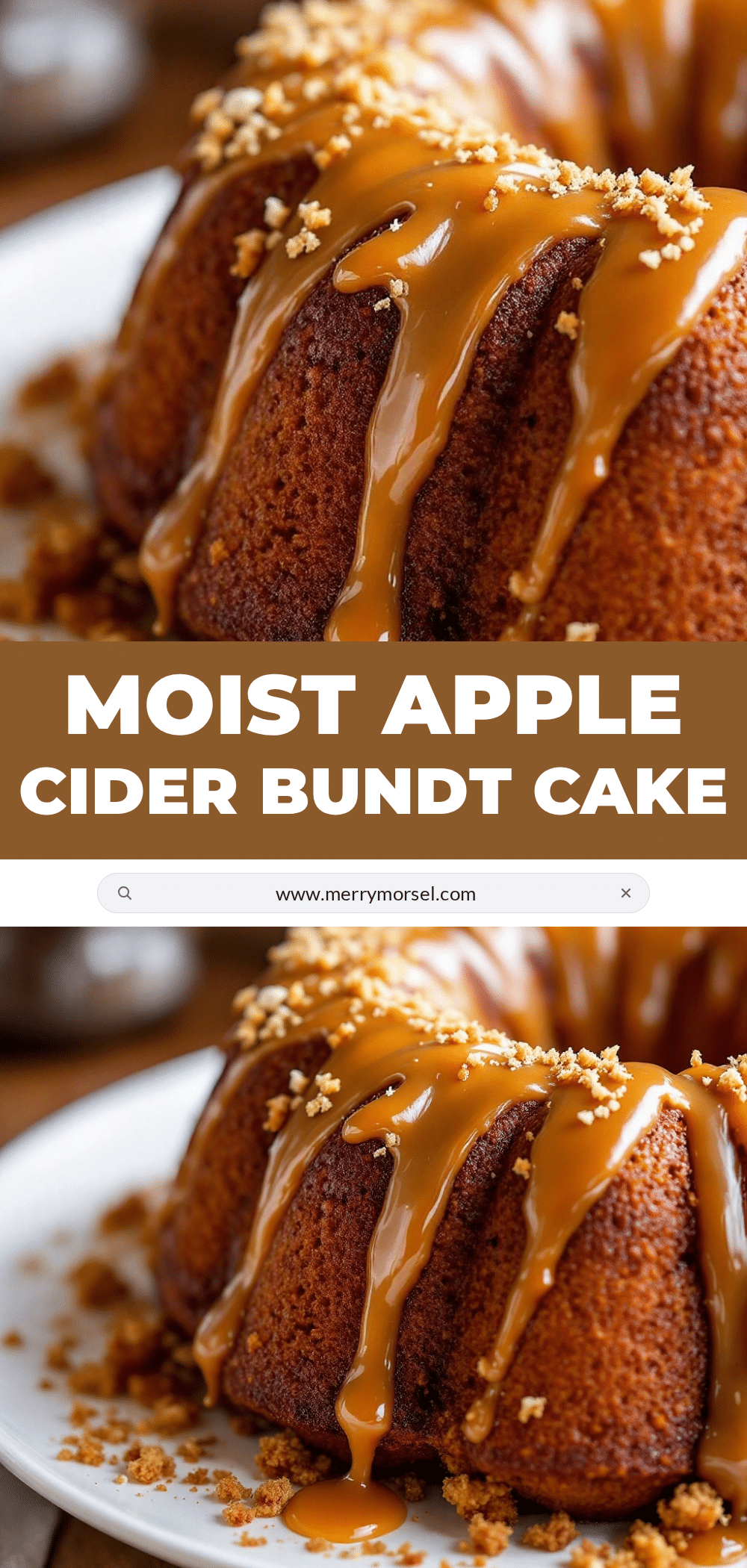
Moist Apple Cider Bundt Cake with Salted Caramel
A tender, moist fall bundt cake infused with reduced apple cider and topped with a rich, salty-sweet caramel glaze. This recipe balances tart apple flavors with warm spices for a cozy, autumn-inspired dessert.
- Prep Time: 20 minutes
- Cook Time: 60 minutes
- Total Time: 80 minutes
- Yield: 12 servings 1x
- Category: Dessert
- Cuisine: American
Ingredients
- 3 cups fresh-pressed apple cider
- 2 ½ cups all-purpose flour
- 1 teaspoon baking powder
- 1 teaspoon baking soda
- 1 teaspoon cinnamon
- ½ teaspoon nutmeg
- ¼ teaspoon allspice
- ½ teaspoon kosher salt
- 1 cup unsalted butter, softened to room temperature
- 1 ½ cups granulated sugar
- 4 large eggs, room temperature
- 1 teaspoon pure vanilla extract
- ½ cup full-fat buttermilk, room temperature
- 1 cup brown sugar (for caramel)
- ½ cup heavy cream (for caramel)
- 4 tablespoons butter (for caramel)
- ¼ teaspoon salt (for caramel)
- Flaky sea salt (for garnish)
Instructions
- Pour 3 cups of apple cider into a medium saucepan. Bring to a boil over medium-high heat, then reduce to a simmer. Simmer for 20-25 minutes until reduced to approximately 1 cup of syrupy liquid. Let cool completely.
- Preheat oven to 350°F (175°C). Generously grease a 12-cup Bundt pan with butter or baking spray, ensuring all nooks are covered. Dust with flour, tapping out excess.
- In a medium bowl, whisk together 2 ½ cups flour, baking powder, baking soda, cinnamon, nutmeg, allspice, and ½ teaspoon kosher salt. Set aside.
- In a large bowl, beat 1 cup softened butter and 1 ½ cups granulated sugar on medium-high speed for 4-5 minutes until light and fluffy.
- Add eggs one at a time, beating well after each addition. Scrape down the sides of the bowl. Mix in 1 teaspoon vanilla extract.
- Add the dry ingredients to the butter mixture in three additions, alternating with the cooled reduced cider and ½ cup buttermilk. Start and end with dry ingredients. Mix on low speed just until combined.
- Pour batter into the prepared Bundt pan and smooth the top. Bake for 50-60 minutes, or until a toothpick inserted into the center comes out clean or with moist crumbs. Tent with foil if browning too quickly.
- Let the cake cool in the pan for 15 minutes, then invert onto a cooling rack. Let cool completely before glazing.
- While the cake cools, make the caramel: In a saucepan, combine 1 cup brown sugar, ½ cup heavy cream, 4 tablespoons butter, and ¼ teaspoon salt. Heat over medium, stirring constantly, until it bubbles and thickens (5-7 minutes). Remove from heat.
- Drizzle the warm caramel over the completely cooled cake. Sprinkle with flaky sea salt.
Notes
Ensure ingredients are at room temperature for best emulsification. Do not overmix the batter once flour is added to avoid a tough cake. The apple cider must be reduced to a syrup to concentrate flavor and remove excess water. If the cake top browns too fast, tent with foil. Let the cake cool completely before adding caramel to prevent it from melting off.
Nutrition
- Serving Size: 1 slice (1/12th of c
- Calories: 350
- Sugar: 38
- Sodium: 280
- Fat: 15
- Saturated Fat: 9
- Carbohydrates: 50
- Fiber: 1
- Protein: 4
Keywords: apple cider bundt cake, fall dessert, salted caramel cake, moist bundt cake, autumn baking, easy fall recipe, apple cider syrup