Love this? Save it for later!
Share the inspiration with your friends
The quiet *thwack* of a wooden skewer piercing a perfect strawberry — that sound, sharp and clean in the afternoon stillness, is the one that finally pulls my youngest away from the television. It’s 3:30 PM on a Tuesday, and the post-school slump has officially set in. You know the one — backpacks abandoned in the hallway, the heavy sigh that comes with remembering there’s homework, and the inevitable chorus of “I’m hungry.”
I had about ten minutes before the grumbling turned into full-blown hangry meltdowns. I grabbed a cutting board, started raiding the fridge, and tried to remember what I even had on hand. That’s when I spotted the pineapple I meant to cut up for breakfast, a handful of blueberries, and the last two kiwis. I wasn’t trying to be a Pinterest mom. Honestly, I was just trying to get something colorful and fast onto the table before my energy gave out.
But then, my oldest wandered in, saw the fruit lined up, and said, “Can we make a rainbow with it?” And just like that, the easy rainbow fruit kabobs were born. Not from a fancy cookbook or a viral video, but from a tired mom and a kid who just needed a little fun in her day. It’s funny how the simplest ideas end up being the ones that stick. These kabobs have become our go-to after-school snack, not because they’re fancy, but because they work. They turn a boring snack into something they actually look forward to.
Why You’ll Love This Recipe
Let’s be real — after a long day of school, activities, and everything in between, the last thing you want is a complicated recipe. These easy rainbow fruit kabobs are the opposite of complicated. They are the snack you make when you are tired, running late, and need something that feels special without the stress.
- Ready in Under 10 Minutes: Seriously. From fridge to table in the time it takes your kids to wash their hands. No cooking, no baking, no waiting for anything to cool down.
- No Fancy Ingredients Needed: You don’t need a trip to a specialty store. Whatever fruit is in your crisper drawer will work. Strawberries, grapes, pineapple, melon — it’s all fair game.
- Perfect for Picky Eaters: There’s something about food on a stick that makes it infinitely more appealing to kids. Suddenly, that piece of cantaloupe they would usually push aside becomes a treasure.
- A Crowd-Pleaser: I’ve brought these to playdates, birthday parties, and even a few school events. They disappear faster than cookies sometimes. Kids love the colors, and parents love that they are actually eating fruit.
- Unbelievably Customizable: This isn’t a strict recipe — it’s a formula. You can swap fruits based on the season, what’s on sale, or what your kids are currently obsessed with.
What makes these different from just a bowl of cut fruit? It’s the presentation, honestly. The act of threading fruit onto a skewer turns snacking into an activity. It slows them down just enough to actually taste what they’re eating. And for me, it’s the kind of win that makes me feel like I’ve got this parenting thing figured out, at least for the afternoon.
What Ingredients You Will Need
This recipe is built on flexibility. The base idea is simple: use colorful, fresh fruit that holds up well on a skewer. I’ve listed my go-to rainbow lineup below, but feel free to mix and match based on what looks good at the store or what you already have at home.
- Red Fruit (Strawberries): Look for ripe, fragrant strawberries. I wash and hull them, then slice larger ones in half so they thread easily. If strawberries aren’t in season, try watermelon cubes or red grapes.
- Orange Fruit (Cantaloupe or Mango): Firm, ripe cantaloupe is my usual pick because it’s sweet and holds its shape. You can also use fresh mango or even orange segments (peeled and pith removed).
- Yellow Fruit (Pineapple): Fresh pineapple is a game-changer here. Its tanginess balances the sweeter fruits. Canned pineapple chunks work in a pinch, just make sure to drain them well and pat them dry so the kabobs aren’t soggy.
- Green Fruit (Kiwi or Green Grapes): Kiwis add that beautiful pop of bright green. Peel them and slice them into rounds or chunks. Green grapes are a fantastic no-cut option if you are short on time.
- Blue Fruit (Blueberries): These little guys are perfect for the blue section. They don’t need any prep — just rinse and thread. If you can find them, blackberries also work well here.
- Purple Fruit (Purple Grapes): For the final color, I use large purple grapes. They are sweet, juicy, and add a nice contrast to the blueberries.
- Skewers: I prefer 8-inch wooden skewers for a snack-sized kabob. You can also use shorter cocktail picks for little hands. If you are making these for a party, reusable metal skewers are a fun option.
One quick tip from my kitchen to yours: try to keep the fruit pieces roughly the same size. It makes the kabobs look more uniform and ensures that every bite has a good mix of flavors. Also, if you are using bananas or apples, give them a quick toss in a little lemon juice to prevent browning.
Equipment Needed
You don’t need any fancy gadgets for this one. Here is the simple equipment that makes the job easy:
- Cutting Board and Sharp Knife: A good chef’s knife makes quick work of hulling strawberries and slicing pineapple. A paring knife is helpful for peeling kiwis.
- Wooden Skewers: Standard 8-inch skewers are perfect for snack-sized kabobs. For toddlers, I sometimes use shorter, blunt-ended skewers or even clean, sturdy drinking straws.
- Melon Baller (Optional): If you want perfectly round pieces of melon, a melon baller is your best friend. It also makes the kabobs look extra polished for parties.
- Large Platter or Sheet Pan: Once the kabobs are assembled, you need a flat surface to lay them out. A sheet pan lined with parchment paper works great for transporting them to the fridge.
- Small Bowl of Water: Soak your wooden skewers in water for 10-15 minutes before threading the fruit. This prevents them from splintering and makes the process much smoother.
Preparation Method
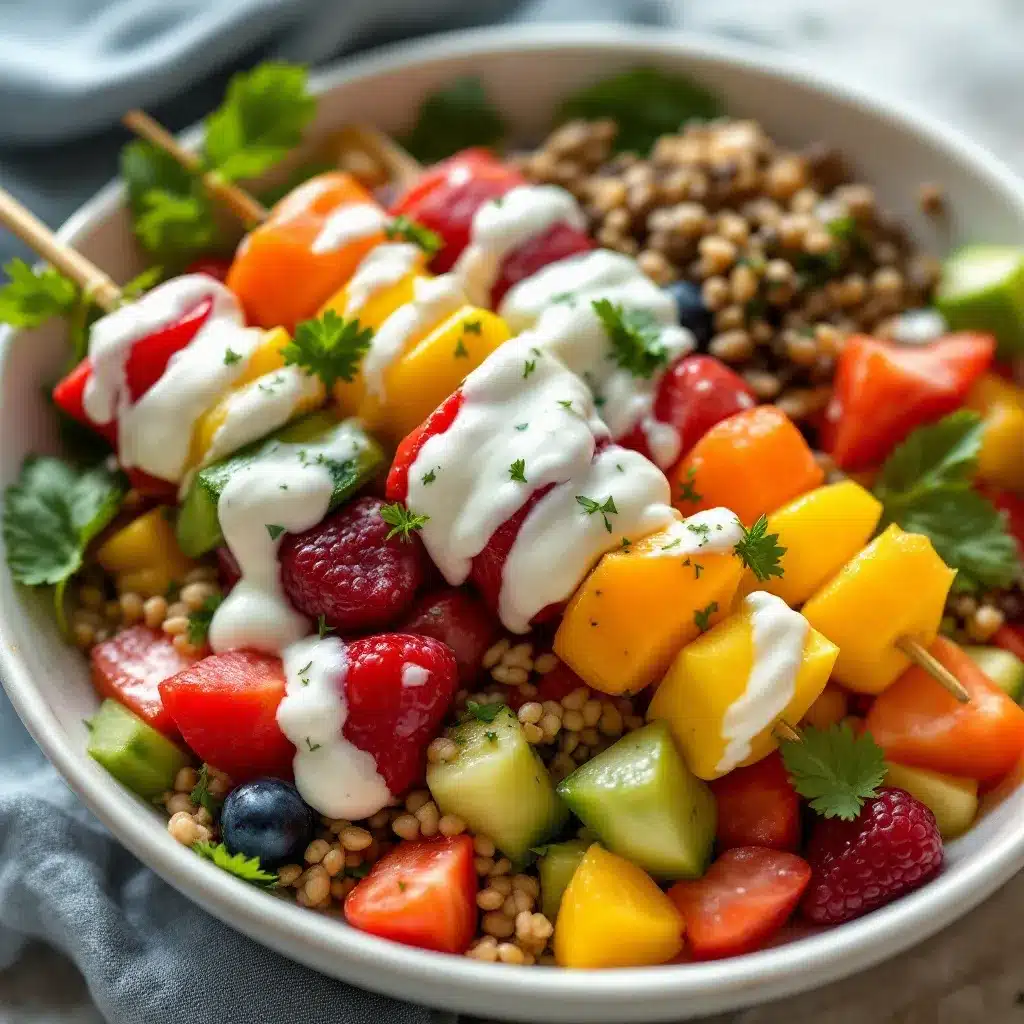
This is the fun part. Get the kids involved if you can — it makes the snack taste even better. Here is how I put these together in about 10 minutes flat.
- Prep the Skewers (5 minutes before you start): Place your wooden skewers in a shallow dish or a tall glass filled with water. Let them soak while you prepare the fruit. This step is small but important — it stops the wood from splintering and makes threading a breeze.
- Wash and Prep All Fruit: Give everything a good rinse under cold water. For strawberries, remove the green tops and slice any large berries in half. Peel the kiwis and slice them into 1/2-inch thick rounds, then cut each round into quarters. Cut the cantaloupe and pineapple into 1-inch cubes. Keep the blueberries and grapes whole.
- Arrange Your Fruit in Rainbow Order: This is the secret to making the process fast. Line up your prepped fruit on a cutting board in the order of the rainbow: red (strawberries), orange (cantaloupe), yellow (pineapple), green (kiwi), blue (blueberries), purple (grapes). Having everything in a line makes assembly feel like an assembly line.
- Thread the Fruit onto Skewers: Start with a strawberry (red). Push the skewer through the center, about halfway down the berry. Next, add a cube of cantaloupe (orange), followed by a piece of pineapple (yellow). Then add a kiwi piece (green), a few blueberries (blue), and finish with a purple grape (purple). Repeat this pattern until the skewer is full, leaving about an inch of space at the bottom for a handle.
- Repeat for Remaining Skewers: Continue the pattern until all your fruit is used up. I usually get about 10-12 skewers from one batch, depending on the size of the fruit pieces.
- Chill Before Serving (Optional but Recommended): Place the finished kabobs on a platter or sheet pan and pop them in the fridge for 15-20 minutes. This makes the fruit extra cold and crisp — perfect for a refreshing after-school snack.
A quick note: if you are making these ahead of time, cover the platter with plastic wrap. The fruit will stay fresh for a few hours, but I wouldn’t recommend making them more than 4-6 hours in advance, as the fruit can start to dry out or get weepy.
Cooking Tips & Techniques
I’ve made these easy rainbow fruit kabobs more times than I can count, and I’ve learned a few things the hard way. Here are my best tips to make sure yours turn out perfect every time.
- Don’t Skip the Soak: I know it seems like an extra step, but soaking the skewers really does prevent splinters. I once skipped it because I was in a hurry, and my oldest got a tiny splinter from a dry skewer. Lesson learned.
- Keep Fruit Pieces Uniform: This is the number one tip for making your kabobs look professional. If your pineapple cubes are twice the size of your kiwi pieces, the kabob looks uneven and is harder to eat. Aim for 1-inch chunks for most fruits.
- Leave a Handle: Always leave about an inch of bare skewer at the bottom. It gives little hands something to hold onto and prevents sticky fingers from sliding onto the fruit. Trust me on this one.
- Pat Fruit Dry: After washing the fruit, lay it out on a clean kitchen towel or paper towels and pat it dry. Excess moisture makes the fruit slide around on the skewer and can make the kabobs soggy over time.
- Use a Melon Baller for Melons: If you have one, a melon baller creates perfectly round, uniform pieces that look beautiful and thread easily. It’s a small tool that makes a big difference in presentation.
Variations & Adaptations
The beauty of this snack is how easily it adapts. Here are a few of my favorite twists on the classic rainbow fruit kabob.
- Seasonal Swap: In the summer, I use fresh peaches (orange), watermelon (red), and blackberries (purple). In the fall, try apple chunks (tossed in lemon juice) and pear slices. Winter calls for clementine segments and pomegranate arils.
- Dairy-Free “Dip” Kabobs: Instead of just fruit, I sometimes add a small cube of dairy-free cheese or a piece of coconut yogurt-covered fruit for a creamy contrast. It adds a fun surprise in the middle of the rainbow.
- Breakfast Kabobs: These are a huge hit for weekend brunch. I thread the fruit onto skewers and serve them alongside a bowl of vanilla yogurt or a stack of creamy overnight peanut butter banana oats for a complete, no-cook breakfast.
- Mini Kabobs for Toddlers: For little hands, I use short cocktail picks or even clean lollipop sticks. I cut the fruit into very small, bite-sized pieces and only use soft fruits like berries and melon.
- Chocolate Drizzle: For a special treat, I melt a little dark chocolate and drizzle it over the finished kabobs. It’s a fantastic option for a healthy-ish dessert that still feels indulgent.
Serving & Storage Suggestions
These kabobs are best enjoyed fresh, but they can be prepped ahead with a few simple tricks.
- Serving Temperature: Serve these kabobs cold, straight from the fridge. The crisp, chilled fruit is the most refreshing way to enjoy them, especially after a long school day.
- Presentation: I like to arrange the kabobs on a large white platter in a rainbow arc. It looks stunning on the counter and makes the snack feel like a special event. For parties, stand them upright in a tall glass or a hollowed-out pineapple half.
- Storage: Place leftover kabobs in a single layer in an airtight container. Lay a piece of paper towel at the bottom of the container to absorb any excess moisture. They will keep in the fridge for up to 24 hours, but the fruit will start to soften after that.
- Reheating: Do not reheat these. They are meant to be enjoyed cold. If you are making them for a picnic or lunchbox, pack them in a small cooler with an ice pack to keep them fresh.
- Flavor Development: The fruit will release some juice as it sits, which can make the kabobs a little sticky. If you are making them more than an hour ahead, I recommend storing the fruit pieces separately and assembling the kabobs just before serving.
Nutritional Information & Benefits
One of the best things about these kabobs is how naturally good they are for you. Each skewer is packed with vitamins, fiber, and antioxidants, all without any added sugar or processed ingredients.
- Estimated Nutrition (per skewer, using the fruit listed above): Approximately 60-80 calories, 15-20g carbohydrates, 2-3g fiber, and 0g fat. It’s a light, energizing snack that won’t weigh kids down before dinner.
- Vitamin C Boost: Strawberries and kiwis are loaded with vitamin C, which supports a healthy immune system. Perfect for keeping those back-to-school germs at bay.
- Hydration: Fruits like watermelon, cantaloupe, and pineapple have high water content, which helps keep kids hydrated, especially after a day of running around.
- Dietary Considerations: This recipe is naturally gluten-free, dairy-free, vegan, and nut-free. It’s a safe and inclusive snack for most dietary needs and school allergy policies.
- Antioxidants: Blueberries and purple grapes are rich in antioxidants, which help protect cells from damage. It’s a small but powerful addition to your child’s diet.
Conclusion
These easy rainbow fruit kabobs have become more than just a snack in my house. They are a small moment of calm in the chaotic after-school rush — a way to slow down, get creative, and actually eat something that makes us feel good. I love that they require no special skills, no fancy equipment, and no stress. They are simply a reminder that sometimes the best things in life are the simplest.
I hope you give them a try, and I hope your kids love them as much as mine do. Don’t be afraid to experiment with different fruits, add a dip, or even turn them into a fun breakfast option. The possibilities are endless, and that is what makes this recipe so special. If you make a batch, I would love to hear about it. Drop a comment below and tell me what fruit combinations your family came up with. Happy snacking!
Frequently Asked Questions
Can I use frozen fruit for these kabobs?
I don’t recommend it. Frozen fruit releases a lot of water as it thaws, which makes the kabobs slippery and soggy. Stick with fresh fruit for the best texture and presentation.
How far in advance can I make these?
You can assemble them up to 4-6 hours ahead of time. Store them in a single layer in an airtight container lined with a paper towel. For best results, I prefer to make them no more than 2 hours before serving.
What are the best fruits for holding up on a skewer?
Firm fruits work best. Strawberries, pineapple, melon, mango, and grapes are all excellent choices. Soft fruits like raspberries or very ripe bananas tend to fall apart or slide off the skewer.
Can I use metal skewers instead of wooden ones?
Absolutely. Metal skewers are reusable and sturdy. Just be careful with little hands, as the ends can be sharp. You can also find kid-friendly metal skewers with blunt or decorative ends.
How do I keep the fruit from browning?
If you are using apples, pears, or bananas, toss the cut pieces in a little lemon juice or pineapple juice before threading. The acid slows down the browning process and keeps your kabobs looking bright and fresh.
Pin This Recipe!
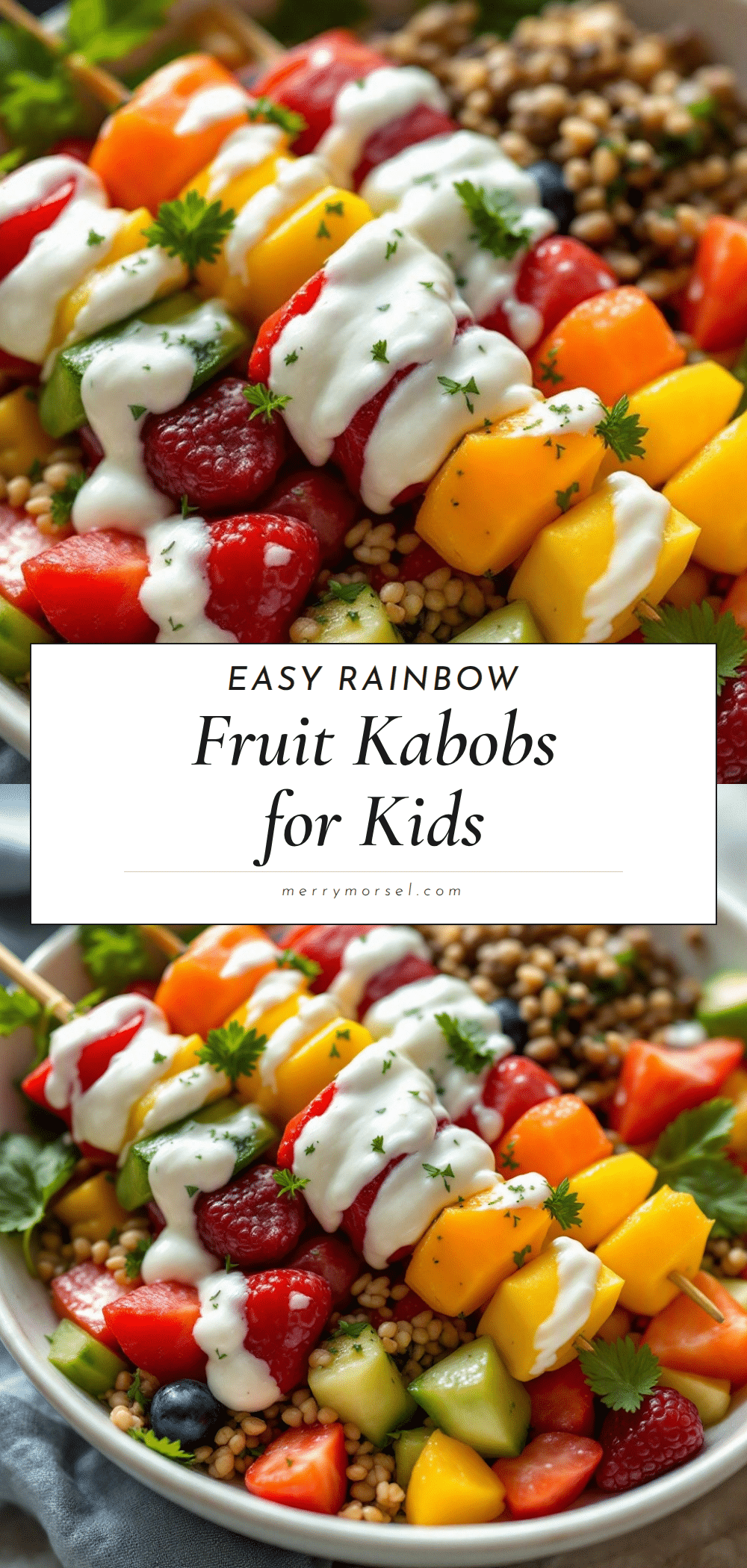
Easy Rainbow Fruit Kabobs: Perfect After-School Snack
These easy rainbow fruit kabobs are a quick, no-cook snack that turns simple fruit into a fun, colorful treat kids love. Ready in under 10 minutes, they’re perfect for after-school, parties, or a healthy dessert.
- Prep Time: 10 minutes
- Cook Time: 0 minutes
- Total Time: 10 minutes
- Yield: 10-12 skewers 1x
- Category: Snack
- Cuisine: American
Ingredients
- 1 cup strawberries, hulled and halved if large
- 1 cup cantaloupe or mango, cut into 1-inch cubes
- 1 cup pineapple, cut into 1-inch cubes
- 2 kiwis, peeled and sliced into 1/2-inch rounds, then quartered
- 1/2 cup blueberries
- 1/2 cup purple grapes
- 8–12 wooden skewers (8-inch)
Instructions
- Soak wooden skewers in water for 10-15 minutes to prevent splintering.
- Wash and prep all fruit: hull strawberries, peel and slice kiwis, cut cantaloupe and pineapple into 1-inch cubes. Keep blueberries and grapes whole.
- Arrange fruit in rainbow order on a cutting board: red (strawberries), orange (cantaloupe), yellow (pineapple), green (kiwi), blue (blueberries), purple (grapes).
- Thread fruit onto skewers in rainbow order, starting with a strawberry, then cantaloupe, pineapple, kiwi, blueberries, and ending with a purple grape. Leave about 1 inch of bare skewer at the bottom for a handle.
- Repeat for remaining skewers until all fruit is used.
- Optional: Chill assembled kabobs in the refrigerator for 15-20 minutes before serving for extra crispness.
Notes
Soak wooden skewers to prevent splintering. Keep fruit pieces uniform in size for even kabobs. Pat fruit dry after washing to prevent sogginess. For best results, assemble no more than 4-6 hours ahead. If using apples or bananas, toss with lemon juice to prevent browning.
Nutrition
- Serving Size: 1 skewer
- Calories: 70
- Sugar: 12
- Sodium: 2
- Carbohydrates: 18
- Fiber: 3
- Protein: 1
Keywords: fruit kabobs, rainbow fruit skewers, easy snack, after-school snack, healthy snack, no-cook, kid-friendly