Love this? Save it for later!
Share the inspiration with your friends
I was standing in my neighbor’s driveway last September, holding a box of cherry tomatoes she’d pressed into my hands with the kind of insistence you just can’t argue with. “I bought too many,” she said, and I looked down at this mountain of little red orbs—some bursting, some starting to wrinkle—and honestly, I felt a little panicked. What was I supposed to do with all of them? Toss them into a salad for the next two weeks? That felt depressing. So I took them home, set them on my counter, and stared at them like they owed me an answer. And then I remembered something: the way the air in my aunt’s kitchen used to change when she put tomatoes in the oven. That sweet, almost jammy smell that made you forget you were hungry until you weren’t.
My aunt lived three states away, and I hadn’t thought about her slow-roasted tomatoes in years. But standing there, with those cherry tomatoes starting to soften on my counter, I could almost feel the warmth from her old gas oven. She never wrote down her recipe—she just did it by feel, by smell, by the way the tomatoes looked when they started to collapse. I tried to recreate that moment that afternoon, and you know what? I got close. Not perfect, but close enough that I called her that night, and she laughed and said, “You finally get it.” This slow-roasted cherry tomato sauce is my version of that memory—a little bit hers, a little bit mine, and entirely worth making on a Sunday afternoon when you have nothing else to do.
Maybe you’ve been there too—standing in your kitchen with a pile of cherry tomatoes that seemed like a good idea at the farmers market but now feel like a challenge. Or maybe you just want a pasta sauce that tastes like summer, even in the middle of January. Either way, this recipe is for you. It’s simple, it’s forgiving, and it turns the most ordinary ingredients into something that feels special. I’ve made it at least a dozen times since that day, and I still get excited when I see cherry tomatoes on sale. That’s the kind of recipe this is—the one you keep coming back to.
Why You’ll Love This Recipe
Let me be honest with you—I’ve made a lot of pasta sauces in my time. Some were good, some were forgettable, and a few were so bad I quietly threw them away before anyone could see. But this slow-roasted cherry tomato sauce? It’s different. It’s the one I keep coming back to, and here’s why I think you’ll love it too.
- Incredibly Simple Ingredients: You don’t need anything fancy here. Cherry tomatoes, garlic, olive oil, salt, and maybe some herbs if you’re feeling fancy. That’s it. No hunting down special items at three different stores—just good, honest ingredients you probably already have.
- Hands-Off Cooking: The oven does most of the work here. You toss everything together, pop it in the oven, and then you can go read a book, fold laundry, or just sit and enjoy the smell filling your kitchen. It’s the kind of cooking that feels like a gift on a busy day.
- Freezer-Friendly Magic: This sauce freezes beautifully. I make a double batch every time, freeze half, and then I have summer tomatoes waiting for me in the dead of winter. It’s like finding a twenty-dollar bill in your coat pocket—unexpected and wonderful.
- Versatile Beyond Pasta: Sure, it’s amazing on spaghetti, but don’t stop there. Spread it on crusty bread, spoon it over grilled chicken, or use it as a base for shakshuka. I once put it on a baked potato and felt like a genius.
- That Deep, Concentrated Flavor: Slow-roasting does something magical to cherry tomatoes. They get sweet, then savory, then almost caramelized. The flavor deepens in a way that quick stovetop sauces just can’t match. It’s the kind of sauce that makes you close your eyes after the first bite.
What makes this recipe different from all the other tomato sauces out there? It’s the patience. Most recipes rush the process, but here we let time do its thing. The low heat coaxes out natural sugars and creates a complexity that feels like you spent hours stirring, even though you barely lifted a finger. It’s comfort food reimagined—simpler, slower, and somehow more satisfying.
What Ingredients You Will Need
This recipe keeps things simple, but each ingredient plays a crucial role in building that deep, slow-roasted flavor. Here’s what you’ll need and why each one matters.
For the Roasted Tomatoes:
- 2 pounds cherry tomatoes (about 900g) – I prefer using a mix of red and yellow cherry tomatoes for color, but any variety works. Look for firm, plump tomatoes without wrinkles. If you have access to farm-fresh tomatoes, even better—they have more natural sweetness.
- 6 cloves garlic, peeled and smashed – Don’t skip this. The garlic roasts alongside the tomatoes and becomes sweet and buttery. Smashing them slightly helps release their flavor without them burning.
- 1/4 cup extra-virgin olive oil (60ml) – Use a good quality olive oil here since it’s a major flavor component. I like California Olive Ranch for everyday cooking, but anything you enjoy the taste of will work.
- 1 teaspoon kosher salt (plus more to taste) – Salt is essential for drawing out moisture and concentrating flavors. Start with this amount and adjust at the end.
- 1/2 teaspoon black pepper, freshly ground – Freshly ground pepper adds a subtle heat that balances the sweetness of the tomatoes.
- 2 sprigs fresh basil or 1 teaspoon dried oregano – Basil adds a fresh, peppery note that complements the tomatoes beautifully. If using dried oregano, add it before roasting for a more earthy flavor.
For Finishing the Sauce:
- 1/2 cup reserved pasta water (120ml) – This is the secret to a silky sauce. The starchy water helps bind the sauce to the pasta and creates a luxurious texture.
- 2 tablespoons unsalted butter or more olive oil – Butter adds richness and smooths out the acidity of the tomatoes. For a vegan version, use additional olive oil or a splash of cashew cream.
- Fresh basil leaves for garnish – A few torn leaves right before serving add freshness and visual appeal.
- Grated Parmesan cheese (optional) – I love a generous shower of Parmesan, but if you’re dairy-free, a sprinkle of nutritional yeast works surprisingly well.
Ingredient Selection Tips:
I’ve learned a few things from making this recipe over and over. First, don’t use cherry tomatoes that are already super soft or starting to mold—they’ll just turn into mush. Second, if you can find them, Campari tomatoes are a great alternative; they’re slightly larger and have a higher sugar content. And third, don’t be tempted to use pre-minced garlic from a jar. Fresh garlic makes a real difference here, and it’s worth the extra 30 seconds to peel a few cloves.
For substitutions, you can easily swap the basil for thyme or rosemary if that’s what you have on hand. I’ve even used a pinch of red pepper flakes for heat, and it was fantastic. The beauty of this recipe is that it’s forgiving—you can adjust based on what’s in your pantry.
Equipment Needed
You don’t need a lot of fancy equipment for this recipe, which is part of its charm. Here’s what I use every time I make it.
- Large rimmed baking sheet (half-sheet pan) – This is essential. A rimmed sheet prevents juices from spilling into your oven and makes cleanup a breeze. I use a Nordic Ware half-sheet pan, and it’s held up for years.
- Parchment paper or silicone baking mat – Not strictly necessary, but it makes cleanup even easier. Plus, the tomatoes won’t stick to the pan.
- Chef’s knife and cutting board – For halving the cherry tomatoes. A sharp knife makes this task quick and prevents squishing the tomatoes.
- Large pot for pasta – You’ll need something big enough to boil your pasta. I use a 6-quart pot for a pound of pasta.
- Large skillet or sauté pan – For combining the roasted tomatoes with the pasta. A wide pan gives you room to toss everything together.
- Wooden spoon or silicone spatula – For stirring and scraping up any browned bits from the baking sheet.
- Immersion blender or food processor (optional) – I prefer my sauce a little chunky, so I just use a fork to mash the tomatoes. But if you want a smoother sauce, an immersion blender works perfectly right in the pan.
If you don’t have a rimmed baking sheet, a 9×13-inch baking dish works too—just keep an eye on the cooking time since it’s deeper and might take a few extra minutes. And honestly, if you don’t have an immersion blender, don’t worry. A potato masher or even the back of a fork does the job beautifully.
Preparation Method
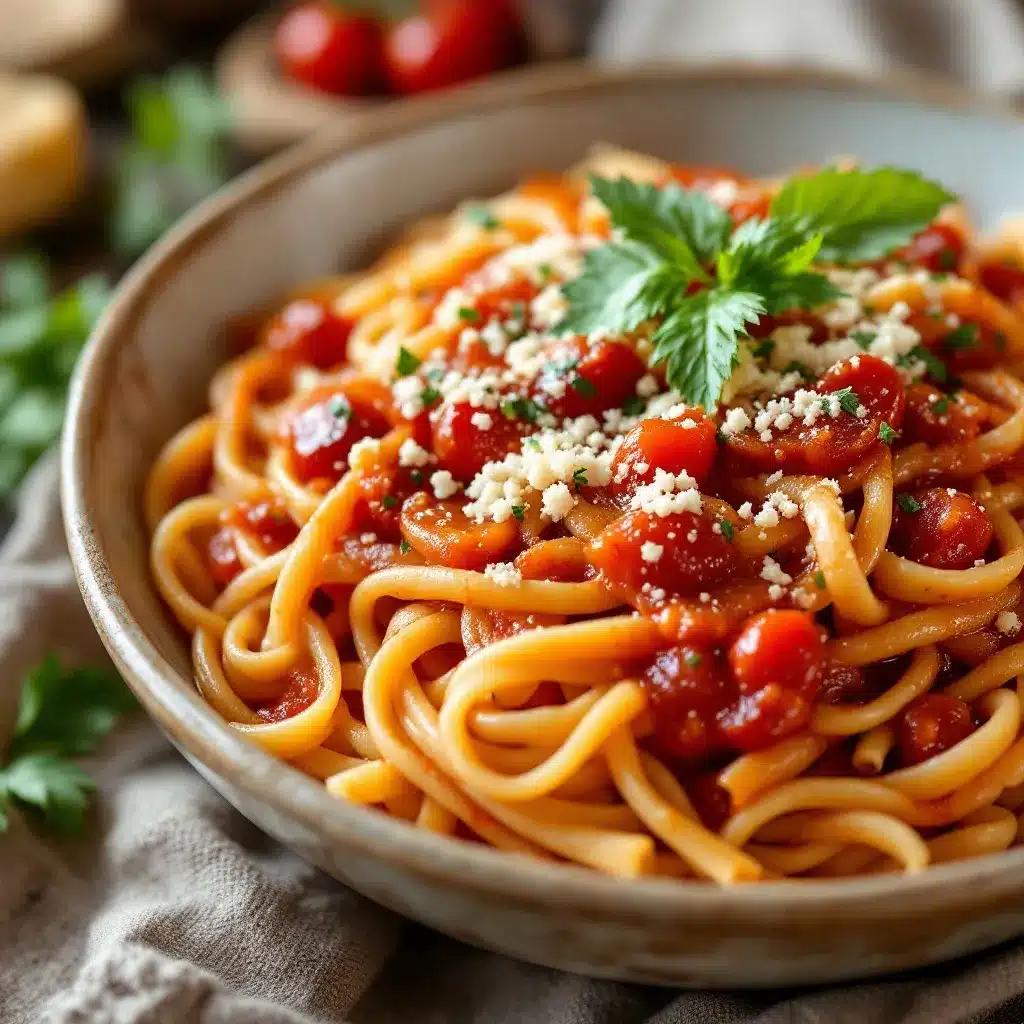
Let me walk you through this step by step. I’ve made this recipe enough times to know exactly where things can go wrong, so I’ll share those little tricks along the way.
Step 1: Preheat and Prep (5 minutes)
Preheat your oven to 300°F (150°C). Yes, that’s lower than you might expect, but trust me—this low temperature is what gives the tomatoes time to concentrate their flavors without burning. While the oven heats up, line your baking sheet with parchment paper or a silicone mat.
Step 2: Halve the Tomatoes (10-15 minutes)
Here’s where a little patience pays off. Wash your cherry tomatoes and cut each one in half through the equator. I know it’s tempting to leave them whole, but halving them allows the juices to release and concentrate during roasting. Place them cut-side up on the prepared baking sheet. Don’t crowd them too much—leave a little space between each tomato so they roast instead of steam. If they’re packed too tightly, they’ll release too much liquid and end up watery.
Step 3: Add Garlic and Seasonings (2 minutes)
Scatter the smashed garlic cloves around the tomatoes. Drizzle everything with the olive oil, then sprinkle with salt and pepper. Toss gently with your hands to coat everything evenly, then arrange the tomatoes back cut-side up. Tuck the basil sprigs (or sprinkle the dried oregano) over the top.
Step 4: Slow Roast (2 to 2.5 hours)
Place the baking sheet in the oven and let it work its magic. After about 1 hour, give the pan a gentle shake to redistribute the tomatoes. They should start looking shriveled and slightly caramelized around the edges. Continue roasting until the tomatoes are deeply wrinkled, the garlic is soft and golden, and the juices have thickened into a syrupy consistency. This usually takes about 2 to 2.5 hours total. Your kitchen will smell incredible—like summer and garlic and something deeply comforting.
Step 5: Make the Sauce (10 minutes)
Remove the baking sheet from the oven and let it cool for a few minutes. Pick out the basil sprigs if you used fresh. Now, here’s where you have a choice. For a chunky sauce, use a fork to mash the tomatoes and garlic right on the baking sheet. For a smoother sauce, transfer everything to a food processor or use an immersion blender directly in the pan. I usually go for a middle ground—mash most of them but leave a few whole for texture.
Step 6: Cook the Pasta (10 minutes)
While the tomatoes are roasting, or after they’re done, bring a large pot of salted water to a boil. Cook your pasta according to package directions until al dente. Before draining, reserve about 1/2 cup of the starchy pasta water. This is crucial—don’t forget this step!
Step 7: Combine and Finish (5 minutes)
Transfer the roasted tomato mixture to a large skillet over medium heat. Add the butter (or extra olive oil) and stir until melted. Add the cooked pasta and toss to coat. Gradually add the reserved pasta water, a little at a time, stirring constantly until the sauce clings to the pasta in a silky, glossy way. You might not need all the water—just use enough to reach your desired consistency.
Step 8: Serve (2 minutes)
Taste and adjust seasoning with more salt or pepper if needed. Serve immediately, topped with torn fresh basil and a generous grating of Parmesan cheese if you’re using it. And then, honestly, just sit down and enjoy it. You’ve earned this.
Cooking Tips & Techniques
I’ve made this recipe more times than I can count, and I’ve definitely made my share of mistakes along the way. Here are the things I wish someone had told me from the start.
Don’t Rush the Roasting
The biggest mistake I made the first time was cranking up the oven to 400°F because I was impatient. The tomatoes caramelized on the outside but stayed raw and watery on the inside. Low and slow is the way to go—300°F for at least 2 hours. The tomatoes should look like little wrinkled jewels when they’re done, not like roasted peppers.
Use the Pasta Water
I cannot stress this enough. The starchy pasta water is what transforms a simple tomato mixture into a cohesive sauce. It helps emulsify the oil and tomato juices, creating that restaurant-quality texture. If you forget to reserve it, you can use plain water with a pinch of cornstarch mixed in, but it’s not quite the same.
Halve the Tomatoes Evenly
This sounds fussy, but it matters. If some tomatoes are halved and others are left whole, they’ll cook at different rates. Take the extra minute to make sure each tomato is cut in half. Your future self will thank you when every bite is perfectly roasted.
Multitasking Strategy
Here’s how I time things so everything comes together at once: start the tomatoes roasting first. While they’re in the oven, I prep the garlic and herbs. About 30 minutes before the tomatoes are done, I bring a pot of water to a boil and cook the pasta. That way, the pasta is ready just as the tomatoes come out of the oven, and everything comes together in minutes.
One Thing I Learned the Hard Way
The first time I made this, I used a non-stick baking sheet without parchment paper. The tomatoes stuck so badly that I spent ten minutes scrubbing the pan, and I lost half the caramelized bits that make the sauce so good. Now I always use parchment paper or a silicone mat. It’s a small step that saves a lot of frustration.
Variations & Adaptations
One of the things I love most about this recipe is how flexible it is. Here are some variations I’ve tried and loved.
Herb Variations
I usually use basil, but thyme and rosemary are fantastic alternatives. For a more Mediterranean flavor, try adding a sprig of fresh rosemary and a few sprigs of thyme to the baking sheet before roasting. The herbs infuse the oil and create a completely different flavor profile. I did this once when I ran out of basil, and honestly, I might like it even better.
Spicy Version
If you like heat, add 1/2 teaspoon of red pepper flakes along with the salt and pepper before roasting. The heat mellows during the long roasting time, leaving behind a warm, subtle kick. I’ve also added a whole dried chili pepper to the baking sheet for a more intense flavor.
Vegan and Dairy-Free Adaptation
This recipe is naturally vegan if you skip the butter and Parmesan. Use an extra tablespoon of olive oil instead of butter, and finish with a sprinkle of nutritional yeast for that cheesy flavor. I’ve served this to dairy-loving friends, and no one noticed the difference.
Roasted Vegetable Addition
Sometimes I add a diced red bell pepper or a small zucchini to the baking sheet along with the tomatoes. They roast beautifully and add extra sweetness and texture to the sauce. Just make sure to cut them into similar-sized pieces so they cook evenly.
Make It a One-Pan Meal
For a heartier dish, toss some halved mushrooms or chickpeas onto the baking sheet during the last 30 minutes of roasting. They absorb all those delicious tomato juices and become little flavor bombs. I’ve done this for quick weeknight dinners, and it turns a simple pasta into a complete meal.
Serving & Storage Suggestions
This sauce is incredibly versatile, so let me share how I like to serve it and how to store it for later.
Serving Suggestions
I love this sauce served over spaghetti or bucatini, but it’s also amazing on short pasta shapes like rigatoni or orecchiette. The little nooks and crannies catch all that rich sauce perfectly. For a complete meal, serve it with a simple green salad dressed with lemon and olive oil, and a piece of crusty bread for sopping up any leftover sauce on your plate.
Temperature and Presentation
Serve the pasta hot, straight from the pan. I like to twirl it into nests on individual plates, then top with fresh basil and a generous grating of Parmesan. A drizzle of good olive oil right before serving adds a beautiful finish and a fresh, peppery note.
Storage Instructions
The sauce (without pasta) keeps beautifully in the refrigerator for up to 5 days. Store it in an airtight container, and the flavors will actually deepen over time. For longer storage, freeze the sauce in freezer-safe bags or containers for up to 3 months. I like to freeze it in 1-cup portions so I can thaw exactly what I need.
Reheating Tips
To reheat, thaw the sauce in the refrigerator overnight if frozen, then warm it gently in a skillet over medium-low heat. Add a splash of water or pasta water to loosen it up if it’s too thick. If you’re reheating the sauced pasta, a quick toss in a hot skillet with a little olive oil works wonders.
How Flavors Develop
Here’s something interesting—this sauce tastes even better the next day. The flavors have time to meld and deepen, so don’t be afraid to make it a day ahead. I often make a double batch on Sunday, use half for dinner, and save the rest for a quick pasta lunch during the week.
Nutritional Information & Benefits
I’m not a nutritionist, but I’ve done some research on the ingredients in this recipe, and I think you’ll be pleasantly surprised by how healthy it is.
Estimated Nutritional Values (per serving, sauce only, without pasta or cheese):
- Calories: ~120
- Fat: 10g
- Carbohydrates: 8g
- Fiber: 2g
- Sugar: 5g
- Protein: 2g
- Sodium: 300mg
Health Benefits of Key Ingredients
Cherry tomatoes are packed with lycopene, a powerful antioxidant that’s been linked to heart health and reduced inflammation. Interestingly, cooking tomatoes actually increases the bioavailability of lycopene, so this slow-roasted sauce is even more beneficial than a raw tomato salad. The olive oil adds healthy monounsaturated fats, which help your body absorb the fat-soluble nutrients from the tomatoes. And garlic? It’s known for its immune-boosting properties and adds a ton of flavor without any extra calories.
Dietary Considerations
This sauce is naturally gluten-free, dairy-free (if you skip the butter and Parmesan), and vegan-friendly. It’s also low in sugar and contains no added sugars—just the natural sweetness of the tomatoes. If you’re watching your sodium intake, you can reduce the salt or use a salt substitute.
Potential Allergens
The main allergens to note are olive oil (though olive allergies are rare) and garlic (some people are sensitive to alliums). If you’re serving this to someone with a tomato allergy, obviously this isn’t the recipe for them. Otherwise, it’s a pretty safe bet for most diets.
Conclusion
This slow-roasted cherry tomato sauce has become a staple in my kitchen, and I hope it becomes one in yours too. It’s the kind of recipe that proves you don’t need complicated techniques or exotic ingredients to make something truly special. Just good tomatoes, a little patience, and the willingness to let the oven do the heavy lifting.
I love that this recipe is forgiving enough for a beginner but impressive enough for a dinner party. I love that it fills my kitchen with a smell that makes everyone wander in and ask, “What’s for dinner?” And I love that it captures the essence of summer tomatoes and lets me enjoy them all year long.
So here’s my challenge to you—make this sauce this weekend. Use whatever cherry tomatoes you can find, adjust the herbs to your taste, and don’t be afraid to make it your own. When you take that first bite, I want you to think about where you were and what you were doing. Maybe you’ll have a memory of your own that comes flooding back. Or maybe you’ll just enjoy a really, really good bowl of pasta. Either way, I’d love to hear about it. Drop a comment below and tell me how it turned out, or share your own twist on this recipe. Happy cooking, friends.
Frequently Asked Questions
Can I use regular tomatoes instead of cherry tomatoes?
You can, but the texture and flavor will be different. Cherry tomatoes have a higher sugar-to-water ratio, which means they concentrate beautifully during slow roasting. If you use larger tomatoes like Roma or San Marzano, chop them into uniform pieces and expect a slightly longer roasting time since they release more liquid.
Do I have to halve all the cherry tomatoes?
Yes, I really recommend it. Halving them exposes the flesh to the heat, which allows the moisture to evaporate and the sugars to caramelize. If you leave them whole, they’ll steam inside and release too much liquid, leaving you with a watery sauce instead of a concentrated one.
Can I make this sauce in advance?
Absolutely. In fact, I think it tastes even better the next day. Store the sauce in an airtight container in the refrigerator for up to 5 days, or freeze it for up to 3 months. Just reheat gently on the stovetop with a splash of water or pasta water to loosen it up.
What pasta shapes work best with this sauce?
I love this sauce with long pasta like spaghetti or bucatini, but it’s also fantastic with short shapes like rigatoni, orecchiette, or fusilli. The key is to choose a shape that will catch and hold the sauce. Avoid very delicate pastas like angel hair, which can get overwhelmed by the chunky texture.
Can I add protein to this dish?
Definitely. Grilled chicken, sautéed shrimp, or crispy chickpeas all work beautifully with this sauce. For a vegetarian option, I love adding white beans or lentils during the last few minutes of cooking. The sauce is versatile enough to pair with just about anything.
Pin This Recipe!
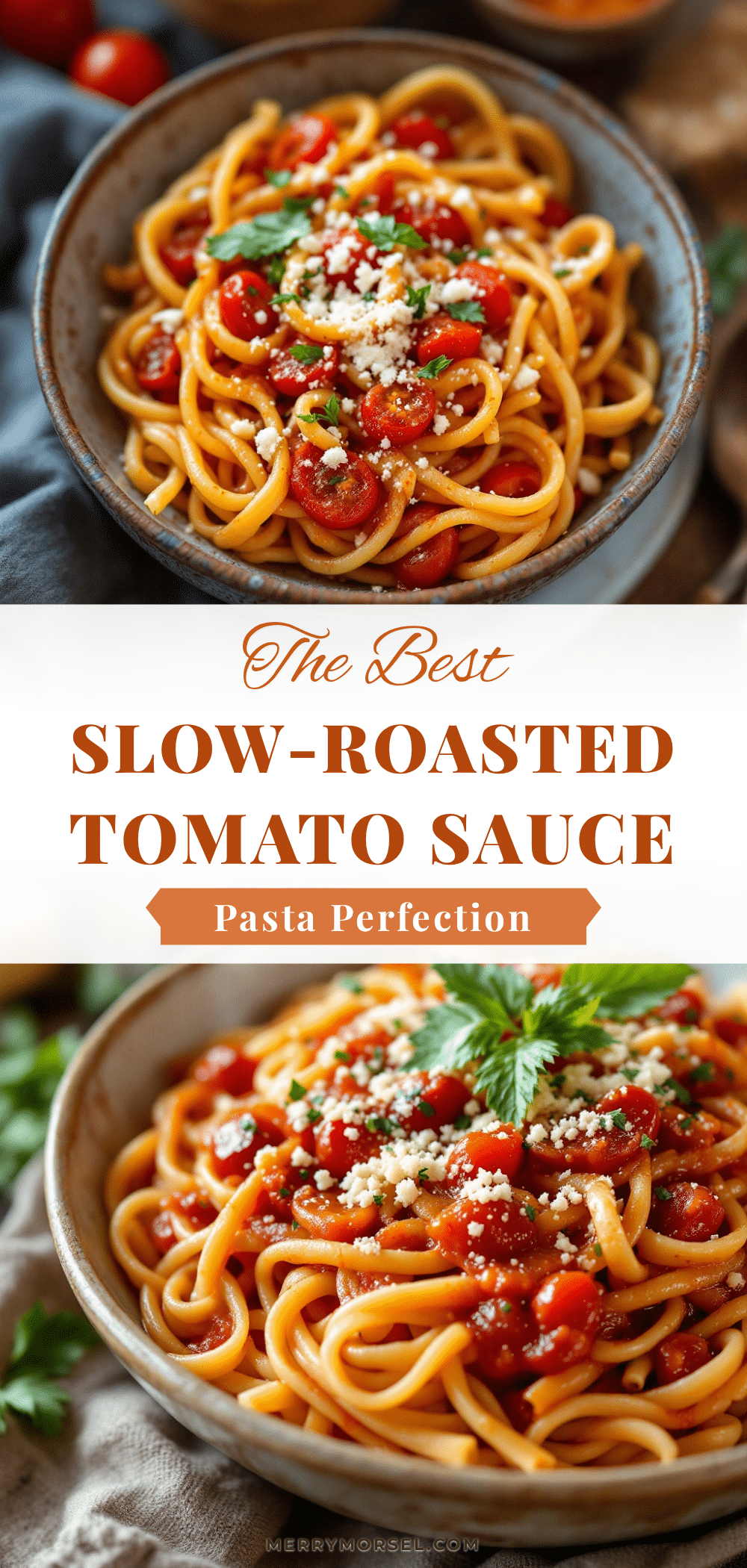
The Best Slow-Roasted Cherry Tomato Sauce for Pasta
This slow-roasted cherry tomato sauce is a simple, forgiving recipe that turns ordinary ingredients into something special. With a hands-off cooking method, it’s perfect for busy days and freezes beautifully for winter enjoyment.
- Prep Time: 15 minutes
- Cook Time: 2 hours 30 minutes
- Total Time: 2 hours 45 minutes
- Yield: 4 servings 1x
- Category: Main Course
- Cuisine: Italian
Ingredients
- 2 pounds cherry tomatoes (about 900g)
- 6 cloves garlic, peeled and smashed
- 1/4 cup extra-virgin olive oil (60ml)
- 1 teaspoon kosher salt
- 1/2 teaspoon black pepper, freshly ground
- 2 sprigs fresh basil or 1 teaspoon dried oregano
- 1/2 cup reserved pasta water (120ml)
- 2 tablespoons unsalted butter or more olive oil
- Fresh basil leaves for garnish
- Grated Parmesan cheese (optional)
Instructions
- Preheat your oven to 300°F (150°C). Line a baking sheet with parchment paper or a silicone mat.
- Wash the cherry tomatoes and cut each one in half through the equator. Place them cut-side up on the prepared baking sheet, leaving space between each tomato.
- Scatter the smashed garlic cloves around the tomatoes. Drizzle with olive oil, then sprinkle with salt and pepper. Toss gently to coat, then arrange tomatoes back cut-side up. Tuck basil sprigs or sprinkle dried oregano over the top.
- Slow roast for 2 to 2.5 hours, until tomatoes are deeply wrinkled, garlic is soft and golden, and juices have thickened into a syrupy consistency. After 1 hour, gently shake the pan to redistribute.
- Remove from oven and let cool for a few minutes. Pick out basil sprigs if used. For a chunky sauce, mash tomatoes and garlic with a fork on the baking sheet. For a smoother sauce, transfer to a food processor or use an immersion blender.
- Cook pasta according to package directions until al dente. Reserve 1/2 cup of starchy pasta water before draining.
- Transfer the roasted tomato mixture to a large skillet over medium heat. Add butter (or extra olive oil) and stir until melted. Add cooked pasta and toss to coat. Gradually add reserved pasta water, stirring until sauce clings to pasta in a silky, glossy way.
- Taste and adjust seasoning with more salt or pepper if needed. Serve immediately, topped with torn fresh basil and grated Parmesan cheese if desired.
Notes
Don’t rush the roasting—low and slow at 300°F for at least 2 hours is key. Use the starchy pasta water to emulsify the sauce. Halve the tomatoes evenly for consistent cooking. The sauce tastes even better the next day.
Nutrition
- Serving Size: 1 serving (sauce onl
- Calories: 120
- Sugar: 5
- Sodium: 300
- Fat: 10
- Saturated Fat: 2
- Carbohydrates: 8
- Fiber: 2
- Protein: 2
Keywords: slow-roasted cherry tomato sauce, pasta sauce, cherry tomatoes, easy pasta sauce, homemade sauce, freezer-friendly