Love this? Save it for later!
Share the inspiration with your friends
“You haven’t truly experienced mango sticky rice until you’ve tasted it under a neon-lit night market stall in Chiang Mai,” my friend whispered as we sat cross-legged on plastic stools, the air thick with the scent of grilled satay and tropical fruit. That night, the sticky rice was warm and slightly chewy, the mango perfectly ripe with a vibrant orange glow, and the coconut cream was so rich it felt like a little indulgence wrapped in a humble street dessert.
Honestly, I never thought I’d try making Thai mango sticky rice at home. It felt like one of those dishes best left to the experts, the kind you find in bustling markets or tucked-away cafés far away from your kitchen. But after that trip, I kept thinking about that dessert, the way the flavors lingered, and how simple ingredients could come together to create something so unforgettable. One rainy Saturday, I decided to give it a shot. The first attempt wasn’t flawless—I forgot to soak the rice long enough, and my coconut cream was a bit too thin—but I tweaked it, messed with the ratios, and made a mess or two in the process.
Now, this recipe for delicious Thai mango sticky rice with rich coconut cream is my go-to comfort dessert. It’s got that perfect balance of sweet and creamy with the tender chew of sticky rice and the fresh burst of mango. Maybe you’ve been there—craving something exotic yet comforting, something that transports you somewhere warm and vibrant with every bite. Let me tell you, this recipe stays with you, not just because it tastes amazing but because it’s a little culinary memory you can create anytime you want right in your own kitchen.
Why You’ll Love This Recipe
I have to admit, this Thai mango sticky rice recipe is one of those dishes that feels fancy but is surprisingly easy to pull off. After trying many versions—some too sweet, others too bland—I landed on this one that’s both authentic and approachable. Here’s why it’s become a staple:
- Quick & Easy: The entire dessert comes together in under an hour, perfect for a last-minute sweet craving or impressing guests without breaking a sweat.
- Simple Ingredients: You likely have most of these in your pantry or can find them at any grocery store—no exotic shopping trips needed.
- Perfect for Any Occasion: Whether it’s a casual family dinner, a summer party, or a festive celebration, this recipe fits right in.
- Crowd-Pleaser: Kids and adults alike adore the creamy, fruity combo. I’ve seen skeptical friends become repeat requesters after the first bite.
- Unbelievably Delicious: The sticky rice has the perfect chewy texture, and the rich coconut cream is just sweet enough without overpowering the fresh mango.
This isn’t just another mango sticky rice recipe. What sets it apart is the way the coconut cream is gently thickened and lightly salted for that just-right contrast, plus soaking the sticky rice overnight for ideal texture. The balance here is all about subtlety—letting the natural sweetness of the mango shine through while wrapping it in a luxuriously creamy blanket. It’s comfort food that’s also a little exotic and endlessly satisfying.
What Ingredients You Will Need
This recipe uses simple, wholesome ingredients to deliver bold flavor and satisfying texture without the fuss. Most are pantry staples or easy to find in any well-stocked grocery store or Asian market.
- Glutinous (Sticky) Rice: 1 cup (200g), rinsed and soaked overnight (essential for that perfect chewy texture).
- Ripe Mangoes: 2 large, peeled and sliced (look for sweet, fragrant varieties like Ataulfo or Nam Dok Mai if you can).
- Coconut Milk: 1 cup (240ml), full fat for richness (I prefer Chaokoh brand for creaminess).
- Granulated Sugar: 1/3 cup (65g), adjust to taste.
- Salt: 1/4 teaspoon, enhances the coconut cream flavor.
- Water: 1 1/2 cups (360ml), for steaming the rice.
- Toasted Sesame Seeds or Mung Beans: 1 tablespoon, optional for garnish (adds a delightful crunch).
If you want to swap ingredients, almond milk or soy milk won’t quite mimic coconut’s richness, but canned coconut cream can be used to thicken the sauce if your coconut milk is thin. For a gluten-free and vegan dessert, this recipe fits perfectly as is.
Equipment Needed
- Steamer or Bamboo Basket: For steaming the sticky rice. If you don’t have a dedicated steamer, a metal colander over a pot with a lid works well too.
- Large Mixing Bowls: For soaking the rice and mixing the coconut cream.
- Small Saucepan: To gently heat the coconut cream mixture.
- Wooden Spoon or Spatula: For stirring the rice and cream without crushing the grains.
- Measuring Cups and Spoons: For precise ingredient amounts.
I once tried steaming sticky rice in a rice cooker, but it didn’t get that chewy texture I love. So, I recommend the traditional steaming method for best results. Also, using a bamboo basket adds a subtle aroma that’s hard to replicate with other steamers.
Preparation Method
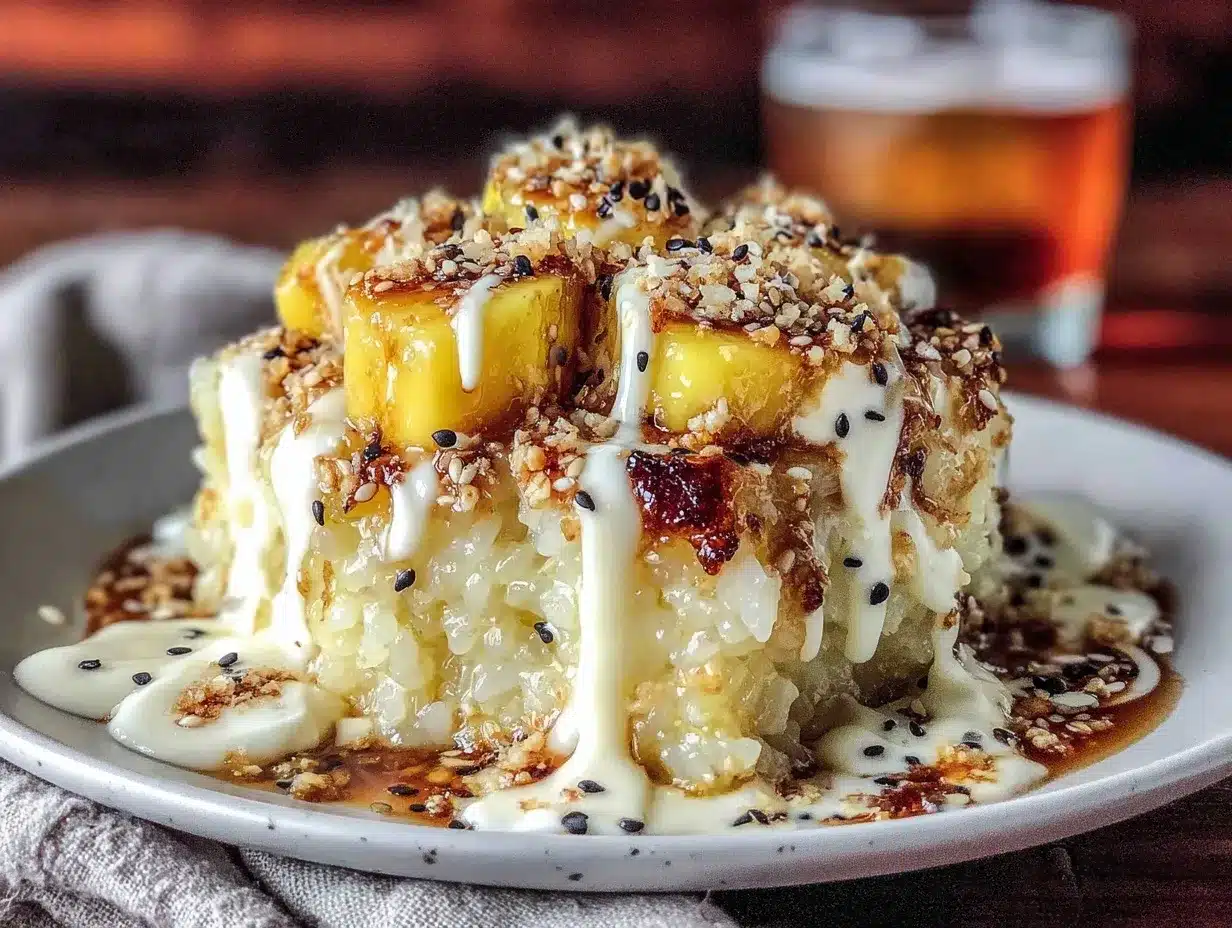
- Soak the Sticky Rice: Rinse 1 cup (200g) of glutinous rice under cold water until the water runs clear. Soak it in fresh water overnight or for at least 6 hours. This step is key for that perfect chewy texture.
- Prepare the Mango: Peel and slice 2 large ripe mangoes into thin, even pieces. Set aside. The mango should be fragrant and sweet but still firm enough to hold its shape.
- Steam the Rice: Drain the soaked rice and set it in a steamer lined with cheesecloth or a clean kitchen towel. Steam over boiling water for 20-25 minutes, fluffing gently halfway through. The rice should look translucent and sticky but not mushy.
- Make the Coconut Cream Sauce: In a small saucepan, combine 1 cup (240ml) full-fat coconut milk, 1/3 cup (65g) sugar, and 1/4 teaspoon salt. Warm gently over medium heat, stirring until sugar dissolves. Do not boil. Remove from heat.
- Mix Coconut Cream with Rice: Transfer steamed rice to a bowl. Pour about 3/4 of the warm coconut cream over it and gently stir to combine. Cover and let sit for 20-30 minutes to absorb the flavors. The rice should be moist but not swimming in liquid.
- Prepare the Drizzle: Warm the remaining 1/4 cup coconut cream gently to serve as a drizzle over the finished dish.
- Serve: Plate a generous scoop of sticky rice beside sliced mango. Drizzle with the reserved coconut cream and sprinkle with toasted sesame seeds or mung beans for crunch.
Pro tip: If your coconut cream seems too thin, simmer it down gently to thicken before mixing it with the rice.
Cooking Tips & Techniques
Sticky rice isn’t sticky because of added ingredients—it’s all about the rice type and soaking method. Glutinous rice is essential here, and soaking it long enough softens the grains to become tender yet chewy.
When steaming, keep the lid on tightly to trap steam and cook the rice evenly. If you lift the lid too often, the rice can dry out or cook unevenly.
For the coconut cream, avoid boiling it. Boiling can cause the milk to separate and lose that smooth, luscious texture you want. Warm it gently and stir until sugar dissolves fully.
One mistake I made early on was using underripe mangoes. The flavor falls flat, so pick mangoes that give slightly under gentle pressure and have a sweet aroma.
Finally, let the rice rest covered after adding the coconut cream. This resting time lets the flavors meld and the rice absorb the liquid, giving you that melt-in-your-mouth sensation.
Variations & Adaptations
You can customize this Thai mango sticky rice in several fun ways:
- Seasonal Fruit Swaps: If mangoes aren’t in season, try ripe kiwi or fresh lychee for a different but refreshing twist.
- Vegan & Dairy-Free: This recipe is naturally vegan, but if you want extra richness, add a tablespoon of coconut cream or coconut butter.
- Flavor Infusions: Add a pandan leaf while steaming the rice or a few drops of vanilla extract to the coconut cream for a fragrant touch.
- Cooking Methods: For a quicker version, cook the sticky rice in a rice cooker designed for sticky rice, but watch closely to prevent overcooking.
- Texture Twist: Sprinkle crushed roasted peanuts or toasted coconut flakes on top for extra crunch.
Personally, I once tried mixing in a pinch of cardamom to the coconut cream for a subtle warm spice—unexpected but delicious!
Serving & Storage Suggestions
Serve this dessert slightly warm or at room temperature for the best experience. The sticky rice should be tender and moist, with the fresh mango cooling things off perfectly. For presentation, I like to fan the mango slices beside a neat mound of rice, then drizzle the coconut cream artistically on top.
This dessert pairs beautifully with a light jasmine tea or even an iced Thai iced tea for a full flavor experience.
If you have leftovers, store the sticky rice and coconut cream separately in airtight containers in the refrigerator for up to 2 days. Mango slices are best enjoyed fresh but can be refrigerated wrapped in plastic for a day.
To reheat the rice, steam it gently or microwave with a damp paper towel to restore moisture. The flavors actually deepen a bit after resting, making it even better the next day.
Nutritional Information & Benefits
This Thai mango sticky rice dessert is a delightful treat that balances indulgence with wholesome ingredients. Per serving, it provides approximately:
- Calories: 350-400 kcal
- Carbohydrates: 60g (from sticky rice and mango)
- Fats: 10-15g (mainly from coconut milk)
- Protein: 3-4g
The coconut milk offers healthy medium-chain triglycerides (MCTs), which can support energy and metabolism. Mangoes are rich in vitamins A and C, as well as antioxidants that promote skin and immune health.
This recipe is naturally gluten-free and vegan, making it accessible for many dietary preferences. Just watch the sugar level if you’re managing carbohydrate intake.
Conclusion
If you’ve been craving something sweet that feels like a special getaway in every bite, this Thai mango sticky rice with rich coconut cream recipe is your ticket. It’s straightforward enough for a weeknight dessert yet impressive enough for company. I love how it brings a little taste of Thailand’s vibrant street food culture into my kitchen without fuss.
Feel free to adjust the sweetness or add your own flair—maybe a sprinkle of toasted coconut or a splash of lime juice for brightness. I hope you enjoy making and sharing this recipe as much as I do. Don’t be shy about leaving a comment or sharing how your version turned out—I’d love to hear your stories!
Remember, cooking is a journey, and sometimes the best dishes come from a little experimentation (and a few kitchen messes). Happy cooking!
FAQs
What kind of rice is best for mango sticky rice?
Glutinous or sticky rice is essential. It has the unique texture that makes this dessert special. Avoid regular white or jasmine rice.
Can I make this recipe without a steamer?
Yes! You can use a metal colander over a pot of boiling water with a tight lid, or a bamboo basket if you have one. Just make sure the rice doesn’t touch the water.
How do I know when the sticky rice is fully cooked?
The rice should be translucent, sticky but not mushy, and tender to bite. If it’s still hard in the center, steam for a few more minutes.
Can I prepare this dessert in advance?
You can soak the rice the night before and even steam it ahead. Keep the coconut cream and mango separate until serving for best freshness.
What can I use if I can’t find fresh mangoes?
Frozen mango chunks (thawed) work in a pinch, or try other sweet fruits like kiwi or lychee. Just adjust sweetness accordingly.
Pin This Recipe!
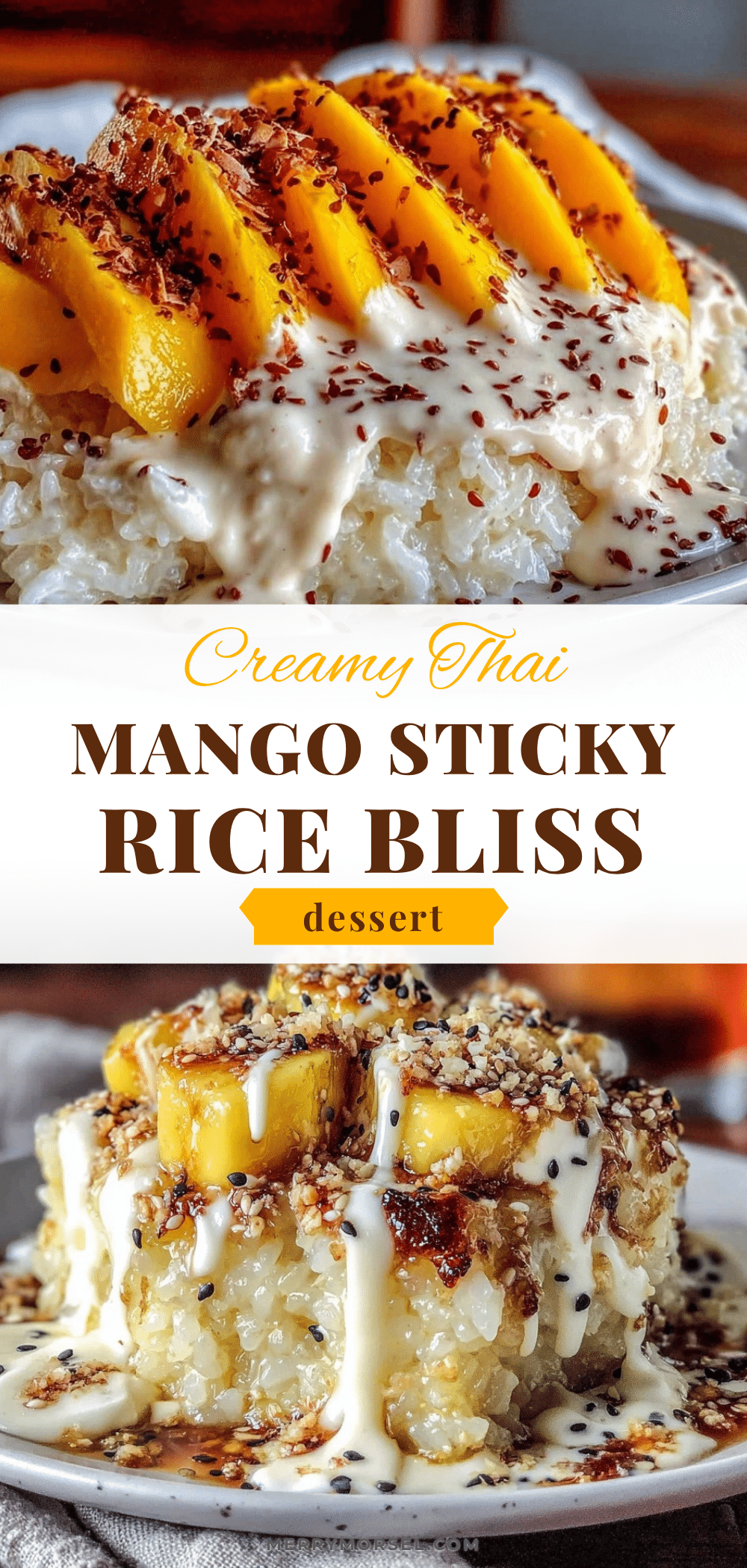
Thai Mango Sticky Rice Recipe Easy Homemade Dessert with Rich Coconut Cream
A delicious and authentic Thai dessert featuring chewy glutinous sticky rice paired with ripe mango and rich, gently sweetened coconut cream. Perfect for a comforting yet exotic treat.
- Prep Time: 8 hours (including soaking time)
- Cook Time: 25 minutes
- Total Time: 8 hours 30 minutes
- Yield: 4 servings 1x
- Category: Dessert
- Cuisine: Thai
Ingredients
- 1 cup (200g) glutinous (sticky) rice, rinsed and soaked overnight
- 2 large ripe mangoes, peeled and sliced
- 1 cup (240ml) full-fat coconut milk
- 1/3 cup (65g) granulated sugar, adjust to taste
- 1/4 teaspoon salt
- 1 1/2 cups (360ml) water, for steaming the rice
- 1 tablespoon toasted sesame seeds or mung beans (optional, for garnish)
Instructions
- Rinse 1 cup (200g) of glutinous rice under cold water until the water runs clear. Soak it in fresh water overnight or for at least 6 hours.
- Peel and slice 2 large ripe mangoes into thin, even pieces. Set aside.
- Drain the soaked rice and set it in a steamer lined with cheesecloth or a clean kitchen towel. Steam over boiling water for 20-25 minutes, fluffing gently halfway through.
- In a small saucepan, combine 1 cup (240ml) full-fat coconut milk, 1/3 cup (65g) sugar, and 1/4 teaspoon salt. Warm gently over medium heat, stirring until sugar dissolves. Do not boil. Remove from heat.
- Transfer steamed rice to a bowl. Pour about 3/4 of the warm coconut cream over it and gently stir to combine. Cover and let sit for 20-30 minutes to absorb the flavors.
- Warm the remaining 1/4 cup coconut cream gently to serve as a drizzle over the finished dish.
- Plate a generous scoop of sticky rice beside sliced mango. Drizzle with the reserved coconut cream and sprinkle with toasted sesame seeds or mung beans for crunch.
Notes
Soak the sticky rice overnight or at least 6 hours for the best chewy texture. Avoid boiling the coconut cream to prevent separation. Use ripe mangoes that are fragrant and slightly soft to the touch. If coconut cream is too thin, simmer gently to thicken before mixing with rice. Keep the lid on tightly while steaming to ensure even cooking. Leftovers should be stored separately and consumed within 2 days.
Nutrition
- Serving Size: 1 serving (approxima
- Calories: 375
- Sugar: 20
- Sodium: 150
- Fat: 12
- Saturated Fat: 10
- Carbohydrates: 60
- Fiber: 2
- Protein: 4
Keywords: Thai mango sticky rice, mango sticky rice recipe, Thai dessert, coconut cream dessert, glutinous rice dessert, easy Thai dessert, vegan dessert, gluten-free dessert