Love this? Save it for later!
Share the inspiration with your friends
“You’ve got to try these,” my neighbor Carlos insisted one rainy Thursday evening, holding out a small box with a knowing smile. I was skeptical — Portuguese custard tarts? Honestly, I’d tasted a few versions before, but none had ever quite hit the mark. The next day, I cracked open the box to find these golden, flaky wonders with caramelized tops that practically called my name. That first bite? Pure magic.
This recipe for Perfect Portuguese Custard Tarts with Flaky Caramelized Pastry stayed with me ever since — and I swear, it’s the flaky crust and that slightly burnt sugar finish that make all the difference. I mean, the way the crisp, buttery layers shatter beneath the creamy, silky custard is a little bit of heaven. Maybe you’ve been there too — chasing the perfect pastel de nata that tastes like a warm hug but with a bit of sass.
What’s funny is, while Carlos shared this recipe with a casual shrug, it took me a few tries (and a cracked baking dish, don’t ask) to get it just right. But once I nailed the balance between custard smoothness and pastry crunch, I knew I had a keeper. So, here’s my take on the ultimate Portuguese custard tarts—easy enough for a weeknight treat, but impressive enough to steal the show at any brunch or dinner party. Let me tell you, no matter your skill level, these tarts make you look like a dessert wizard.
Why You’ll Love This Recipe
After testing countless recipes and tweaking little things here and there, I can confidently say this Portuguese custard tarts recipe is one you’ll want in your repertoire. Here’s why:
- Quick & Easy: The custard comes together in just 10 minutes, and with a bit of patience on the pastry, you’re looking at under an hour for a batch of 12 tarts.
- Simple Ingredients: No exotic or hard-to-find items — just pantry staples like eggs, milk, and flour plus a touch of cinnamon and lemon zest to bring the flavor alive.
- Perfect for Any Occasion: Whether it’s a casual afternoon snack, a festive brunch, or an unexpected treat for friends, these tarts fit the bill.
- Crowd-Pleaser: I’ve never met a soul who didn’t go back for seconds — kids, adults, even the toughest dessert critics.
- Unbelievably Delicious: The contrast between that flaky, caramelized crust and the luxuriously smooth egg custard is next-level comfort food — honestly, it’s like a little celebration in every bite.
What sets this recipe apart? The secret lies in the pastry technique. By folding and rolling the dough just right, you get those iconic thin, crunchy layers that snap beautifully. Plus, the custard is perfectly balanced: sweet, but not cloying, with a whisper of vanilla and citrus brightness that wakes up your taste buds. It’s not just another tart recipe — it’s the one that makes you close your eyes and sigh after the first bite.
What Ingredients You Will Need
This recipe uses simple, wholesome ingredients to deliver bold flavor and satisfying texture without the fuss. Most of these are pantry staples, and substitutions are easy if needed.
- For the Pastry:
- 1 cup (125g) all-purpose flour, sifted
- 1/4 teaspoon salt
- 1/3 cup (75g) unsalted butter, cold and cut into small cubes (I highly recommend plugging in Kerrygold for best buttery flavor)
- 1/3 cup (80ml) ice-cold water
- Extra flour for dusting
- For the Custard Filling:
- 1 cup (240ml) whole milk (swap with almond milk for dairy-free option, but flavor will differ)
- 1/2 cup (100g) granulated sugar
- 3 large egg yolks, room temperature
- 2 teaspoons cornstarch
- 1 teaspoon vanilla extract (pure vanilla is best for flavor)
- 1 strip of lemon zest (avoid the white pith for bitterness)
- 1/4 teaspoon ground cinnamon (optional, but adds a subtle warmth)
Ingredient Tips: Look for firm, fresh eggs for the smoothest custard. For the lemon zest, I like using organic lemons from my local farmers market — no waxy aftertaste. If you want that classic caramelized finish, granulated sugar sprinkled on top before baking is key.
Equipment Needed
- Mixing bowls (medium and small size)
- Whisk and wooden spoon (my go-to combo for custard prep)
- Rolling pin (a basic wooden one works perfectly)
- 12-cup muffin tin or pastel de nata molds (if you have specialty tart tins, even better)
- Fine mesh sieve (for smoothing the custard)
- Measuring cups and spoons (accurate measurements matter!)
- Oven thermometer (optional, but useful for precise baking temperature)
If you don’t have a rolling pin, a clean wine bottle works in a pinch — I’ve done it during a kitchen chaos moment! For the muffin tin, non-stick is helpful, but a bit of butter or parchment paper cups can save the day. Keeping your butter cold and your workspace lightly floured makes rolling the dough way easier, trust me on this.
Preparation Method
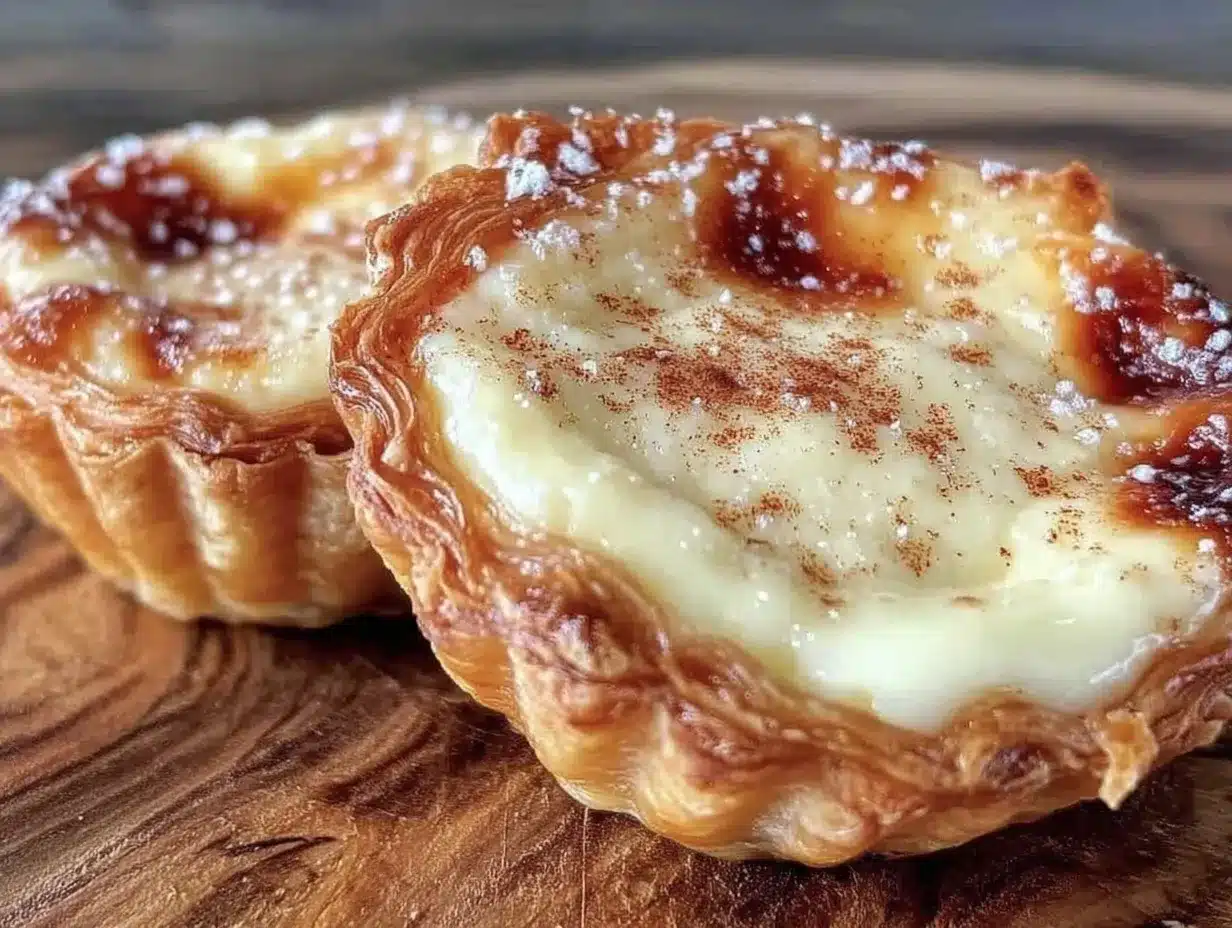
- Make the pastry dough: In a bowl, combine the sifted flour and salt. Add the cold butter cubes and use your fingertips or a pastry cutter to rub the butter into the flour until the mixture looks like coarse breadcrumbs with some pea-sized butter bits. This creates those flaky layers we’re after. Slowly add the ice-cold water, stirring gently until the dough just comes together. Be careful not to overwork it—overmixing can make the pastry tough. Wrap the dough in plastic and chill for at least 30 minutes.
- Prepare the custard filling: In a small saucepan, heat the milk, lemon zest, and cinnamon (if using) over medium heat until just about to boil. Remove from heat and let it infuse for 10 minutes. Meanwhile, whisk together egg yolks, sugar, cornstarch, and vanilla extract in a bowl until pale and slightly thickened. Remove the lemon zest from the milk and slowly pour the warm milk into the egg mixture, whisking continuously to prevent cooking the eggs. Strain the custard through a fine mesh sieve into a clean bowl to ensure silky smoothness.
- Roll and layer the pastry: On a lightly floured surface, roll the chilled dough into a rectangle about 10 x 8 inches (25 x 20 cm). Fold the dough into thirds, like a letter. Turn it 90 degrees and roll out again to the same size. Repeat the fold and roll process 2-3 times for flakiness. Finally, roll the dough into a log shape, wrap in plastic, and chill for 15 minutes.
- Shape the tarts: Preheat your oven to 475°F (245°C). Cut the dough log into 12 equal pieces. Press each piece into the muffin tin cups, pushing the dough up and around the sides to create thin layers. The thinner, the better for that signature crispiness.
- Fill and bake: Pour custard filling into each pastry shell, filling about 3/4 full to allow room for bubbling. Bake for 12-15 minutes, watching closely—the tops should blister and caramelize with some dark spots but not burn. Rotate the tray halfway for even baking. The pastry edges should be golden and crisp.
- Cool and enjoy: Let the tarts cool in the pan for 10 minutes before transferring to a wire rack. Serve warm or at room temperature. If you want to reheat, pop them in a 350°F (175°C) oven for 5 minutes to regain crispness.
Pro tip: If your custard seems too runny after baking, it usually needs a minute or two longer in the oven. Patience here is key. Also, I sometimes sprinkle a tiny pinch of sugar on top midway through baking to get that extra caramelized crunch.
Cooking Tips & Techniques
Making Portuguese custard tarts is as much about technique as it is about ingredients. Here are some tips I picked up the hard way:
- Keep ingredients cold: This is essential for flaky pastry. Work quickly with the butter and chill the dough between folds to prevent it melting into the flour.
- Don’t rush custard mixing: When combining warm milk with eggs, pour slowly and whisk continuously to avoid scrambled eggs. Straining the custard makes a huge difference in texture.
- Watch the oven carefully: High heat is crucial for that blistered top, but every oven is different. Keep an eye to avoid burning, especially after 10 minutes.
- Use fresh lemon zest: This adds a subtle brightness that cuts through the richness beautifully. Avoid zesting the white pith, which can taste bitter.
- Practice rolling and folding: The layering technique is the secret behind the signature pastel de nata crunch. If your first attempt feels tough, chill the dough more and roll gently.
Once, I baked a batch and forgot to remove the lemon zest before pouring the custard. The texture was fine, but the zest pieces made it a bit gritty — lesson learned! Also, multitasking by prepping the custard while the dough chills saves time and keeps the process smooth.
Variations & Adaptations
You can easily tweak this recipe to suit your preferences or dietary needs:
- Dairy-Free Version: Swap whole milk with unsweetened almond or oat milk. The custard will be slightly less rich but still tasty. Use vegan butter for the pastry.
- Spice It Up: Add a pinch of nutmeg or cardamom to the custard for a warm twist. Some folks love a dash of espresso powder for a subtle coffee flavor.
- Fruit Topping: After baking, top the tarts with fresh berries or a drizzle of passion fruit syrup for a bright, tangy contrast.
- Gluten-Free Pastry: Use a gluten-free flour blend designed for pastries. It may take a couple of tries to get the folding technique just right, but the result is lovely.
- Personal Favorite: I sometimes add a touch of orange zest alongside lemon for a citrusy double punch. It’s a small change that packs a flavorful punch.
If you want to try baking these in a toaster oven or air fryer, reduce cooking time slightly and keep an eye on caramelization. Adjustments in heat will be necessary, but it’s doable!
Serving & Storage Suggestions
Portuguese custard tarts are best enjoyed warm, fresh from the oven with their caramelized tops crackling under your fork. Serve them with a dusting of cinnamon or powdered sugar for added charm.
They pair beautifully with a strong espresso or a crisp white wine like Vinho Verde if you’re feeling fancy. For afternoon tea, a simple black tea or chamomile complements the custard’s richness.
To store, keep tarts in an airtight container at room temperature for up to 2 days. Refrigerate if you want to keep them longer, but the pastry can lose its crispness. Reheat in a hot oven (350°F / 175°C) for 5-7 minutes to bring back that delightful crunch.
Flavors develop subtly overnight, making these tarts a nice treat the next day if you don’t mind a softer crust. Just don’t leave them too long — best enjoyed within 48 hours for that perfect balance of creamy custard and flaky pastry.
Nutritional Information & Benefits
Each tart provides approximately 180-210 calories, with about 9 grams of fat and 22 grams of carbohydrates. The custard is rich in protein thanks to the egg yolks, and the lemon zest adds a slight vitamin C boost.
Using whole milk contributes calcium and vitamin D, while the butter provides some healthy fats. You can reduce sugar slightly if you prefer a less sweet tart, making it a more balanced indulgence.
This recipe is gluten-containing by default, but swapping to gluten-free flour makes it accessible for those with sensitivities. It’s vegetarian-friendly and can be adapted for dairy-free or vegan diets with the ingredient swaps mentioned.
From a wellness perspective, these tarts are a treat best enjoyed mindfully — they remind me of slow afternoons and joyful moments shared, which matters as much as nutrition sometimes!
Conclusion
If you’re after a dessert that looks impressive but feels utterly doable, these Perfect Portuguese Custard Tarts with Flaky Caramelized Pastry will quickly become your go-to. They bring together buttery layers and custard so smooth, it’s honestly a little addictive.
Feel free to tweak the citrus zest, spices, or even the pastry method to suit your kitchen style. I love this recipe because it’s forgiving, approachable, and always impresses — plus, it’s a delicious way to share a bit of Portuguese tradition at home.
Try making a batch this weekend, and when you do, I’d love to hear how yours turned out. Drop a comment or share your tweaks — let’s keep the pastry love going strong! Remember, every imperfect tart you bake is a step closer to your perfect pastel de nata.
Happy baking!
FAQs
What is the secret to getting flaky pastry for Portuguese custard tarts?
The key is to keep the butter cold and fold the dough multiple times, creating thin layers that puff and crisp beautifully when baked.
Can I make the custard filling ahead of time?
Yes, you can prepare the custard a day in advance and refrigerate it. Bring it back to room temperature before filling the pastry shells.
Why does the top of my custard tarts not caramelize properly?
Make sure your oven is hot enough (around 475°F / 245°C) and bake long enough for the sugar on top to blister and darken. Rotating the tray midway helps with even caramelization.
How do I store leftover Portuguese custard tarts?
Store them in an airtight container at room temperature for up to 2 days or refrigerate for longer storage. Reheat in a hot oven to crisp the pastry again.
Can I use frozen puff pastry instead of making my own dough?
Yes, frozen puff pastry can be a shortcut, but homemade dough yields a more authentic flaky texture and buttery flavor that’s worth the effort.
Pin This Recipe!
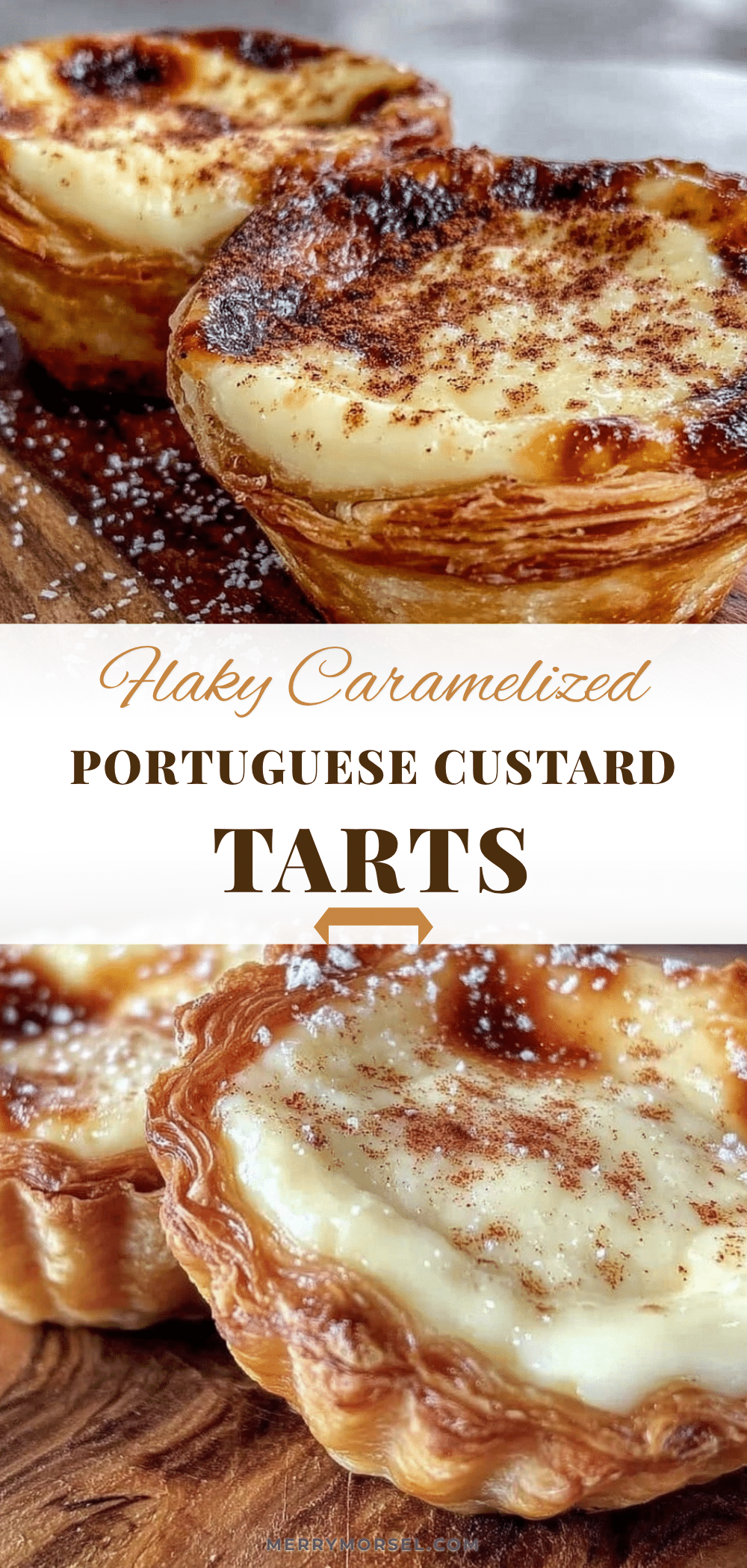
Portuguese Custard Tarts Recipe Easy Perfect Flaky Caramelized Pastry

This recipe delivers perfect Portuguese custard tarts with a flaky, buttery pastry and a smooth, creamy custard topped with a caramelized finish. Easy enough for weeknight treats and impressive for any occasion.
- Prep Time: 15 minutes
- Cook Time: 15 minutes
- Total Time: 1 hour
- Yield: 12 tarts 1x
- Category: Dessert
- Cuisine: Portuguese
Ingredients
- 1 cup (125g) all-purpose flour, sifted
- 1/4 teaspoon salt
- 1/3 cup (75g) unsalted butter, cold and cut into small cubes
- 1/3 cup (80ml) ice-cold water
- Extra flour for dusting
- 1 cup (240ml) whole milk
- 1/2 cup (100g) granulated sugar
- 3 large egg yolks, room temperature
- 2 teaspoons cornstarch
- 1 teaspoon vanilla extract
- 1 strip of lemon zest
- 1/4 teaspoon ground cinnamon (optional)
Instructions
- Make the pastry dough: In a bowl, combine sifted flour and salt. Add cold butter cubes and rub into flour until mixture resembles coarse breadcrumbs with pea-sized butter bits. Slowly add ice-cold water, stirring gently until dough just comes together. Wrap dough in plastic and chill for at least 30 minutes.
- Prepare the custard filling: Heat milk, lemon zest, and cinnamon over medium heat until just about to boil. Remove from heat and infuse for 10 minutes. Whisk egg yolks, sugar, cornstarch, and vanilla extract until pale and thickened. Remove lemon zest from milk and slowly pour warm milk into egg mixture, whisking continuously. Strain custard through fine mesh sieve.
- Roll and layer the pastry: On a floured surface, roll chilled dough into a 10 x 8 inch rectangle. Fold into thirds like a letter, turn 90 degrees, and roll out again. Repeat fold and roll 2-3 times. Roll dough into a log, wrap in plastic, and chill for 15 minutes.
- Shape the tarts: Preheat oven to 475°F (245°C). Cut dough log into 12 equal pieces. Press each piece into muffin tin cups, pushing dough up sides to create thin layers.
- Fill and bake: Pour custard filling into each shell about 3/4 full. Bake 12-15 minutes until tops blister and caramelize with dark spots but do not burn. Rotate tray halfway through baking.
- Cool and enjoy: Let tarts cool in pan for 10 minutes, then transfer to wire rack. Serve warm or at room temperature. Reheat at 350°F (175°C) for 5 minutes to regain crispness if desired.
Notes
Keep ingredients cold for flaky pastry. Pour warm milk slowly into eggs to avoid scrambling. Watch oven carefully to prevent burning. Use fresh lemon zest avoiding white pith. Practice rolling and folding dough for best layers. Sprinkle sugar on top midway through baking for extra caramelization. Custard can be made ahead and refrigerated.
Nutrition
- Serving Size: 1 tart
- Calories: 195
- Sugar: 15
- Sodium: 90
- Fat: 9
- Saturated Fat: 5
- Carbohydrates: 22
- Fiber: 0.5
- Protein: 4
Keywords: Portuguese custard tarts, pastel de nata, flaky pastry, caramelized custard, easy dessert, brunch dessert, traditional Portuguese recipe