Love this? Save it for later!
Share the inspiration with your friends
“You know that moment when a simple smell can stop you in your tracks?” That’s exactly what happened to me last spring during a bustling Saturday afternoon at a local Korean market. I was wandering past a small food stall, the air thick with the nutty aroma of toasted sesame oil, when a plate of glossy, colorful japchae caught my eye. Honestly, I wasn’t expecting to fall for a noodle salad that day—I was just grabbing snacks for a picnic. But the vendor, a cheerful woman named Mina, offered me a taste, and I was hooked instantly.
What made her Fresh Korean Japchae Glass Noodle Salad stand out was how vibrant and fresh it was, not heavy or greasy like some versions I’d tried before. The noodles shimmered in that perfect sesame oil sheen, mixed with crisp, bright vegetables, and the subtle sweetness balanced by a touch of soy. I was scribbling down ingredients on a napkin while Mina shared her family’s secret: the careful timing and the quality of the sesame oil really make this dish sing.
I tried making it at home that very weekend, but let me tell you, the first attempt was a bit of a mess (forgot to soak the noodles properly—classic). Still, with a bit of trial and error, I nailed the texture and flavor that reminded me of that market day. Maybe you’ve been there—craving something fresh and satisfying, but with a touch of something exotic and comforting. This recipe stuck with me because it’s just that kind of dish: approachable, full of layers, and perfect chilled or at room temperature. Plus, it’s a fantastic way to enjoy noodles without feeling weighed down.
So, buckle up, because I’m sharing my easy homemade version of Fresh Korean Japchae Glass Noodle Salad with Sesame Oil. It’s one of those recipes that’s as fun to make as it is to eat, and honestly, it’s a crowd-pleaser every single time.
Why You’ll Love This Recipe
Japchae is a classic Korean dish, but this fresh glass noodle salad version brings a light and lively twist that works for any season. From my kitchen experiments and plenty of feedback from family and friends, here’s why this recipe shines:
- Quick & Easy: Ready in about 30 minutes, perfect for a last-minute lunch or a colorful side at dinner.
- Simple Ingredients: No hard-to-find items—just pantry staples and fresh veggies you likely have on hand.
- Perfect for Entertaining: Serve it as a vibrant side dish at potlucks or casual gatherings; it keeps well and tastes amazing cold.
- Crowd-Pleaser: Even noodle skeptics love the chewy texture and the savory-sweet balance.
- Unbelievably Delicious: The toasted sesame oil and soy sauce combo give it a nutty, umami-rich flavor that’s addictive.
What sets this japchae apart is the fresh salad style—no heavy stir-frying that can make the noodles sticky or oily. Instead, the noodles are tossed gently with crisp veggies and a perfectly balanced dressing. Plus, I use a light hand with the sesame oil to highlight its aroma without overpowering the other flavors. Honestly, it’s the kind of dish that sneaks up on you with its depth while feeling refreshingly light.
If you’re curious about other Korean-inspired dishes, I once shared a recipe for crispy garlic chicken that pairs beautifully with japchae for a full meal experience.
What Ingredients You Will Need
This Fresh Korean Japchae Glass Noodle Salad uses simple, wholesome ingredients to bring together bold flavor and satisfying texture without any fuss. Most of these are pantry staples or easy-to-find fresh produce, making the recipe approachable for any home cook.
- Glass noodles (dangmyeon): 8 oz (225 g) sweet potato starch noodles, soaked in warm water for 20 minutes to soften (look for Japchae noodles in Asian markets or online)
- Sesame oil: 2 tablespoons, toasted variety preferred for that rich, nutty aroma (I trust Kadoya brand for consistency)
- Soy sauce: 3 tablespoons, low-sodium to balance flavors without too much saltiness
- Sugar: 1 tablespoon, to add a subtle sweetness that lifts the dish
- Garlic: 2 cloves, minced, for that punch of depth
- Carrots: 1 medium, julienned or thinly sliced (adds crunch and color)
- Spinach: 2 cups fresh, blanched and squeezed dry (a tender green contrast)
- Bell peppers: 1 small red or yellow, thinly sliced (optional, for vibrant color and sweetness)
- Shiitake mushrooms: 4-5 fresh, thinly sliced (adds earthy flavor; can substitute with button mushrooms)
- Green onions: 2, thinly sliced, for freshness
- Sesame seeds: 1 tablespoon, toasted, for garnish and crunch
- Vegetable oil: 1 tablespoon, for sautéing the veggies
- Black pepper: Freshly ground, to taste
If you want to swap out ingredients, sweet potato noodles can be replaced with mung bean glass noodles for a slightly different texture. For a gluten-free version, double-check that your soy sauce is tamari-based. Also, feel free to use kale or bok choy instead of spinach depending on what’s fresh in your market.
Equipment Needed
- Large pot for boiling noodles and blanching spinach
- Large mixing bowl for combining ingredients
- Non-stick skillet or wok for sautéing vegetables
- Colander or sieve for draining noodles and veggies
- Sharp knife and cutting board for prepping vegetables
- Measuring spoons and cups for accurate seasoning
- Tongs or chopsticks for tossing the salad gently
If you don’t have a wok, a large skillet will do just fine—just be sure not to overcrowd the pan when sautéing the veggies. I’ve also found a fine mesh strainer handy when rinsing and draining the noodles thoroughly. For budget-friendly options, any basic sauté pan works, and you don’t need a fancy set of knives, but a sharp one makes the prep way easier.
Preparation Method
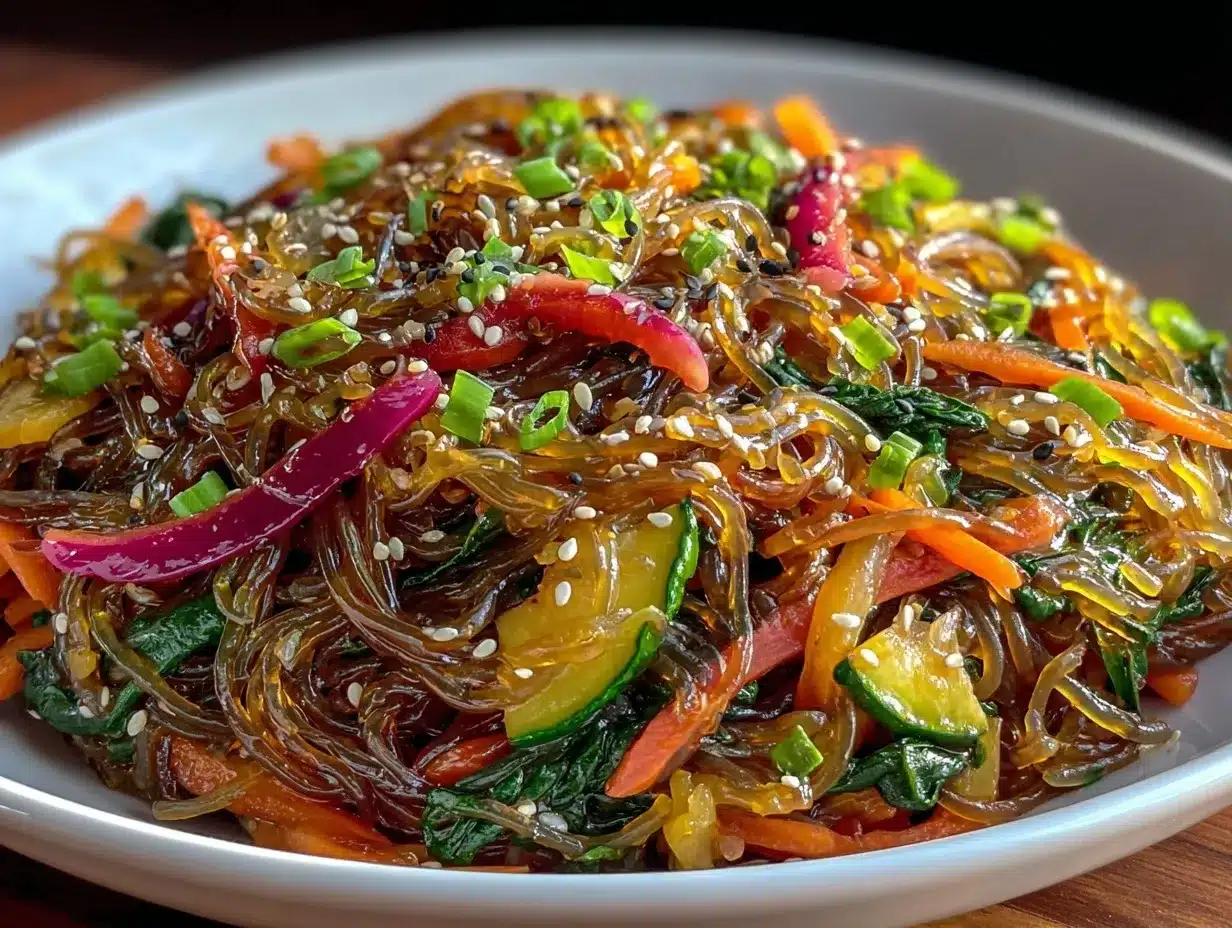
- Prepare the noodles: Soak 8 oz (225 g) glass noodles in warm water for 20 minutes until pliable. Drain, then boil in a large pot of water for 6-7 minutes until tender but still chewy. Drain in a colander and rinse under cold water to stop cooking. Toss with a teaspoon of sesame oil to keep them from sticking.
- Blanch the spinach: Bring a small pot of water to boil, add spinach, and cook for 30 seconds to 1 minute until wilted but bright green. Drain and immediately transfer to ice water or rinse under cold water. Squeeze out excess water and roughly chop.
- Sauté the vegetables: Heat 1 tablespoon vegetable oil in a skillet over medium heat. Add minced 2 garlic cloves and sauté for 30 seconds until fragrant. Add julienned carrots, sliced shiitake mushrooms, and bell peppers if using. Cook for 3-4 minutes until veggies are tender but still crisp. Remove from heat.
- Mix the sauce: In a small bowl, whisk together 3 tablespoons soy sauce, 2 tablespoons toasted sesame oil, 1 tablespoon sugar, and freshly ground black pepper to taste.
- Combine everything: In a large bowl, place the drained noodles, sautéed veggies, blanched spinach, and sliced green onions. Pour the sauce over and toss gently with tongs or chopsticks, making sure everything is evenly coated without squishing the noodles.
- Final touches: Sprinkle 1 tablespoon toasted sesame seeds on top for crunch and a little extra flavor. Taste and adjust seasoning—add more soy sauce or sesame oil if you want it richer.
- Serve: This japchae salad can be enjoyed immediately or chilled for an hour to let flavors meld beautifully. Either way, it’s a fresh, satisfying dish.
Pro tip: When tossing the noodles with the sauce, be gentle to keep the glass noodles intact—they can break easily if handled roughly. Also, don’t overcook the veggies; they should have a slight crunch to contrast with the chewy noodles.
Cooking Tips & Techniques
Japchae is deceptively simple, but getting the perfect texture and flavor balance takes a few tricks I’ve learned the hard way:
- Soak noodles properly: Soaking the glass noodles in warm water before boiling helps prevent them from sticking and ensures they cook evenly.
- Don’t overboil: Cook noodles just until tender and chewy, about 6-7 minutes. Overcooked noodles become mushy and lose that signature chewiness.
- Rinse with cold water: This stops the cooking instantly and cools the noodles for a refreshing salad.
- Light sautéing: Cook veggies just until tender-crisp to maintain vibrant colors and textures—overcooking turns them soggy and dull.
- Use toasted sesame oil sparingly: It can be overpowering, so start with less and add more if needed to keep the flavor balanced.
- Gentle tossing: Handle noodles carefully to avoid breakage; using tongs or chopsticks helps distribute the sauce without mashing the noodles.
I once skipped rinsing the noodles with cold water and ended up with a sticky, clumpy mess (lesson learned!). Also, the sugar in the sauce isn’t just for sweetness—it helps round out the saltiness of the soy sauce and deepens the overall flavor profile.
Variations & Adaptations
This Fresh Korean Japchae Glass Noodle Salad is flexible and easy to adapt to your preferences or dietary needs. Here are a few ideas:
- Protein boost: Add thinly sliced beef, chicken, or tofu. Marinate the meat briefly in soy sauce and garlic, then sauté separately before mixing in.
- Vegetarian/Vegan: Omit the meat and use tamari instead of soy sauce to keep it gluten-free. Add extra mushrooms or roasted sweet potatoes for heartiness.
- Spicy kick: Toss in a teaspoon of gochujang (Korean chili paste) or red pepper flakes for a bold twist.
- Seasonal swaps: Use kale or Swiss chard instead of spinach in cooler months. In summer, fresh julienned zucchini or cucumbers can add a refreshing crunch.
- Gluten-free option: Use gluten-free soy sauce or coconut aminos and ensure noodles are certified gluten-free.
Personally, I love adding a handful of toasted pine nuts for extra texture and a nutty surprise. It’s not traditional, but hey, sometimes you’ve got to make a recipe your own!
Serving & Storage Suggestions
This Fresh Korean Japchae Glass Noodle Salad is best served at room temperature or slightly chilled. It’s a fantastic side dish alongside grilled meats or served as a light main course on its own.
Pair it with steamed rice and a simple cucumber salad for a balanced meal. A cold glass of green tea or a light lager complements the nutty notes of the sesame oil nicely.
To store, place leftovers in an airtight container and refrigerate for up to 3 days. The noodles may absorb more sauce over time, so toss gently before serving again. Reheat briefly in the microwave or enjoy cold straight from the fridge—it tastes great either way.
Flavors tend to deepen after resting, so if you make it ahead for a party, it’ll only get better. Just remember to sprinkle fresh sesame seeds before serving for that perfect finishing touch.
Nutritional Information & Benefits
This japchae salad is a wholesome dish with moderate calories—roughly 250-300 calories per serving (about 1.5 cups). It offers a good balance of carbohydrates from the noodles, fiber and vitamins from the vegetables, and healthy fats from the sesame oil.
Sweet potato starch noodles are gluten-free and low in fat, while spinach and bell peppers provide iron, vitamin C, and antioxidants. The sesame oil contributes heart-healthy fats and a dose of vitamin E. This recipe is naturally dairy-free and can be made vegan easily.
Be mindful of the sodium content from soy sauce; using low-sodium versions helps keep it balanced. Overall, it’s a nutrient-dense, flavorful dish that fits well into a balanced diet.
Conclusion
If you’re looking for a fresh, tasty, and easy Korean-inspired dish, this Fresh Korean Japchae Glass Noodle Salad with Sesame Oil is a winner. It’s light but filling, effortlessly colorful, and packed with flavor that makes you want seconds. I love how it comes together with simple ingredients and minimal fuss but delivers a satisfying meal that feels special.
Feel free to tweak the veggies or spice level to your liking—cooking is all about making the recipe your own. I hope this japchae recipe becomes a staple in your kitchen as it has in mine. Don’t forget to leave a comment sharing your adaptations or any questions you have—I’m here to help!
Now, go on and make this bright, satisfying salad your own. You won’t regret it!
FAQs About Fresh Korean Japchae Glass Noodle Salad
What are glass noodles made from?
Glass noodles, also called dangmyeon in Korean, are typically made from sweet potato starch, giving them a translucent, chewy texture when cooked.
Can I make japchae ahead of time?
Yes! Japchae actually tastes great chilled or at room temperature, making it a perfect make-ahead dish. Just store in an airtight container in the fridge for up to 3 days.
Is japchae gluten-free?
Traditional japchae uses sweet potato starch noodles, which are gluten-free. Just be sure to use gluten-free soy sauce or tamari to keep the dish gluten-free.
How do I prevent the noodles from sticking?
After cooking, rinse the noodles under cold water and toss them with a small amount of sesame oil to keep them from sticking together.
Can I add protein to japchae?
Absolutely! Thinly sliced beef, chicken, tofu, or shrimp are all great options to add protein and make it more filling.
Pin This Recipe!
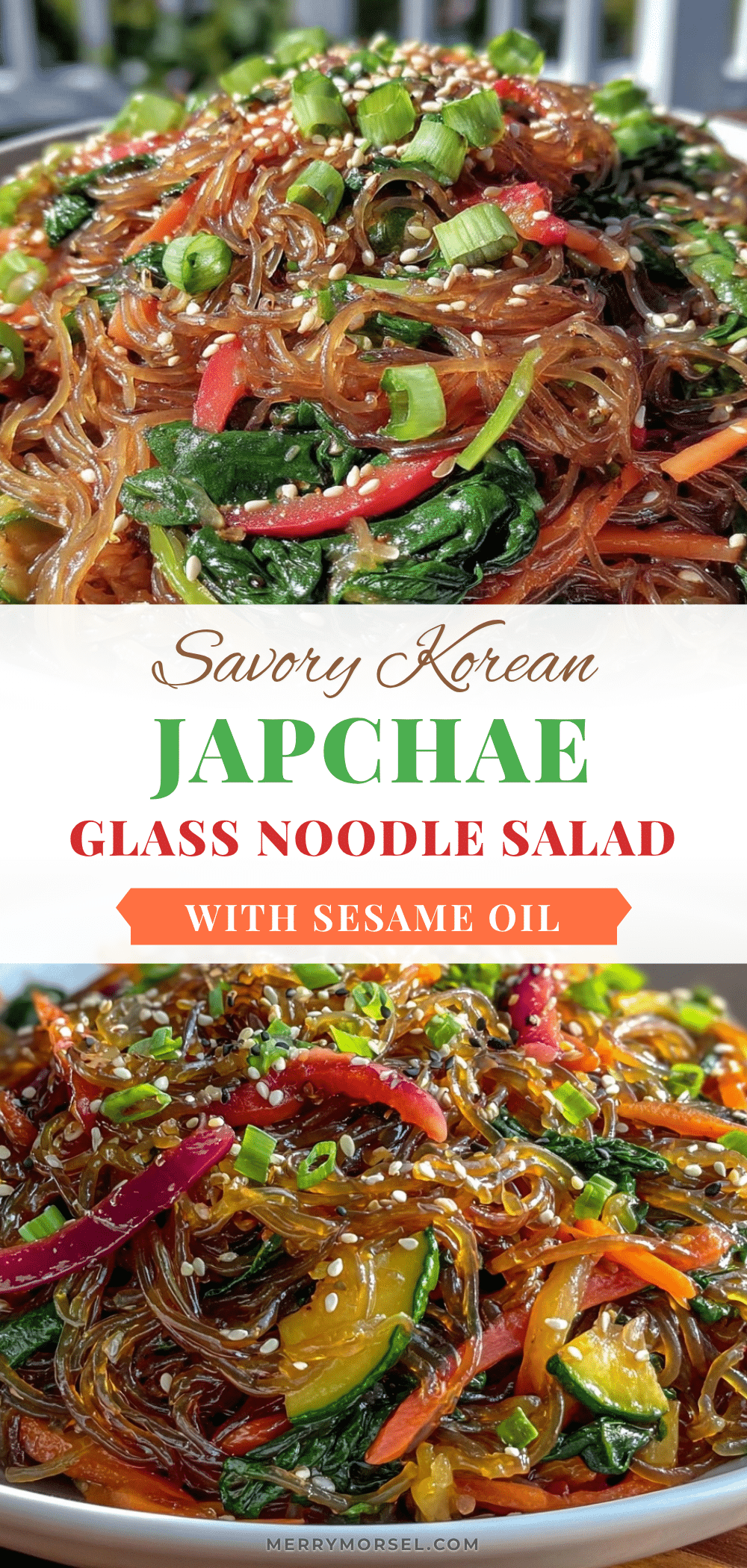
Fresh Korean Japchae Glass Noodle Salad Easy Homemade Recipe with Sesame Oil
A vibrant and fresh Korean glass noodle salad featuring chewy sweet potato noodles, crisp vegetables, and a nutty toasted sesame oil dressing. Perfect served chilled or at room temperature as a light main or side dish.
- Prep Time: 25 minutes
- Cook Time: 10 minutes
- Total Time: 35 minutes
- Yield: 4 servings 1x
- Category: Main Course
- Cuisine: Korean
Ingredients
- 8 oz (225 g) glass noodles (dangmyeon), soaked in warm water for 20 minutes
- 2 tablespoons toasted sesame oil
- 3 tablespoons low-sodium soy sauce
- 1 tablespoon sugar
- 2 cloves garlic, minced
- 1 medium carrot, julienned or thinly sliced
- 2 cups fresh spinach, blanched and squeezed dry
- 1 small red or yellow bell pepper, thinly sliced (optional)
- 4–5 fresh shiitake mushrooms, thinly sliced (or button mushrooms)
- 2 green onions, thinly sliced
- 1 tablespoon toasted sesame seeds
- 1 tablespoon vegetable oil
- Freshly ground black pepper, to taste
Instructions
- Soak 8 oz (225 g) glass noodles in warm water for 20 minutes until pliable. Drain, then boil in a large pot of water for 6-7 minutes until tender but still chewy. Drain in a colander and rinse under cold water to stop cooking. Toss with a teaspoon of sesame oil to keep them from sticking.
- Bring a small pot of water to boil, add spinach, and cook for 30 seconds to 1 minute until wilted but bright green. Drain and immediately transfer to ice water or rinse under cold water. Squeeze out excess water and roughly chop.
- Heat 1 tablespoon vegetable oil in a skillet over medium heat. Add minced garlic and sauté for 30 seconds until fragrant. Add julienned carrots, sliced shiitake mushrooms, and bell peppers if using. Cook for 3-4 minutes until veggies are tender but still crisp. Remove from heat.
- In a small bowl, whisk together soy sauce, toasted sesame oil, sugar, and freshly ground black pepper to taste.
- In a large bowl, place the drained noodles, sautéed veggies, blanched spinach, and sliced green onions. Pour the sauce over and toss gently with tongs or chopsticks, making sure everything is evenly coated without squishing the noodles.
- Sprinkle toasted sesame seeds on top for crunch and a little extra flavor. Taste and adjust seasoning—add more soy sauce or sesame oil if desired.
- Serve immediately or chill for an hour to let flavors meld beautifully.
Notes
Soak noodles properly before boiling to prevent sticking. Rinse noodles with cold water after boiling to stop cooking and cool them for salad. Use toasted sesame oil sparingly to avoid overpowering flavors. Handle noodles gently when tossing to prevent breakage. Vegetables should be cooked until tender-crisp to maintain texture and color. Can add protein like beef, chicken, or tofu if desired. Use gluten-free soy sauce or tamari for gluten-free version.
Nutrition
- Serving Size: About 1.5 cups per s
- Calories: 275
- Sugar: 6
- Sodium: 550
- Fat: 9
- Saturated Fat: 1
- Carbohydrates: 42
- Fiber: 3
- Protein: 6
Keywords: Japchae, Korean noodle salad, glass noodles, sweet potato noodles, sesame oil, healthy salad, gluten-free, vegetarian option