Love this? Save it for later!
Share the inspiration with your friends
“I wasn’t expecting much when I found a bunch of rhubarb wilting in the back of my fridge last Thursday night,” I admit. It was one of those moments where you’re staring at ingredients, hoping for inspiration to strike before the clock mocks you. Honestly, I was tempted to toss the rhubarb out, but then I remembered a chat I had with a local market vendor weeks ago. She casually mentioned her grandmother’s rhubarb curd, something she said was unbelievably simple and didn’t require fancy kitchen gadgets.
I’d never made curd before. The mere thought of a double boiler always made me hesitate—it felt like too much fuss for something that might not even turn out. But that night, with just four ingredients and zero double boiler in sight, I gave it a shot. The kitchen got a little messy (I spilled sugar on the counter—typical me), but the result? Let me tell you, that bright pink curd with its tangy-sweet zing was worth every bit of the chaos.
Maybe you’ve been there, staring at rhubarb wondering how to make it sing beyond pies and crumbles. This easy rhubarb curd recipe is my go-to for turning that tart stalk into a luscious spread or filling. It’s quick, forgiving, and honestly, it’s the kind of thing you want to make again and again. I keep a jar in the fridge at all times—perfect for spooning over pancakes, swirling into yogurt, or even dolloping on a simple cake.
Why You’ll Love This Easy Rhubarb Curd Recipe
After many attempts (and a few burnt batches), I finally landed on this straightforward rhubarb curd recipe that’s as reliable as it is delicious. Here’s why it’s become a staple in my kitchen:
- Quick & Easy: Comes together in about 20 minutes, no double boiler, no stress, just great curd.
- Simple Ingredients: Only four everyday ingredients – rhubarb, sugar, eggs, and butter. No fussing with fancy add-ins.
- Perfect for Homemade Desserts: Ideal for spreading on toast, filling tarts, or stirring into oatmeal for a touch of fresh flavor.
- Crowd-Pleaser: The tangy but sweet balance wins over picky eaters and dessert lovers alike.
- Unbelievably Delicious: Silky smooth texture with a vibrant pink hue that brightens any dish.
This recipe isn’t just another curd—it’s the one that sticks because it respects the ingredient’s natural tartness while delivering creamy richness without complicated steps. Plus, no double boiler means less cleanup—honestly, that’s a game-changer for me (and maybe for you too!). If you love rhubarb but shy away from making curd because of the technique, this is your new best friend.
What Ingredients You Will Need
This recipe uses simple, wholesome ingredients to deliver bold flavor and satisfying texture without the fuss. You likely have most of these in your pantry or fridge already, and if not, they’re easy to find in any grocery store.
- Fresh Rhubarb – about 2 cups, chopped (roughly 300 grams). I prefer fresh stalks that are firm and brightly colored for the best flavor.
- Granulated Sugar – 3/4 cup (150 grams). Adjust slightly if you like it more or less sweet. I recommend brands like Domino or C&H for consistent sweetness.
- Large Eggs – 3, beaten, room temperature. These help thicken and give the curd richness.
- Unsalted Butter – 6 tablespoons (85 grams), cut into small pieces and room temperature. Adds that silky mouthfeel and balances tartness.
If rhubarb isn’t in season, frozen rhubarb works fine; just thaw and drain excess liquid before starting. For a dairy-free version, you can swap the butter with coconut oil, though the flavor will shift slightly. Also, if you want to add a little extra zing, a teaspoon of finely grated lemon zest complements the rhubarb beautifully, but it’s totally optional.
Equipment Needed
- Medium saucepan – a good quality non-stick or heavy-bottomed pan works best to prevent sticking or burning.
- Fine mesh sieve – for straining the cooked rhubarb puree to create a smooth curd. If you don’t have one, a food mill or blender can help, but you might end up with a slightly chunkier texture.
- Whisk – for beating eggs and stirring the curd continuously.
- Heatproof bowl – for mixing and resting the curd once done.
- Spatula – a silicone one is ideal for scraping down the sides of the pan and bowl.
Personally, I avoid using a double boiler here (which is the point of this recipe!) because it cuts down on kitchen clutter and save time. A sturdy saucepan is all you need, and if you’re worried about curd scrambling, just keep the heat low and stir constantly—it’s a trick I’ve perfected after more than a few early kitchen mishaps.
Preparation Method
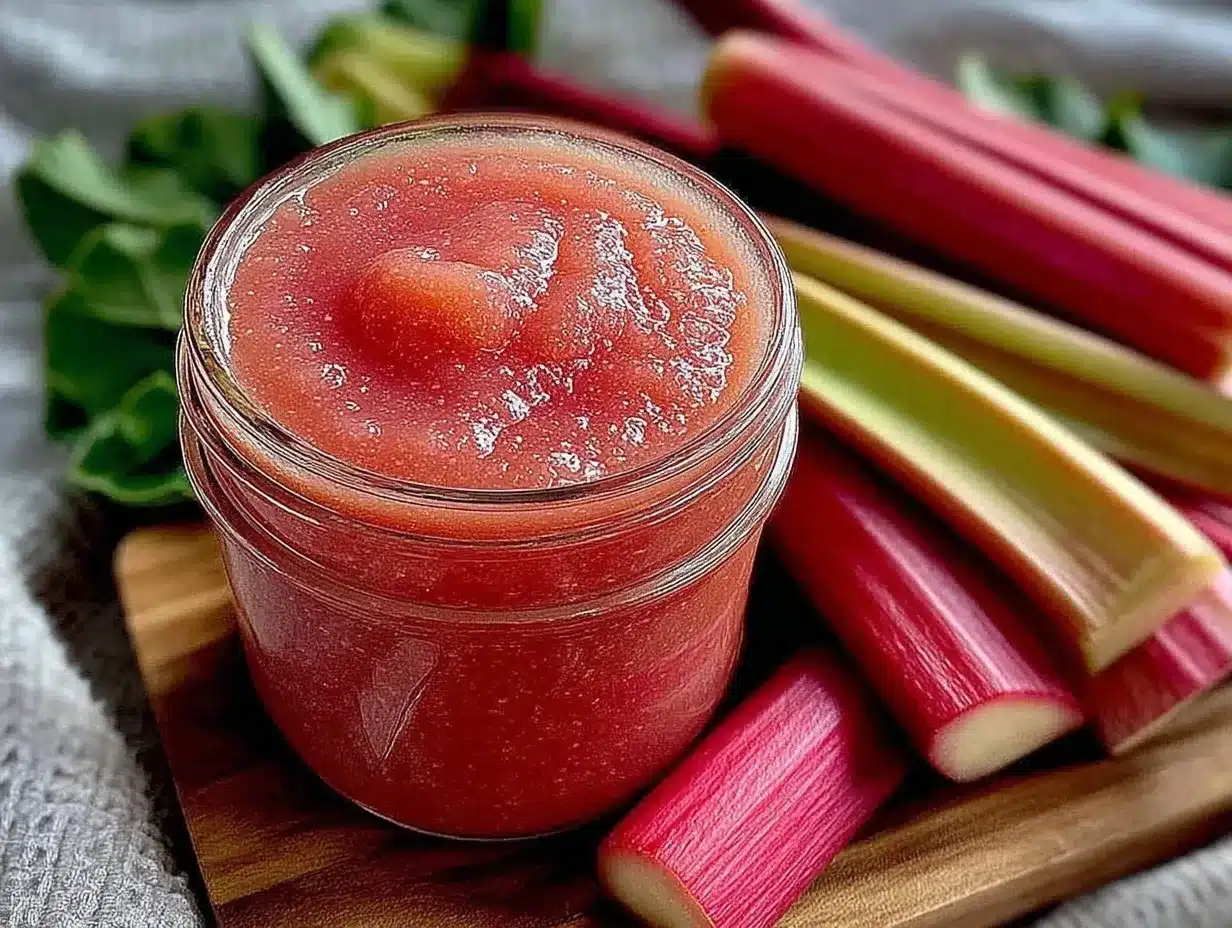
- Prepare the rhubarb: Chop about 2 cups (300 grams) of fresh rhubarb into small pieces. Place them in the saucepan with 1/4 cup (50 grams) of the sugar and cook over medium-low heat for about 8 minutes, stirring occasionally. The rhubarb will soften and release its juices. You’ll want it to be mushy but not burnt—watch closely.
- Strain the puree: Pour the cooked rhubarb mixture through a fine mesh sieve into a bowl, pressing gently with the back of a spoon to extract as much juice and pulp as possible. Discard the solids (or save for a smoothie). You should end up with roughly 1 cup (240 ml) of rhubarb puree.
- Mix eggs and sugar: In a separate bowl, whisk together the remaining 1/2 cup (100 grams) sugar and 3 beaten large eggs until combined and slightly frothy.
- Combine and cook: Return the rhubarb puree to the saucepan and place over low heat. Slowly whisk in the egg-sugar mixture. Stir constantly with a whisk or spatula to prevent the eggs from curdling. Cook for 8–10 minutes until the mixture thickens enough to coat the back of a spoon. The temperature should be around 170°F (77°C) if you want to be exact, but you can also judge by texture—when it’s thick and glossy, you’re good.
- Add butter: Remove from heat and immediately whisk in the 6 tablespoons (85 grams) of unsalted butter until fully melted and incorporated. This gives the curd a luxurious, smooth finish.
- Cool and store: Pour the curd into a clean jar or container. Let it cool to room temperature, then cover and refrigerate. It will thicken further as it chills.
Heads up: stirring constantly is key here to avoid scrambled eggs—a mistake I made on my first try! Also, don’t rush the cooking; patience pays off with silky texture. If it seems too thick when cold, a quick stir or gentle warm-up helps loosen it up.
Cooking Tips & Techniques
Let me share a few nuggets from my trial and error moments that helped make this rhubarb curd foolproof:
- Low and slow is your friend: Cooking the curd gently over low heat while stirring ensures it thickens without scrambling. Rushing with high heat almost always means curdled eggs.
- Use fresh eggs at room temperature: This helps the eggs integrate smoothly and thickens the curd better.
- Strain the rhubarb puree: This might feel like an extra step, but it makes the curd super smooth and silky, without fibrous bits.
- Butter at the end: Adding butter off the heat preserves its creamy texture and prevents it from separating.
- Keep a whisk handy: Stirring constantly is tiring, but trust me—it’s worth it. Set a timer if you need to remember to keep stirring.
I once tried adding the butter during cooking, and the curd split horribly. Lesson learned! Also, if you want to multitask, you can prep the rhubarb puree earlier in the day and finish the curd just before serving.
Variations & Adaptations
Want to switch things up? Here are some ways to customize this rhubarb curd recipe:
- Strawberry-Rhubarb Curd: Toss in 1/2 cup chopped strawberries with the rhubarb for a classic combo.
- Vanilla Rhubarb Curd: Add a teaspoon of vanilla extract or scrape in a vanilla bean pod during cooking for a fragrant twist.
- Gluten-Free & Dairy-Free: Substitute butter with coconut oil or a plant-based margarine and still get that creamy finish.
- Less Sweet Version: Cut the sugar to 1/2 cup (100 grams) for a tarter curd, especially if using sweeter rhubarb or berries.
- Spiced Rhubarb Curd: Add a pinch of ground ginger or cinnamon during cooking for a warm spice note.
One of my favorite tweaks is adding a splash of lemon juice at the end for extra brightness. It’s a subtle change but makes all the difference on a gloomy day!
Serving & Storage Suggestions
This rhubarb curd is a versatile delight. Serve it slightly chilled or at room temperature, depending on your preference. Here are some ideas to enjoy it:
- Spread on toast, scones, or English muffins for a quick breakfast or snack.
- Use as a filling for tarts or mini tartlets—it pairs beautifully with a buttery crust.
- Swirl into plain yogurt or cottage cheese for a tangy treat.
- Drizzle over vanilla ice cream or pound cake for an easy dessert upgrade.
Store the curd in an airtight container in the refrigerator for up to 2 weeks. For longer storage, freeze in small portions for up to 3 months. When reheating, gently warm it in a saucepan or microwave, stirring often to keep the smooth texture intact. Flavors deepen with time, so sometimes letting it rest overnight makes it even better.
Nutritional Information & Benefits
Per serving (about 2 tablespoons/30 grams):
| Calories | 70 |
|---|---|
| Fat | 5g |
| Carbohydrates | 6g |
| Sugar | 5g |
| Protein | 1g |
Rhubarb is a low-calorie vegetable rich in fiber and antioxidants, especially vitamin C and K. The eggs provide protein and help with satiety, while butter adds healthy fats needed for nutrient absorption. This recipe is naturally gluten-free and can be adjusted for dairy-free diets. Just be mindful of the sugar content if watching intake.
From my perspective, having a fresh homemade curd like this means controlling what goes into your food, avoiding preservatives, and enjoying a bright, fresh flavor that’s rare in store-bought versions.
Conclusion
This easy rhubarb curd recipe has earned a permanent spot on my kitchen counter—and I think it will in yours too. It’s simple enough for weeknights but special enough to impress guests or make a treat for yourself. Whether you’re new to rhubarb or a longtime fan, this curd showcases the ingredient’s unique tartness wrapped in creamy, buttery goodness without any complicated steps.
Try tweaking it to your taste, maybe adding spices or other fruits, and watch how it transforms your desserts and breakfasts. Honestly, I love how it brightens my mornings and adds a pop of color to so many dishes.
If you make it, I’d love to hear how you serve yours—drop a comment or share a twist you tried. Let’s keep the rhubarb love going!
FAQs About Easy Rhubarb Curd
Can I use frozen rhubarb for this curd?
Yes! Just thaw and drain frozen rhubarb well before cooking to avoid excess liquid diluting the curd.
Why doesn’t this recipe need a double boiler?
The low and slow cooking method with constant stirring prevents the eggs from curdling, so a double boiler isn’t necessary.
How long does homemade rhubarb curd last?
Stored in the fridge in an airtight container, it lasts up to 2 weeks. You can also freeze it for longer storage.
Can I make this curd vegan?
It’s tricky since eggs are key to thickening, but you can experiment with vegan egg substitutes, though the texture may differ.
What are some creative ways to use rhubarb curd?
Try it on toast, as a tart filling, stirred into yogurt, or as a topping for ice cream and cakes.
Pin This Recipe!
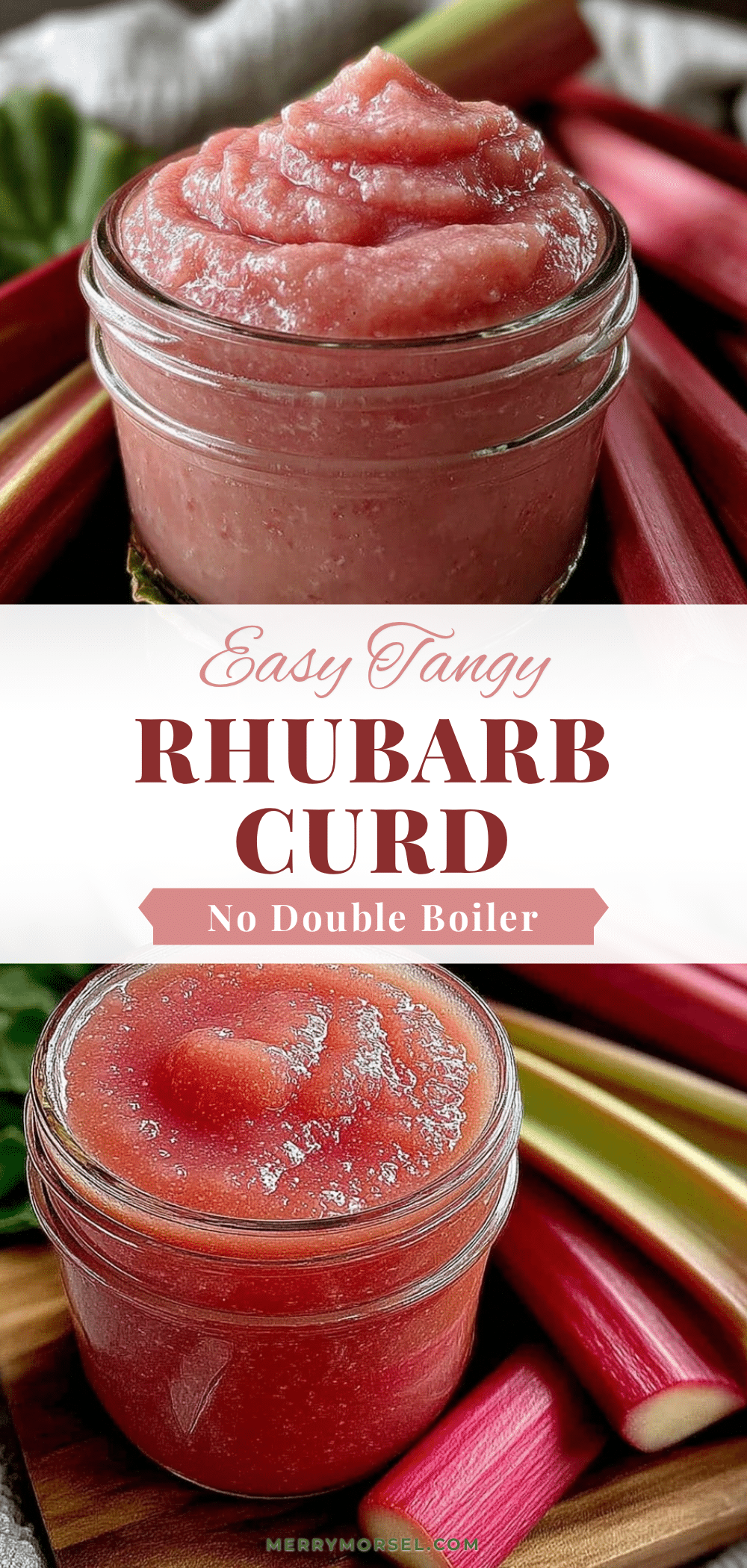
Easy Rhubarb Curd Recipe with 4 Ingredients Perfect for Homemade Desserts
A quick and simple rhubarb curd recipe using just four ingredients, perfect for spreading on toast, filling tarts, or adding to desserts. No double boiler needed, making it easy and fuss-free.
- Prep Time: 10 minutes
- Cook Time: 15 minutes
- Total Time: 25 minutes
- Yield: About 1 1/2 cups (12 servings, 2 tablespoons each) 1x
- Category: Dessert
- Cuisine: American
Ingredients
- 2 cups fresh rhubarb, chopped (about 300 grams / 10.5 oz)
- 3/4 cup granulated sugar (150 grams)
- 3 large eggs, beaten, room temperature
- 6 tablespoons unsalted butter (85 grams / 3 oz), cut into small pieces, room temperature
Instructions
- Chop about 2 cups (300 grams) of fresh rhubarb into small pieces. Place them in a medium saucepan with 1/4 cup (50 grams) of the sugar and cook over medium-low heat for about 8 minutes, stirring occasionally until the rhubarb softens and releases its juices.
- Pour the cooked rhubarb mixture through a fine mesh sieve into a bowl, pressing gently with the back of a spoon to extract as much juice and pulp as possible. Discard the solids or save for another use. You should have about 1 cup (240 ml) of rhubarb puree.
- In a separate bowl, whisk together the remaining 1/2 cup (100 grams) sugar and the 3 beaten eggs until combined and slightly frothy.
- Return the rhubarb puree to the saucepan and place over low heat. Slowly whisk in the egg-sugar mixture. Stir constantly with a whisk or spatula to prevent the eggs from curdling. Cook for 8–10 minutes until the mixture thickens enough to coat the back of a spoon.
- Remove from heat and immediately whisk in the 6 tablespoons (85 grams) of unsalted butter until fully melted and incorporated.
- Pour the curd into a clean jar or container. Let it cool to room temperature, then cover and refrigerate. It will thicken further as it chills.
Notes
Stir constantly over low heat to prevent eggs from scrambling. Use room temperature eggs for best results. Straining the rhubarb puree ensures a smooth curd. Butter is added off the heat to preserve creamy texture. The curd thickens more as it cools. For dairy-free, substitute butter with coconut oil but expect a flavor change.
Nutrition
- Serving Size: 2 tablespoons (30 gr
- Calories: 70
- Sugar: 5
- Fat: 5
- Carbohydrates: 6
- Protein: 1
Keywords: rhubarb curd, easy rhubarb recipe, homemade curd, rhubarb dessert, simple curd recipe, no double boiler curd, rhubarb spread