Love this? Save it for later!
Share the inspiration with your friends
My husband stared at the empty plate for a full minute before asking if I’d hidden the roast in the oven. He actually checked the other oven, just to be sure. I had to point at the pile of caramelized, rosemary-scented roots sitting right in front of him. He laughed, shook his head, and took another bite of the roasted carrots.
It’s funny how we treat vegetables like an afterthought. You know? We cook the protein, plate it, and then shove a sad pile of steamed broccoli on the side. But honestly, this batch of Crispy Rosemary Roasted Root Vegetables stole the show completely. The edges were dark and crisp, the centers soft and sweet, and the smell of fresh herbs filled the entire kitchen.
I’ve made roasted veggies before, but they usually end up soggy or bland. Not this time. The key was getting the oil hot enough and not crowding the pan. When he went back for seconds without me even suggesting it, I knew I had finally cracked the code. It’s not just a side dish; it’s the star of the table.
Now, whenever I pull a tray of these out of the oven, there is zero competition. It’s become our go-to comfort food, especially when the weather turns chilly. I don’t need to make a fancy sauce or a complex main course to impress him anymore. Just good, honest roots and some rosemary.
It’s a simple shift, but it makes dinner feel less like a chore and more like a treat. You’ll see why these are sticking around in your rotation.
Why You’ll Love This Recipe
There is a specific magic that happens when root vegetables meet high heat and fresh herbs. I’ve tested this method over and over, trying different oil temperatures and pan sizes, until I found the sweet spot. This isn’t just about cooking veggies; it’s about transforming humble ingredients into something that tastes like it came from a high-end restaurant kitchen. Here is why this recipe stands out from the rest.
- Quick & Easy: While the oven does the heavy lifting, the prep time is minimal. You chop, toss, and roast. It comes together in under an hour, making it perfect for those busy weeknights when you’re tired but still want a home-cooked meal.
- Simple Ingredients: You likely already have everything in your kitchen. Potatoes, carrots, parsnips, olive oil, salt, pepper, and fresh rosemary. No fancy grocery trips needed for obscure spices or hard-to-find items.
- Perfect for Meal Prep: These vegetables hold up surprisingly well in the fridge. They actually taste even better the next day as the flavors meld together. Great for lunchboxes or quick reheating for dinner.
- Crowd-Pleaser: I have fed these to picky eaters and gourmet foodies alike. The natural sweetness of the carrots and parsnips balances the earthiness of the potatoes and rosemary. It always gets rave reviews.
- Unbelievably Delicious: The texture is next-level. You get that contrast between the shattering crisp edges and the creamy, buttery interior. It’s comfort food reimagined—healthier, faster, but with the same soul-soothing satisfaction.
What makes this recipe different is the technique. Most people steam their veggies or roast them at too low a temperature. By using a higher heat and ensuring the vegetables are dry before oiling them, you get that essential Maillard reaction. It’s the difference between boiled potatoes and roasted potatoes. This is the best version of roasted root vegetables because it respects the ingredient while pushing it to its maximum flavor potential.
What Ingredients You Will Need
This recipe relies on the natural sugars and sturdy structure of root vegetables to deliver bold flavor without the fuss. You don’t need exotic spices or expensive truffle oil. The secret is in the quality of the fresh produce and the right balance of fat and acid. Here is what you need to gather for this batch.
The Roots
- Yukon Gold Potatoes: These are my top choice because they have a naturally buttery flavor and a waxy texture that holds its shape well during roasting. Look for medium-sized potatoes that are uniform in size so they cook evenly. You can also use red potatoes or fingerlings if you prefer.
- Carrots: Use fresh, firm carrots. Rainbow carrots add a nice visual pop, but orange ones work perfectly too. Peel them if you have thick skins, but leave them on if they are organic and young.
- Parsnips: These look like white carrots and have a sweet, spicy flavor that pairs beautifully with rosemary. They add a wonderful depth that complements the earthiness of the potatoes.
- Sweet Potatoes: For extra sweetness, add cubed sweet potatoes. They caramelize quickly, so keep an eye on them. They pair wonderfully with the savory herbs.
The Flavor Builders
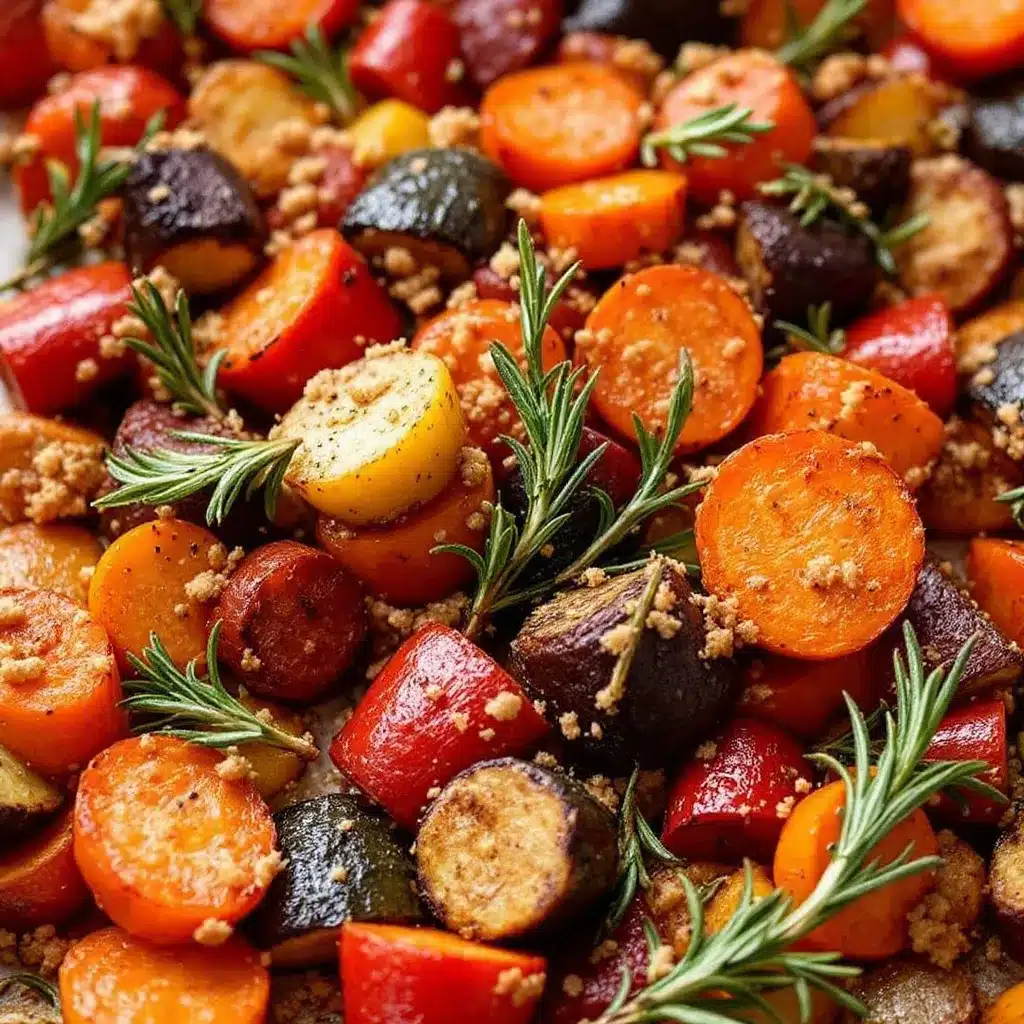
- Fresh Rosemary: Fresh is non-negotiable here. Dried rosemary can be too piney and brittle. You want those needle-like leaves that release essential oils when heated. I recommend buying a fresh sprig from the produce section rather than a jar of dried herbs.
- Extra Virgin Olive Oil: Use a good quality oil. It doesn’t have to be expensive, but avoid the cheap stuff. It coats the vegetables and helps conduct the heat for crisping. About 3-4 tablespoons should do the job.
- Garlic: Fresh cloves, minced. Garlic powder can work in a pinch, but fresh garlic adds a brighter, sharper bite that cuts through the richness of the oil.
- Kosher Salt and Black Pepper: Season generously. Kosher salt sticks to the vegetables better than table salt and doesn’t have that metallic aftertaste. Freshly cracked black pepper adds a nice heat.
- Optional: Parmesan Cheese: If you want to take it up a notch, sprinkle some grated Parmesan over the veggies during the last 5 minutes of roasting. It adds a salty, umami kick.
Substitution tip: Feel free to swap in turnips or beets if that’s what is in season. Just note that beets will bleed color into everything, so roast them separately if you want to keep the other veggies bright. For a gluten-free and vegan option, this recipe is already naturally compliant.
Equipment Needed
You don’t need a fancy kitchen to make this recipe work. In fact, keeping it simple helps you focus on the food. Here is what you’ll need to get started.
- Large Sheet Pans: I recommend using two large rimmed baking sheets. This is crucial. If you crowd the vegetables on one pan, they will steam instead of roast. You need space for the air to circulate. If you only have one pan, roast in two batches.
- Sharp Chef’s Knife: A good knife makes chopping the roots much safer and faster. A dull knife is dangerous because it slips. Keep your blade sharp.
- Large Mixing Bowl: Use a bowl big enough to toss the vegetables with oil and herbs without spilling. A stainless steel or glass bowl works best.
- Pastry Brush or Hands: You can use a brush to coat the veggies, but honestly, clean hands are faster and ensure every nook and cranny gets oiled.
- Parchment Paper (Optional): Lining your pans with parchment paper makes cleanup a breeze. It also prevents sticking, though a well-seasoned pan usually works fine if oiled properly.
Budget-friendly note: You don’t need expensive non-stick pans. Standard aluminum sheet pans are fine and actually help with browning because they conduct heat well. Just make sure they aren’t warped, or your veggies might cook unevenly.
Preparation Method
Let’s get into the nitty-gritty. The process is straightforward, but attention to detail here is what separates good roasted veggies from great ones. Follow these steps closely for the best results.
- Preheat the Oven: Start by heating your oven to 425°F (220°C). This high heat is essential for crisping. If you roast at a lower temperature, the vegetables will release moisture and become soft rather than crunchy. Let the oven fully preheat for at least 15 minutes.
- Prep the Vegetables: Wash all your root vegetables thoroughly. Peel the carrots and parsnips if the skins are thick or waxy. Cut the potatoes, carrots, and parsnips into uniform chunks. Aim for 1-inch cubes or batons. Consistency is key here; if some pieces are tiny and others are huge, the small ones will burn before the large ones are cooked through.
- Dry Them Thoroughly: This is the step most people skip. After washing, pat the vegetables completely dry with a clean kitchen towel or paper towels. Any excess water will turn to steam in the oven, preventing browning. Dry veggies equal crispy veggies.
- Season the Oil: In your large mixing bowl, combine the olive oil, minced garlic, chopped fresh rosemary, salt, and pepper. Whisk it together slightly to distribute the herbs and spices evenly in the oil.
- Toss the Veggies: Add the dried vegetables to the bowl. Use your hands to toss them, ensuring every piece is lightly coated. You don’t need to drown them in oil, just a thin, glossy layer. If they look dry, add a little more oil.
- Arrange on Pans: Transfer the vegetables to your prepared sheet pans. Spread them out in a single layer. Leave space between each piece. If they are touching, they will steam. This might seem like a lot of empty space, but it’s necessary for the roast to work.
- Roast: Place the pans in the oven. Roast for 20 minutes. Then, remove the pans and flip/toss the vegetables. This ensures even cooking and browning on all sides. Return to the oven and roast for another 15-20 minutes, or until the edges are dark brown and crispy, and the centers are tender when pierced with a fork.
- Final Check: Taste one piece. If it needs more salt, sprinkle a little more on top. If you are using Parmesan, add it now and roast for the final 2 minutes to melt and crisp up.
- Serve: Remove from the oven and serve immediately. They lose their crispness if they sit in a covered container for too long.
Troubleshooting tip: If your edges are burning before the centers are soft, your oven might run hot. Check them 5 minutes early. If they are still pale after 40 minutes, the pan was too crowded. Next time, use two pans.
Cooking Tips & Techniques
I have made my fair share of burnt, mushy vegetable disasters over the years. Here are some professional techniques and personal lessons to help you avoid common pitfalls.
Don’t Crowd the Pan: I cannot stress this enough. Overcrowding is the number one reason roasted vegetables fail. They need room to breathe. If you have a small oven, roast in batches. It’s worth the extra effort.
Uniform Cuts Matter: Take the time to cut your vegetables into similar sizes. I know it’s tempting to just chop them quickly, but uneven pieces lead to uneven cooking. A few extra minutes of prep saves you from burnt edges and raw centers.
Oil Temperature: Make sure your oil is not cold when it hits the pan. If you are worried about the oil smoking, you can warm it slightly before tossing the veggies, or just ensure your oven is fully preheated. The initial burst of heat is what creates the crust.
Seasoning Timing: Salt draws out moisture. If you salt the vegetables too far in advance before roasting, they might release water and become soggy. It’s best to season them right before they go into the oven.
The Flip: Don’t forget to flip the veggies halfway through. The bottom side needs just as much heat as the top. A simple toss ensures everything gets that golden-brown treatment.
Sensory Cues: Trust your nose. When the rosemary starts to smell fragrant and slightly toasted, you are getting close. The vegetables should sizzle when they hit the hot pan. If they are silent, the pan wasn’t hot enough.
Variations & Adaptations
One of the best things about this base recipe is how easy it is to adapt. Here are a few ways to switch it up depending on what you have or what you’re craving.
- Dietary Variations: This recipe is naturally gluten-free and vegan. For a dairy-free option, skip the Parmesan. If you want to reduce carbs, swap the potatoes for cauliflower florets or broccoli stems. Just note that cauliflower cooks faster, so add it later in the roasting process.
- Flavor Twists: Instead of rosemary, try thyme and lemon zest for a brighter, more floral flavor. Or go savory with garlic powder and smoked paprika for a BBQ-style vibe. For a spicy kick, add a pinch of red pepper flakes or cayenne pepper to the oil mixture.
- Seasonal Swaps: In the fall, add butternut squash cubes. In the winter, try turnips and rutabaga. In the spring, young carrots and new potatoes are delicious. Use whatever is fresh and local at your farmers market.
- Cooking Method: You can make this in an air fryer. Toss the veggies in oil and seasonings, then air fry at 400°F (200°C) for 12-15 minutes, shaking the basket halfway through. They get incredibly crispy in the air fryer.
- My Personal Favorite: I love adding a drizzle of balsamic glaze after they come out of the oven. The acidity cuts through the richness of the roasted roots and adds a sweet-tangy finish that is addictive.
Experiment with these variations to find your perfect combination. Cooking is all about adjusting to your taste and what you have on hand.
Serving & Storage Suggestions
These vegetables are best served hot and fresh from the oven. They make a perfect side dish for easy one pan honey garlic chicken thighs or a hearty roast beef. They also pair well with grilled fish or tofu.
Storage: If you have leftovers (which is rare), let them cool completely before storing. Place them in an airtight container in the refrigerator. They will keep for up to 3-4 days.
Reheating: To restore the crispness, reheat them in an oven or air fryer at 400°F (200°C) for 5-10 minutes. Avoid the microwave, as it will make them soft and chewy. You can also sauté them quickly in a pan with a little oil to crisp them up again.
Flavor Development: Interestingly, these vegetables often taste even better the next day. The flavors have time to meld and concentrate. They make a great addition to salads or grain bowls for lunch.
Presentation: Serve them in a large communal bowl or plate them individually with a sprinkle of fresh parsley or chives for a pop of green color. A squeeze of fresh lemon juice right before serving can brighten the whole dish.
Nutritional Information & Benefits
Root vegetables are nutrient powerhouses. They are packed with vitamins, minerals, and fiber. Carrots are high in Vitamin A, which is great for eye health. Potatoes provide potassium and Vitamin C. Parsnips offer fiber and folate.
Using olive oil adds healthy monounsaturated fats, which help with nutrient absorption. This recipe is naturally gluten-free and can be made vegan by omitting any cheese toppings. It is a wholesome, balanced side dish that supports overall wellness without feeling like a diet food.
One serving (about 1 cup) contains roughly 150-200 calories, depending on the oil used. It’s a low-fat, high-fiber option that keeps you full and satisfied. I love adding these to my meals because I feel energized and nourished, not sluggish.
Conclusion
Roasted root vegetables with rosemary are a simple, delicious, and healthy addition to any meal. They are easy to make, customizable, and always a crowd-pleaser. I hope you try this recipe and find it as useful and tasty as I do. Don’t be afraid to experiment with different herbs and vegetables to make it your own.
Let me know how it turns out for you! Share your variations or tips in the comments below. I love hearing from readers who have made this recipe. Happy cooking, and enjoy every bite!
FAQs
Can I use frozen vegetables for this recipe?
It is not recommended. Frozen vegetables release a lot of water when cooked, which leads to steaming rather than roasting. You will end up with mushy, soggy veggies instead of crispy ones. Always use fresh vegetables for the best results.
How do I prevent the garlic from burning?
Garlic burns quickly at high temperatures. To avoid this, you can add the minced garlic in the last 5-10 minutes of roasting. Alternatively, use whole garlic cloves that are left unpeeled; they will roast gently and become sweet and spreadable.
Can I roast these vegetables in advance?
Yes, you can prep the vegetables and toss them in oil up to 24 hours in advance. Store them in the fridge in a sealed container. However, do not cook them until you are ready to eat, as they may become soggy if left in the oil too long.
What is the best oil to use for roasting?
Extra virgin olive oil is great for flavor, but it has a lower smoke point. If you are worried about burning, use avocado oil or refined olive oil, which have higher smoke points. Both work well for roasting at 425°F.
Why are my vegetables not crispy?
The most common reasons are overcrowding the pan or not drying the vegetables thoroughly before oiling. Make sure you give them enough space and pat them dry. Also, ensure your oven is fully preheated before putting the pan inside.
Pin This Recipe!
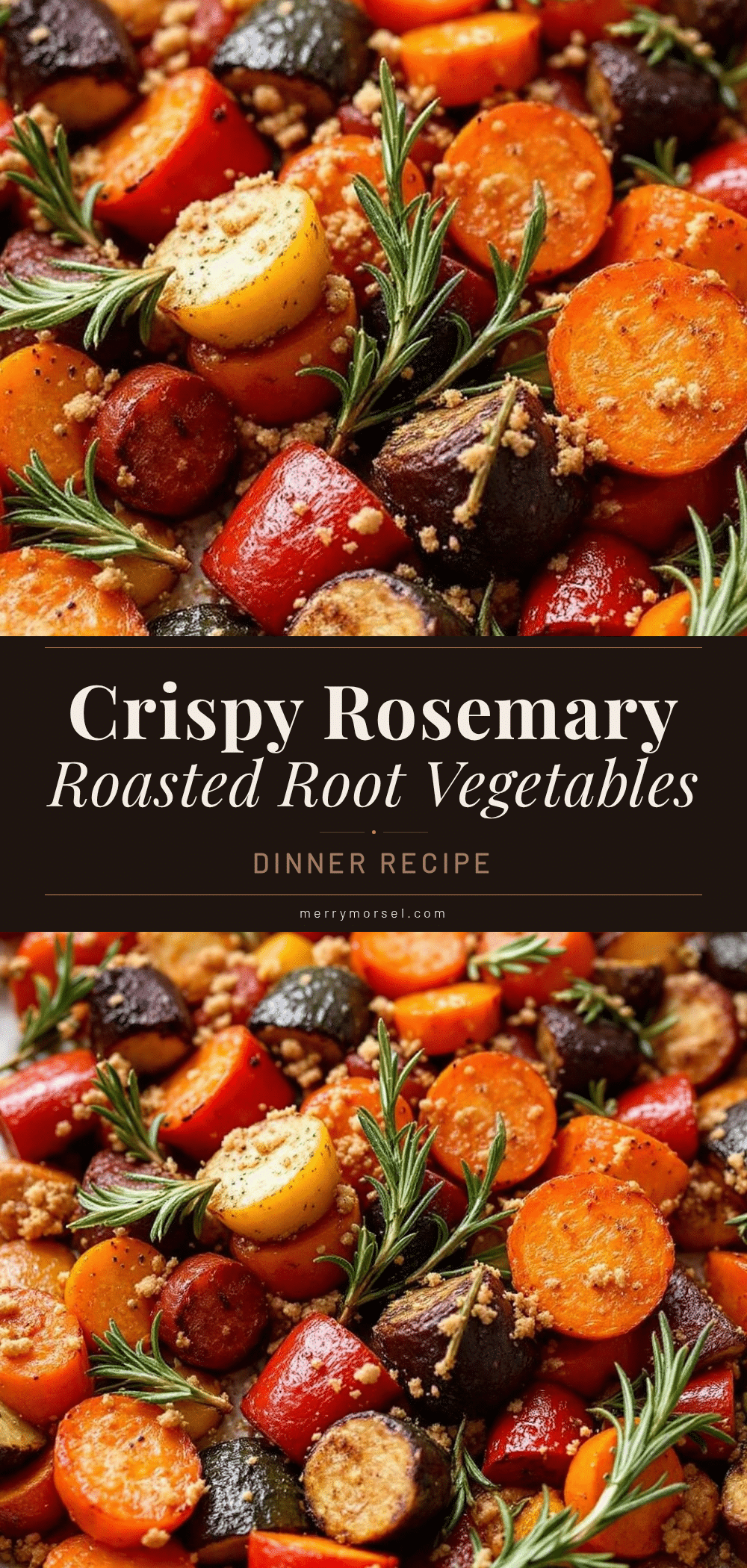
Crispy Rosemary Roasted Root Vegetables: Easy Side Dish
Transform humble root vegetables into a crispy, caramelized side dish with fresh rosemary and high-heat roasting. This easy, gluten-free, and vegan-friendly recipe ensures tender centers and shattering crisp edges.
- Prep Time: 15 minutes
- Cook Time: 40 minutes
- Total Time: 55 minutes
- Yield: 4 servings
- Category: Side Dish
- Cuisine: American
Ingredients
- Yukon Gold Potatoes (or red potatoes/fingerlings), cut into 1-inch cubes
- Carrots, peeled and cut into 1-inch chunks or batons
- Parsnips, peeled and cut into 1-inch chunks or batons
- Sweet Potatoes (optional), cubed
- Fresh Rosemary, chopped (needles only)
- Extra Virgin Olive Oil (3-4 tablespoons)
- Garlic, minced
- Kosher Salt
- Freshly Cracked Black Pepper
- Parmesan Cheese (optional, for last 5 minutes)
Instructions
- Preheat oven to 425°F (220°C) and allow it to fully preheat for at least 15 minutes.
- Wash all root vegetables thoroughly. Peel carrots and parsnips if skins are thick.
- Cut potatoes, carrots, and parsnips into uniform 1-inch cubes or batons to ensure even cooking.
- Pat vegetables completely dry with a clean kitchen towel or paper towels to ensure crispiness.
- In a large mixing bowl, combine olive oil, minced garlic, chopped rosemary, salt, and pepper.
- Add dried vegetables to the bowl and toss with hands until lightly coated in the seasoned oil.
- Spread vegetables in a single layer on large rimmed baking sheets, ensuring space between pieces to prevent steaming.
- Roast for 20 minutes, then remove pans and flip/toss vegetables.
- Return to oven and roast for another 15-20 minutes until edges are dark brown and crispy, and centers are tender.
- If using Parmesan, sprinkle over veggies during the last 5 minutes of roasting.
- Serve immediately while hot and crisp.
Notes
Do not crowd the pan; use two pans or roast in batches if necessary. Ensure vegetables are dry before oiling to prevent steaming. Cut vegetables into uniform sizes for even cooking. If using beets, roast separately to avoid staining. For air fryer method, cook at 400°F for 12-15 minutes, shaking halfway.
Nutrition
- Serving Size: 1 cup
- Calories: 175
- Sugar: 6
- Sodium: 350
- Fat: 8
- Saturated Fat: 1
- Carbohydrates: 24
- Fiber: 4
- Protein: 2
Keywords: roasted root vegetables, rosemary potatoes, crispy carrots, healthy side dish, gluten-free, vegan, meal prep, oven roasted vegetables