Love this? Save it for later!
Share the inspiration with your friends
Introduction
The first Saturday in November was gray and dripping, the kind of day where the sky never really commits to being light. I had picked up a few honeynut squashes at the farmers’ market the week before, mostly because they were small and cute and the farmer had said they were sweeter than butternut. They sat on my counter for days, looking more and more like little amber sculptures. And on that particular Saturday, with rain tapping against the kitchen window and a chill seeping through the old floorboards, the only thing I wanted was a bowl of something warm and quiet. So I grabbed the smallest squash, a stick of butter, and decided to just figure it out.
I had never made honeynut squash soup before. Honestly, I wasn’t even sure if the skin was edible (it is, by the way, once it’s roasted). But there’s something about a rainy afternoon that makes me brave in the kitchen. I cut the squashes in half, scooped out the seeds, and drizzled them with olive oil and salt. While they roasted, filling the whole house with that nutty, caramelized smell, I browned some butter on the stove. That smell—toasted, rich, almost hazelnut-like—is the kind of thing that makes you feel like you’re doing something right even if you’re just making soup.
This recipe was born from that quiet afternoon. It’s not complicated or fancy. It’s just a simple, honest soup that tastes like fall in a bowl. The honeynut squash does all the heavy lifting with its naturally sweet, dense flesh, and the brown butter adds this deep, savory warmth that makes you want to curl up on the couch and take your time eating. It’s the kind of soup that doesn’t need a lot of fussing over. And honestly, that’s my favorite kind.
Why You’ll Love This Recipe
I have tested this soup at least six times across three different ovens, and I can tell you with confidence—it works every single time. Here’s why this one is different from all the other squash soups out there.
- Quick & Easy: From start to finish, this soup comes together in about 45 minutes. Most of that time is hands-off roasting, so you can clean up or just sit and enjoy the smell.
- Simple Ingredients: You need a handful of things—honeynut squash, butter, onion, garlic, broth, and a few pantry staples. No fancy grocery trips required.
- Perfect for Fall Evenings: This is the soup you want when the leaves are turning and you need something that feels like a hug in a bowl. It’s great for a quiet dinner or a casual gathering.
- Crowd-Pleaser: I’ve served this to friends who said they “don’t really like squash soup” and watched them go back for seconds. The brown butter is a game-changer.
- Unbelievably Delicious: The texture is velvety without being heavy. The flavor is sweet and savory and nutty all at once. It’s comfort food that feels a little special.
What makes this recipe stand out is the technique of roasting the squash with a touch of maple syrup and browning the butter until it’s deeply fragrant. It’s not just another blended soup. It’s the kind where you take a bite and immediately text your friend the recipe. If you love cozy fall flavors, you might also enjoy this cozy pumpkin spice cold foam coffee for a perfect seasonal pairing.
What Ingredients You Will Need
This recipe uses simple, wholesome ingredients to deliver bold flavor and satisfying texture without the fuss. Most of these are probably already in your kitchen, except maybe the honeynut squash itself. But trust me, it’s worth seeking out.
- Honeynut squash (3-4 medium, about 2 lbs total): These little guys are sweeter and denser than butternut squash. Their skin is thin enough to eat once roasted, though I usually scoop the flesh out anyway. If you can’t find them, butternut squash works just fine.
- Unsalted butter (4 tablespoons): We’re browning this, so use unsalted to control the salt level. The browning process is where the magic happens.
- Yellow onion (1 medium, diced): Adds a savory base. I’ve tried shallots instead, and they work too, but onion is more affordable and just as good.
- Garlic (3 cloves, smashed): Don’t mince it too fine; we’re going to blend everything anyway. Smashed cloves are easier to fish out if you prefer a smoother texture.
- Vegetable broth (3 cups): Use a good quality broth here. I like Better Than Bouillon roasted vegetable base for the deepest flavor. Chicken broth works too if you’re not vegetarian.
- Maple syrup (1 tablespoon): Just a touch to coax out the natural sweetness of the squash. Use real maple syrup, not pancake syrup.
- Olive oil (2 tablespoons): For roasting the squash. Avocado oil works too.
- Salt and black pepper (to taste): Don’t be shy with the salt—it makes the squash taste more like itself.
- Fresh thyme (4 sprigs, plus more for garnish): Adds an earthy, slightly floral note. Dried thyme works in a pinch, but fresh is better here.
- Heavy cream or coconut cream (¼ cup, optional): For a silkier finish. I often skip it and the soup is still wonderfully creamy.
Ingredient Selection Tip: Look for honeynut squashes that feel heavy for their size and have a deep orange-tan color. Avoid any with soft spots or cracks. They should feel firm and dense, like a small rock. If you have leftover squash, try roasting it alongside some honey roasted fig and goat cheese crostini for a lovely fall appetizer spread.
Equipment Needed

You don’t need a lot of fancy gear for this recipe, which is part of why I love it. Here’s what you’ll need.
- Baking sheet (half-sheet size): For roasting the squash. A rimmed sheet is best to catch any juices.
- Large pot or Dutch oven: I use a 5-quart Dutch oven. It holds the heat well and is perfect for simmering the soup.
- Immersion blender or regular blender: An immersion blender makes life easier because you can blend right in the pot. If using a regular blender, work in batches and let the soup cool slightly first to avoid explosions.
- Sharp knife and cutting board: Honeynut squashes are small but dense. A sharp knife makes cutting them in half much safer.
- Wooden spoon or spatula: For stirring the brown butter and the soup.
- Measuring cups and spoons: Because precision matters, even in a rustic soup.
Budget-Friendly Alternative: If you don’t have an immersion blender, a regular blender works perfectly. Just let the soup cool for 10 minutes before blending, and only fill the blender halfway each time. I’ve also mashed the squash with a potato masher for a chunkier texture, and it’s honestly delicious that way too.
Preparation Method
Let’s make some soup. I’ll walk you through it step by step, including the little things I learned from my own mistakes.
- Preheat your oven to 400°F (200°C). Line a baking sheet with parchment paper for easy cleanup. Trust me on this one—roasted squash can get sticky.
- Prepare the squash. Cut each honeynut squash in half lengthwise. Use a sturdy chef’s knife and be careful—these little guys are firm. Scoop out the seeds and stringy bits with a spoon. Don’t throw the seeds away! You can roast them separately with a little salt for a crunchy snack.
- Season and roast. Place the squash halves cut-side up on the baking sheet. Drizzle with olive oil and maple syrup, then sprinkle with salt and pepper. Tuck the fresh thyme sprigs around the squash. Roast for 30-35 minutes, until the flesh is fork-tender and the edges are caramelized. The smell at this point is unreal.
- Brown the butter. While the squash roasts, melt the butter in your large pot over medium heat. Swirl the pan occasionally. The butter will foam up, then settle down, and you’ll see brown specks forming at the bottom. This takes about 4-5 minutes. The moment it smells nutty and toasty, remove it from the heat and pour it into a small bowl to stop the cooking. Don’t walk away from this—brown butter can go from perfect to burnt in seconds.
- Sauté the aromatics. In the same pot (don’t wipe it out!), add a drizzle of olive oil over medium heat. Add the diced onion and cook for 5-6 minutes until soft and translucent. Add the smashed garlic cloves and cook for 1 more minute until fragrant. The little browned bits from the butter will mix in and add even more flavor.
- Add the broth and squash. Once the squash is done roasting, let it cool for a few minutes. Scoop the flesh out of the skins (or leave the skin on if you like—it’s edible and adds fiber). Add the squash flesh to the pot along with the vegetable broth. Stir everything together and bring to a gentle simmer. Let it cook for 5 minutes so the flavors meld.
- Blend until smooth. Remove the pot from the heat. Use an immersion blender to puree the soup until it’s velvety smooth. If using a regular blender, work in batches and hold the lid down with a kitchen towel. Taste and adjust salt and pepper.
- Finish with brown butter and cream. Stir in the reserved brown butter. If using heavy cream or coconut cream, add it now and stir gently. The soup should be thick but pourable. If it’s too thick, add a splash more broth or water.
- Serve and garnish. Ladle the soup into bowls. Drizzle with a little extra brown butter or cream, and top with fresh thyme leaves and a crack of black pepper. For a little crunch, I sometimes add roasted pumpkin seeds or crumbled bacon.
Preparation Note: The soup will thicken as it sits. If you’re making it ahead, add a little extra broth when reheating to bring it back to the right consistency.
Cooking Tips & Techniques
I have burned my fair share of butter and overseasoned more soups than I care to admit. Here are the lessons I learned the hard way so you don’t have to.
- Don’t rush the browning butter. I know it’s tempting to crank up the heat, but medium heat is your friend. The butter needs time to cook evenly. Watch for the foam to subside and the milk solids to turn golden brown. The second it smells nutty, pull it off the heat.
- Roast the squash until it’s truly tender. A fork should slide in with no resistance. Under-roasted squash will give you a grainy, less flavorful soup. If you’re unsure, give it an extra 5 minutes. Caramelization is flavor.
- Taste as you go. This is the most important tip. Squash sweetness varies, so you might need more salt or a touch more maple syrup. Trust your taste buds more than the recipe.
- Blend carefully. Hot soup expands in a blender. If using a regular blender, let the soup cool for 10 minutes first and only fill it halfway. Hold the lid down with a folded towel to be safe.
- Make it ahead. This soup actually tastes better the next day. The flavors deepen and meld overnight. Make a double batch and thank yourself on a busy Tuesday.
One of my biggest failures was adding too much garlic once. It overpowered the delicate sweetness of the squash. Now I stick to 3 cloves and smash them instead of mincing—it gives a gentler flavor. If you’re looking for another cozy fall recipe that comes together quickly, try these chocolate chip pumpkin bread with cream cheese swirl for a sweet treat alongside your soup.
Variations & Adaptations
This soup is wonderfully flexible. Here are some ways to make it your own.
- Vegan Version: Use coconut oil instead of butter for browning (it won’t brown exactly the same, but it adds richness), and swap the heavy cream for full-fat coconut cream. Use vegetable broth as listed.
- Spicy Twist: Add a pinch of red pepper flakes or a small diced jalapeño when sautéing the onion. The heat balances the sweetness beautifully.
- Herb Swap: Replace thyme with fresh sage or rosemary. Sage and brown butter are a classic pairing, and rosemary adds a piney, aromatic note.
- Apple-Squash Combo: Roast a peeled and diced apple (like Honeycrisp or Fuji) alongside the squash. Blend it in for a subtle fruity sweetness that’s lovely in early autumn.
- Protein Boost: Stir in a cup of cooked white beans (like cannellini) before blending. They add creaminess and protein without changing the flavor much.
I once tried a version with ginger and turmeric, inspired by a cold I was trying to fight off. It was surprisingly good—earthy and warming. If you’re feeling adventurous, add a thumb-sized piece of fresh ginger (peeled and sliced) when you sauté the onion.
Serving & Storage Suggestions
This soup is best served hot, but not boiling. Ladle it into warm bowls for the most comforting experience. I like to top mine with a drizzle of the reserved brown butter, a few fresh thyme leaves, and a generous crack of black pepper. A swirl of cream or coconut cream adds a beautiful finish.
What to serve with it: A crusty sourdough bread is my go-to for dipping. A simple green salad with a tangy vinaigrette cuts through the richness. For a heartier meal, serve it alongside a classic southern meatloaf with brown sugar glaze for a comforting fall dinner spread.
Storage: Let the soup cool completely before storing. Transfer it to an airtight container and refrigerate for up to 5 days. The flavor actually improves after a day or two.
Freezing: This soup freezes beautifully. Pour cooled soup into freezer-safe containers or zip-top bags, leaving an inch of headspace for expansion. Freeze for up to 3 months. Thaw overnight in the fridge before reheating.
Reheating: Reheat gently on the stovetop over medium-low heat, stirring occasionally. Add a splash of broth or water if the soup has thickened too much. You can also microwave individual portions in 30-second bursts, stirring between each.
Flavor Development: The soup’s sweetness and nuttiness become more pronounced after a day in the fridge. The brown butter flavor mellows and integrates beautifully. It’s one of those rare recipes that’s actually better as leftovers.
Nutritional Information & Benefits
Here’s an approximate nutritional breakdown per serving (based on 4 servings, without optional cream):
- Calories: 220
- Fat: 14g
- Carbohydrates: 24g
- Fiber: 4g
- Protein: 3g
- Vitamin A: 250% DV
- Vitamin C: 20% DV
Health Benefits: Honeynut squash is packed with beta-carotene, which your body converts into vitamin A for healthy vision and immune function. It’s also a good source of fiber, which supports digestive health. The brown butter adds healthy fats that help absorb fat-soluble vitamins. If you use coconut cream instead of heavy cream, you’ll get a dose of medium-chain triglycerides (MCTs) for quick energy.
Dietary Considerations: This recipe is naturally gluten-free and can be made vegan with the substitutions listed above. It’s also nut-free and egg-free. The only potential allergen is dairy from the butter and optional cream, which are easily swapped.
Personal Wellness Perspective: I love that this soup feels indulgent but is actually full of nutrients. It’s the kind of meal that fills you up without weighing you down. Perfect for those days when you want something cozy but also want to feel good about what you’re eating.
Conclusion
This cozy honeynut squash soup with brown butter is more than just a recipe—it’s a moment of calm in a busy day. It’s the soup I make when I need to slow down and remember that good food doesn’t have to be complicated. The sweetness of the roasted squash, the nutty depth of the brown butter, the silky texture that feels like a warm blanket—every spoonful is a little reminder that fall is a season worth savoring.
I hope you make this soup and make it your own. Maybe you’ll add a pinch of cayenne for heat, or swirl in some coconut cream for extra richness. Maybe you’ll serve it with a grilled cheese sandwich on the side (I won’t judge). Whatever you do, take your time with it. Let the squash roast until it’s caramelized. Let the butter brown until it smells like toasted hazelnuts. And when you take that first bite, let yourself enjoy it fully.
If you try this recipe, I’d love to hear about it. Leave a comment below and tell me how it turned out, or share your own twist on it. And if you’re looking for more cozy fall recipes, don’t forget to check out the perfect pumpkin cream cheese muffins for a breakfast treat that pairs beautifully with this soup. Happy cooking, friends.
Frequently Asked Questions
Can I use butternut squash instead of honeynut?
Absolutely. Honeynut squash is sweeter and denser, but butternut squash works perfectly. You may need to roast it a little longer (about 40-45 minutes) since butternut halves are larger. The flavor will be slightly less sweet, so you might want to add an extra teaspoon of maple syrup.
Do I have to peel the squash before roasting?
Nope! Honeynut squash has thin, edible skin that softens during roasting. If you blend the soup thoroughly, you won’t even notice it. If you’re using butternut squash, I recommend peeling it first because the skin is thicker and tougher.
Can I make this soup in a slow cooker?
Yes, but with a small adjustment. Roast the squash in the oven first to caramelize it (this step is crucial for flavor), then transfer it to the slow cooker with the sautéed onions, garlic, and broth. Cook on low for 2-3 hours, then blend. You won’t get the same depth of flavor without roasting, but it’s still good.
How do I store leftovers and how long do they last?
Store leftover soup in an airtight container in the refrigerator for up to 5 days. You can also freeze it for up to 3 months. When reheating, add a splash of broth or water to thin it out if needed. The flavor actually gets better after a day or two.
Is this soup spicy?
Not at all. This version is mild and comforting, with no heat. If you want a little kick, add a pinch of red pepper flakes or a diced jalapeño when sautéing the onion. You can also top each bowl with a drizzle of chili oil for a gentle warmth.
Pin This Recipe!
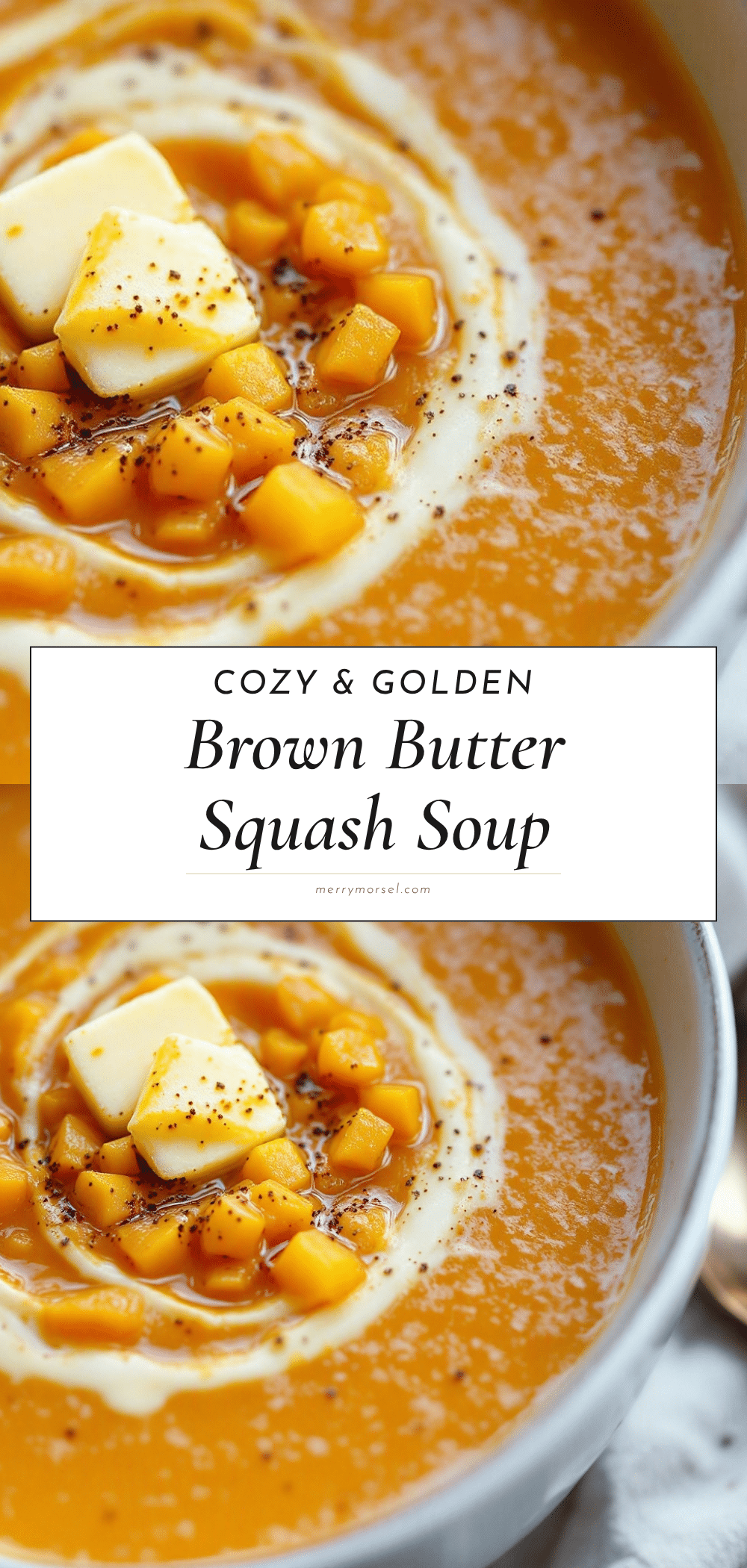
Cozy Honeynut Squash Soup with Brown Butter: The Best Easy Fall Soup

A simple, honest soup that tastes like fall in a bowl. The honeynut squash does all the heavy lifting with its naturally sweet, dense flesh, and the brown butter adds a deep, savory warmth that makes you want to curl up on the couch.
- Prep Time: 15 minutes
- Cook Time: 35 minutes
- Total Time: 50 minutes
- Yield: 4 servings 1x
- Category: Soup
- Cuisine: American
Ingredients
- 3–4 medium honeynut squashes (about 2 lbs total)
- 4 tablespoons unsalted butter
- 1 medium yellow onion, diced
- 3 cloves garlic, smashed
- 3 cups vegetable broth
- 1 tablespoon maple syrup
- 2 tablespoons olive oil
- Salt and black pepper to taste
- 4 sprigs fresh thyme, plus more for garnish
- ¼ cup heavy cream or coconut cream (optional)
Instructions
- Preheat your oven to 400°F (200°C). Line a baking sheet with parchment paper.
- Cut each honeynut squash in half lengthwise. Scoop out the seeds and stringy bits.
- Place the squash halves cut-side up on the baking sheet. Drizzle with olive oil and maple syrup, then sprinkle with salt and pepper. Tuck the fresh thyme sprigs around the squash. Roast for 30-35 minutes, until fork-tender and caramelized.
- While the squash roasts, melt the butter in a large pot over medium heat. Swirl occasionally until the butter foams, then subsides, and brown specks form. Remove from heat and pour into a small bowl.
- In the same pot, add a drizzle of olive oil over medium heat. Add the diced onion and cook for 5-6 minutes until soft. Add the smashed garlic and cook for 1 more minute.
- Scoop the roasted squash flesh into the pot (or leave skin on if desired). Add the vegetable broth. Stir and bring to a gentle simmer. Cook for 5 minutes.
- Remove from heat. Use an immersion blender to puree until smooth. (If using a regular blender, let cool slightly and blend in batches.) Taste and adjust salt and pepper.
- Stir in the reserved brown butter. If using cream, add it now. If too thick, add a splash more broth.
- Ladle into bowls. Garnish with extra brown butter, fresh thyme leaves, and black pepper.
Notes
The soup will thicken as it sits. If making ahead, add extra broth when reheating. For a vegan version, use coconut oil instead of butter and coconut cream instead of heavy cream. The soup tastes even better the next day.
Nutrition
- Serving Size: 1 bowl (about 1.5 cu
- Calories: 220
- Sugar: 8
- Sodium: 480
- Fat: 14
- Saturated Fat: 7
- Carbohydrates: 24
- Fiber: 4
- Protein: 3
Keywords: honeynut squash soup, brown butter, fall soup, easy soup, vegetarian soup, gluten-free soup