Love this? Save it for later!
Share the inspiration with your friends
I had been looking for a fall lunch that actually felt like a full meal, not just a sad pile of leaves on a plate. For a while, I just accepted that grain bowls were either gorgeous but left me hungry an hour later, or they were so heavy they defeated the whole point of eating something healthy. You know that moment when you’re staring at another sad desk salad, wondering why autumn food has to be either a stick-to-your-ribs casserole or a handful of raw spinach? That was me, every October, for years.
It started on a Tuesday, actually. I had a fridge full of root vegetables from the farmers’ market—butternut squash that was getting impatient, a few beets I’d bought on impulse, and a sweet potato that had been rolling around the crisper drawer for a week. I was tired, it was drizzling outside, and I needed something that would make me actually look forward to lunch the next day. So I roasted everything on one sheet pan (honestly, the laziest possible approach), tossed some farro into boiling water, and started pulling random things from the pantry. A handful of pecans. Some dried cranberries from a bag that was definitely older than I’d like to admit. Leftover crumbled goat cheese.
The first bowl was good. The second one, after I actually paid attention to what I was doing, was the one that stuck. It had that thing you can’t really plan for—the sweet squash against the tangy dressing, the chewy farro, the little pops of tartness from the cranberries. It was the kind of lunch that made me stop scrolling and actually taste what I was eating. I made it three times that week, and by Friday, I knew this wasn’t just another bowl. It was the one I’d keep coming back to all season long. And honestly? I think you will too.
Why You’ll Love This Recipe
This isn’t one of those grain bowls that looks pretty on Instagram but leaves you hunting for a snack twenty minutes later. Every component here pulls its weight—texture, flavor, and actual staying power. Here’s what makes it different:
- Comes together in under 45 minutes — Most of that is hands-off roasting time, so you can get other things done while dinner (or meal prep) practically makes itself.
- Simple, grocery-store ingredients — Nothing weird or hard to find. You can grab everything at a regular supermarket, and most of it keeps well in the pantry.
- Perfect for meal prep — The components all hold up beautifully in the fridge for days. Make a big batch on Sunday, and you’ve got lunches that actually excite you all week.
- Naturally adaptable — Swap in whatever vegetables are looking good at the market, use whatever grain you have on hand, adjust the dressing to your taste. It’s forgiving in the best way.
- That first-bite moment — The combination of caramelized roasted vegetables, chewy farro, creamy goat cheese, and that tangy maple-tahini dressing is the kind of thing that makes you close your eyes for a second. It’s simple food that tastes like you tried way harder than you did.
What really sets this bowl apart is the dressing. Most grain bowl dressings are either boring vinaigrettes or gloppy creamy things that weigh everything down. This maple-tahini situation is different—it’s tangy, a little bit savory, slightly sweet, and somehow ties all the disparate elements together without overpowering any of them. I’ve had people ask for the recipe just for the dressing alone. (And I’ve been known to put it on everything from sheet pan chicken fajitas to simple roasted vegetables.)
What Ingredients You Will Need
This recipe uses simple, wholesome ingredients that come together to create something far greater than the sum of their parts. Most of these are pantry staples or easy fall finds, and I’ve included notes on substitutions where they work well.
For the Roasted Vegetables
- 1 medium butternut squash, peeled and cubed (about 3 cups) — Look for one that feels heavy for its size. The sweetness concentrates beautifully as it roasts. (Pre-cut cubes from the store work in a pinch, but they’re often drier.)
- 1 large sweet potato, cubed (about 2 cups) — Any variety works; I prefer the orange-fleshed ones for sweetness.
- 1 red onion, cut into wedges — The edges get all caramelized and jammy. So good.
- 2 tablespoons olive oil — A good-quality extra virgin makes a difference here since it’s a starring flavor.
- 1 teaspoon smoked paprika — Adds that subtle warmth that makes everything taste cozier.
- ½ teaspoon salt — I use fine sea salt for even distribution.
- ¼ teaspoon black pepper — Freshly ground, ideally.
For the Grain Base
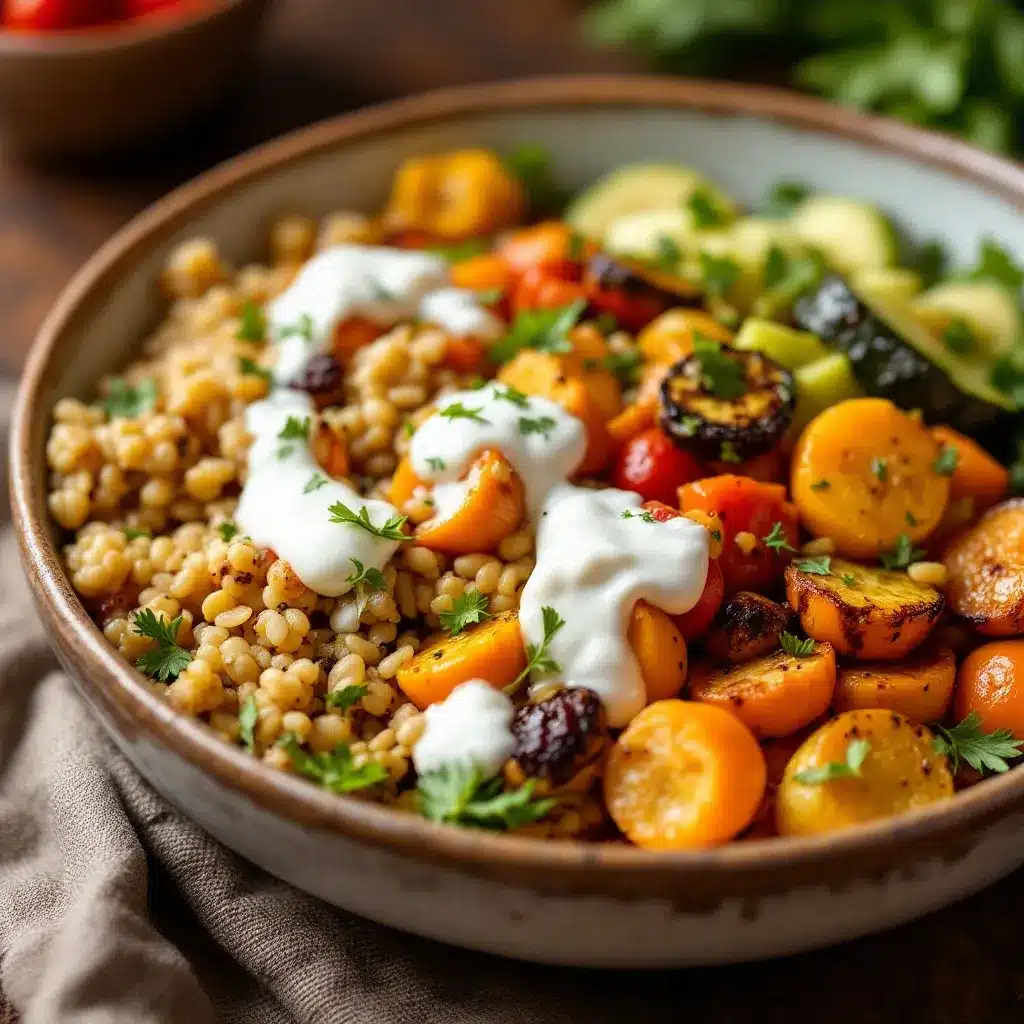
- 1 cup farro (or other whole grain like spelt, wheat berries, or brown rice) — I love farro for its chewy texture and nutty flavor. It holds up better than quinoa or rice in a bowl like this. (Use pearled farro for faster cooking; whole farro needs more time.)
- 3 cups water or vegetable broth — Broth adds flavor, but water works fine.
- Pinch of salt
For the Maple-Tahini Dressing
- ¼ cup tahini — Stir it well before measuring; the oil separates naturally. I like the brand Soom for its smoothness.
- 2 tablespoons maple syrup — Real maple syrup, not pancake syrup. The flavor is noticeably better.
- 2 tablespoons lemon juice (about 1 lemon) — Fresh is non-negotiable here; bottled lemon juice tastes flat.
- 1 small garlic clove, minced — Or grated on a microplane if you’re fancy.
- 3–4 tablespoons warm water — To thin the dressing to your preferred consistency.
- ¼ teaspoon salt
For the Bowl Assembly
- 4 cups fresh spinach or mixed greens — Massage them with a little olive oil and salt if you have a minute; it makes them more tender and flavorful.
- ½ cup crumbled goat cheese (or feta) — The tanginess cuts through the sweetness of the roasted vegetables perfectly.
- ⅓ cup toasted pecans, roughly chopped — Toast them in a dry pan for 3-4 minutes until fragrant. Watch them carefully—they burn fast.
- ⅓ cup dried cranberries or cherries — Look for ones without added sugar if you can find them.
- Optional: ½ cup cooked chickpeas or roasted chicken — For extra protein if you want to make it a heartier meal.
Equipment Needed
You don’t need much fancy equipment for this one, which is part of the appeal. Here’s what you’ll want on hand:
- Large rimmed baking sheet — Half-sheet size (18×13 inches) is ideal. A rimmed sheet prevents juices from spilling and burning in the oven.
- Medium saucepan with lid — For cooking the farro. Any pot with a tight-fitting lid works.
- Small bowl and whisk — For the dressing. A fork works in a pinch, but a whisk makes it smoother.
- Chef’s knife and cutting board — A sharp knife makes cubing squash infinitely less frustrating. (Pro tip: microwave the whole squash for 2 minutes to soften the skin slightly before peeling.)
- Mixing bowls — One for tossing the vegetables, one for assembly if you’re doing individual bowls.
- Measuring cups and spoons — Though honestly, I eyeball most of this after the first time.
If you don’t have a baking sheet with edges, you can use a jelly roll pan or even a cast iron skillet. Just make sure the vegetables have enough room to spread out—crowding them leads to steaming instead of roasting. And if you’re making this for meal prep, a set of glass meal prep containers with tight lids is worth its weight in gold.
Preparation Method
Step 1: Preheat and Prep the Vegetables
Preheat your oven to 425°F (220°C). While it’s heating up, peel and cube the butternut squash and sweet potato into roughly ¾-inch pieces. Cut the red onion into wedges about ½-inch thick at the widest part. You want everything roughly the same size so it roasts evenly—I learned this the hard way after burning tiny squash pieces while waiting for giant ones to soften.
Step 2: Roast the Vegetables
Toss the cubed squash, sweet potato, and onion wedges with the olive oil, smoked paprika, salt, and pepper directly on the baking sheet. Spread them in a single layer—if they’re crowded, they’ll steam instead of caramelizing. Roast for 25-30 minutes, flipping halfway through, until the vegetables are tender and starting to brown at the edges. You’ll know they’re done when a fork slides in easily and the bottoms have that beautiful golden-brown crust. Let them cool slightly on the pan while you finish the other components.
Step 3: Cook the Farro
While the vegetables roast, rinse the farro in a fine-mesh strainer. Combine it with the water or broth and a pinch of salt in a medium saucepan. Bring to a boil, then reduce the heat to low, cover, and simmer for 25-30 minutes (for pearled farro) or 40-45 minutes (for whole farro). The farro is done when it’s tender but still pleasantly chewy—not mushy. Drain any excess liquid, fluff with a fork, and let it sit uncovered for a few minutes to release steam.
Step 4: Make the Dressing
In a small bowl, whisk together the tahini, maple syrup, lemon juice, minced garlic, and salt. The mixture will look thick and maybe a little clumpy at first—that’s normal. Slowly add the warm water, one tablespoon at a time, whisking constantly until the dressing is smooth and pourable. It should be thick enough to coat the back of a spoon but thin enough to drizzle. Taste and adjust—more lemon for tang, more maple for sweetness, more salt if it needs it. I usually end up adding an extra squeeze of lemon because I like the brightness.
Step 5: Toast the Pecans
While everything else is going, toast the pecans in a small dry skillet over medium heat. Stir or shake the pan frequently—they’ll go from perfectly toasted to burnt in about 30 seconds. After 3-4 minutes, when they smell nutty and look slightly darker, transfer them to a plate to cool. (Leaving them in the hot pan will continue cooking them, so don’t skip this step.)
Step 6: Assemble the Bowls
Divide the spinach or mixed greens among four bowls. Top each with a generous scoop of warm farro, then arrange the roasted vegetables on top. Sprinkle with crumbled goat cheese, toasted pecans, and dried cranberries. Drizzle generously with the maple-tahini dressing—I like to do a zigzag pattern because it looks pretty and ensures every bite gets some. Serve immediately while the farro and vegetables are still warm, or let everything cool completely if you’re packing for meal prep.
Cooking Tips & Techniques
After making this bowl more times than I can count (and definitely more times than I needed to for recipe testing), I’ve picked up a few tricks that make the process smoother and the results more consistent.
Don’t skip the high heat. Roasting at 425°F is non-negotiable for getting that caramelization. Lower temperatures will cook the vegetables through but won’t give you the browning that makes them taste almost candy-sweet. If your oven runs hot, check at 20 minutes instead of 25.
Spread those vegetables out. I cannot stress this enough. If they’re crowded on the pan, they release steam and basically boil in their own moisture. Give them room to breathe, and you’ll be rewarded with those gorgeous caramelized edges. Use two baking sheets if you need to.
Make extra dressing. Seriously. This dressing keeps in the fridge for up to a week, and you’ll find yourself putting it on everything—simple salads, roasted broccoli, even as a dip for raw vegetables. I double the recipe every time now.
Let the farro rest. After draining, letting the farro sit uncovered for 5 minutes allows excess steam to escape. This prevents your bowl from getting watery and helps the grains stay separate and chewy rather than clumping together.
Warm the dressing if needed. Tahini-based dressings thicken significantly when cold. If you’re making this for meal prep and the dressing has been in the fridge, run the jar under warm water for a minute or microwave it for 10 seconds before drizzling.
One mistake I made early on was using old tahini that had separated and I didn’t stir it well enough. The dressing came out grainy and bitter. Now I always give the jar a good stir before measuring, and if the tahini tastes bitter on its own, I know it’s past its prime and start fresh.
Variations & Adaptations
This recipe is more of a template than a rigid formula, and I love how adaptable it is. Here are some of my favorite variations:
- Make it vegan — Skip the goat cheese or use a dairy-free alternative. The dressing is already vegan, and the bowl is plenty satisfying without cheese.
- Swap the grain — Farro is my first choice, but quinoa cooks faster (15 minutes), brown rice is heartier, and even couscous works in a pinch. Adjust cooking times accordingly.
- Change up the vegetables — Brussels sprouts (halved), carrots (cut into sticks), cauliflower florets, or cubed beets all work beautifully. Just keep the total volume roughly the same and cut everything to a similar size.
- Add protein — I’ve added crispy chickpeas (tossed with the same spices and roasted alongside the vegetables), shredded rotisserie chicken, or even crumbled crockpot balsamic pulled pork for a heartier version. All of them work.
- Seasonal swap — In spring, I use asparagus and peas with a lemon-herb dressing. In summer, grilled zucchini and corn with a cilantro-lime situation. The fall version is my favorite, though.
- Nut-free option — Swap the pecans for pumpkin seeds (pepitas) or sunflower seeds. Toast them the same way.
One variation I stumbled into by accident was adding a handful of pomegranate arils instead of dried cranberries. The little bursts of juice against the roasted vegetables were incredible. It’s now my go-to for holiday gatherings because it looks so festive.
Serving & Storage Suggestions
These bowls are best served warm, right after assembly, when the farro is still steamy and the goat cheese gets slightly melty against the roasted vegetables. But they’re also fantastic at room temperature—I’ve eaten this for lunch straight from the meal prep container more times than I’d like to admit.
For a beautiful presentation, arrange the components in sections rather than tossing everything together. Start with a bed of greens, add a scoop of farro off to one side, pile the roasted vegetables next to it, and finish with the toppings scattered on top. Drizzle the dressing over everything just before serving.
Storage: Store the components separately in airtight containers in the refrigerator for up to 4 days. Keep the dressing in a separate jar or container. The greens will wilt if stored with the warm components, so assemble fresh each time if possible.
Reheating: The farro and vegetables reheat beautifully in the microwave (about 1-2 minutes) or in a skillet with a splash of water. Add fresh greens and dressing after reheating. I don’t recommend freezing this one—the texture of the vegetables and greens suffers too much.
One thing I love about this recipe is that the flavors actually get better after a day in the fridge. The farro absorbs any residual dressing, and the roasted vegetables become almost marinated in their own juices. It’s one of those rare meals that tastes just as good (if not better) on day three.
Nutritional Information & Benefits
This bowl is packed with good-for-you ingredients that actually taste amazing. Here’s the approximate nutritional breakdown per serving (based on 4 servings with the ingredients listed):
- Calories: Approximately 450-520
- Protein: 12-15g
- Fiber: 10-12g
- Healthy Fats: 18-22g (from tahini, olive oil, pecans, and goat cheese)
- Carbohydrates: 55-65g (mostly complex carbs from the farro and vegetables)
The butternut squash and sweet potato are loaded with vitamin A (beta-carotene) and vitamin C, both of which support immune health—especially welcome during fall and winter. Farro is an ancient grain rich in fiber, protein, and magnesium. The tahini adds calcium and healthy fats, while the pecans contribute vitamin E and antioxidants.
This recipe is naturally vegetarian and can easily be made vegan and gluten-free (use certified gluten-free oats or quinoa instead of farro). It’s also relatively low in added sugar—the maple syrup in the dressing is the only source, and it’s balanced by the savory elements. If you’re watching your sodium, use low-sodium broth for the farro and go easy on the added salt.
Conclusion
This cozy fall harvest grain bowl is the kind of recipe that makes you feel like you’ve got your life together, even on days when you absolutely do not. It’s forgiving enough for a lazy Sunday meal prep session, but impressive enough to serve to guests who’ll think you spent way more effort than you actually did. The combination of textures and flavors—sweet roasted vegetables, chewy farro, tangy dressing, creamy goat cheese, crunchy pecans—hits every note without being fussy or complicated.
I love that this recipe doesn’t demand perfection. If your squash cubes are a little uneven, it doesn’t matter. If you forget to toast the pecans, they’re still good raw. If you want to add extra dressing, go for it. Cooking should feel like that sometimes—not like a test you have to pass, but like something you get to enjoy.
I’d love to hear how this bowl turns out for you. Did you swap in different vegetables? Add a protein that worked especially well? Find a dressing variation that blew your mind? Drop a comment below and let me know—I read every single one, and your adaptations often inspire my next kitchen experiment. And if you loved this recipe, share it with a friend who needs a good fall lunch in their life. Happy cooking!
Frequently Asked Questions
Can I make this grain bowl ahead of time for meal prep?
Absolutely. Cook the farro and roast the vegetables up to 4 days ahead. Store them separately in airtight containers in the fridge. Keep the dressing in a jar and the greens separate. Assemble fresh each day, or layer everything in a container with the dressing on the side to keep the greens from getting soggy.
What can I use instead of farro?
Quinoa, brown rice, spelt, wheat berries, or even couscous all work. Adjust the cooking time based on the grain you choose—quinoa takes about 15 minutes, brown rice 40-45, and wheat berries closer to an hour. For a lower-carb option, try cauliflower rice or a base of extra greens.
Is this recipe gluten-free?
It can be! Farro is a form of wheat and contains gluten. To make this gluten-free, substitute the farro with certified gluten-free oats, quinoa, or brown rice. Double-check that your vegetable broth (if using) is also gluten-free, as some brands contain wheat-based ingredients.
My tahini dressing turned out bitter. What went wrong?
This usually happens for one of two reasons: either the tahini was old or not stirred well enough before measuring, or you added too much garlic. Tahini that has separated and wasn’t re-emulsified can taste bitter. Make sure to stir it thoroughly before using, and taste your tahini before adding it to the dressing. If it’s already bitter, start with a fresh jar. Also, use a small clove of garlic—a large one can overwhelm the dressing.
Can I use frozen vegetables instead of fresh?
You can, but the texture won’t be quite the same. Frozen vegetables release more moisture as they roast, which means they’re more likely to steam than caramelize. If using frozen, thaw and pat them very dry with paper towels before tossing with oil and seasonings. And spread them out generously on the pan to encourage browning. Roasting time may need to increase by 5-10 minutes.
Pin This Recipe!
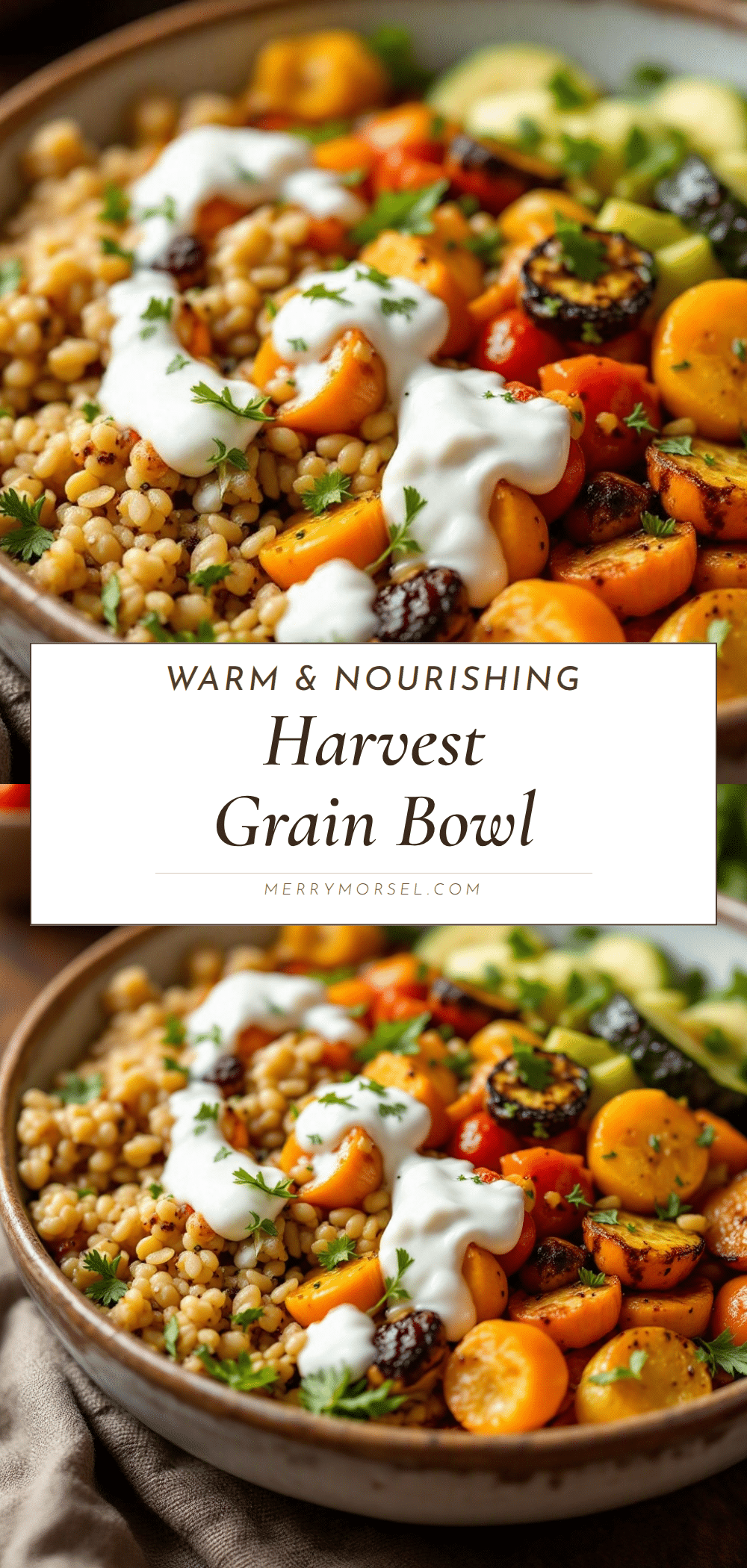
Cozy Fall Harvest Grain Bowl with Roasted Vegetables
A hearty and flavorful grain bowl featuring roasted butternut squash, sweet potato, and red onion over chewy farro, topped with creamy goat cheese, toasted pecans, and dried cranberries, all drizzled with a tangy maple-tahini dressing. Perfect for meal prep or a satisfying fall lunch.
- Prep Time: 15 minutes
- Cook Time: 30 minutes
- Total Time: 45 minutes
- Yield: 4 servings 1x
- Category: Main Course
- Cuisine: American
Ingredients
- 1 medium butternut squash, peeled and cubed (about 3 cups)
- 1 large sweet potato, cubed (about 2 cups)
- 1 red onion, cut into wedges
- 2 tablespoons olive oil
- 1 teaspoon smoked paprika
- ½ teaspoon salt
- ¼ teaspoon black pepper
- 1 cup farro (or other whole grain like spelt, wheat berries, or brown rice)
- 3 cups water or vegetable broth
- Pinch of salt
- ¼ cup tahini
- 2 tablespoons maple syrup
- 2 tablespoons lemon juice (about 1 lemon)
- 1 small garlic clove, minced
- 3–4 tablespoons warm water
- ¼ teaspoon salt
- 4 cups fresh spinach or mixed greens
- ½ cup crumbled goat cheese (or feta)
- ⅓ cup toasted pecans, roughly chopped
- ⅓ cup dried cranberries or cherries
- Optional: ½ cup cooked chickpeas or roasted chicken
Instructions
- Preheat your oven to 425°F (220°C). While it’s heating up, peel and cube the butternut squash and sweet potato into roughly ¾-inch pieces. Cut the red onion into wedges about ½-inch thick at the widest part.
- Toss the cubed squash, sweet potato, and onion wedges with the olive oil, smoked paprika, salt, and pepper directly on the baking sheet. Spread them in a single layer. Roast for 25-30 minutes, flipping halfway through, until the vegetables are tender and starting to brown at the edges.
- While the vegetables roast, rinse the farro in a fine-mesh strainer. Combine it with the water or broth and a pinch of salt in a medium saucepan. Bring to a boil, then reduce the heat to low, cover, and simmer for 25-30 minutes (for pearled farro) or 40-45 minutes (for whole farro). Drain any excess liquid, fluff with a fork, and let it sit uncovered for a few minutes.
- In a small bowl, whisk together the tahini, maple syrup, lemon juice, minced garlic, and salt. Slowly add the warm water, one tablespoon at a time, whisking constantly until the dressing is smooth and pourable. Taste and adjust as needed.
- Toast the pecans in a small dry skillet over medium heat for 3-4 minutes, stirring frequently, until fragrant. Transfer to a plate to cool.
- Divide the spinach or mixed greens among four bowls. Top each with a generous scoop of warm farro, then arrange the roasted vegetables on top. Sprinkle with crumbled goat cheese, toasted pecans, and dried cranberries. Drizzle generously with the maple-tahini dressing. Serve immediately.
Notes
Don’t skip the high heat (425°F) for caramelization. Spread vegetables in a single layer to avoid steaming. Make extra dressing—it keeps for up to a week. Let farro rest after draining to prevent watery bowls. Warm the dressing if it thickens in the fridge. Store components separately for meal prep up to 4 days.
Nutrition
- Serving Size: 1 bowl
- Calories: 485
- Sugar: 14
- Sodium: 480
- Fat: 20
- Saturated Fat: 5
- Carbohydrates: 60
- Fiber: 11
- Protein: 14
Keywords: fall harvest grain bowl, roasted vegetables, farro bowl, maple tahini dressing, meal prep, vegetarian, healthy lunch