Love this? Save it for later!
Share the inspiration with your friends
Introduction
“You know that moment when you’re standing in the grocery aisle, holding a long, shiny cucumber in one hand and the shorter, bumpier one in the other, wondering which one actually makes your salad sing?” Well, that was me last Saturday morning at the local farmers’ market. I was on a quest for the perfect salad, and honestly, I never thought the cucumber choice would trip me up so much. There I was, juggling a fresh English cucumber and a regular garden cucumber, trying to figure out if it really mattered which I picked.
That day, I struck up a conversation with Ellie, the vendor who swore by English cucumbers for their crispness and subtle sweetness. She told me stories about how these cucumbers travel differently and how their thin skin means no peeling necessary. I was skeptical but intrigued—that’s when I decided to put both to the test in my salads at home. By the end of the week, I had a surprising verdict and some insights that changed how I shop and prepare salads forever.
Maybe you’ve been there too, caught between these two cucumber worlds, wondering what the fuss is all about. Let me tell you, this isn’t just about cucumber shapes; it’s the kind of difference that can turn a ho-hum salad into a refreshing delight. So, let’s unpack the fresh English cucumber vs regular salad difference and what it means for your next bowl of greens.
Why You’ll Love This Recipe
After testing both types in countless salads, I can confidently say this guide helps you make a better choice for your meals. Here’s why this breakdown will come in handy:
- Quick & Easy: Knowing which cucumber to grab saves time and guesswork during busy cooking sessions.
- Simple Ingredients: Both cucumbers are pantry staples, so no need for fancy shopping trips.
- Perfect for Salads & More: Whether it’s a crisp summer salad or a refreshing sandwich topping, this knowledge elevates your dish.
- Crowd-Pleaser: Everyone notices the difference in texture and flavor—even picky eaters.
- Unbelievably Delicious: The right cucumber makes your salad taste fresher and more satisfying.
This isn’t just about swapping cucumbers; it’s about understanding their unique qualities. The English cucumber’s thin, nearly seedless flesh means less bitterness and a smoother bite. On the other hand, regular cucumbers bring a heartier crunch and sometimes a bit more moisture, which might be perfect for certain dressings or dishes.
Honestly, after trying both, I keep coming back to English cucumbers for salads because they blend so seamlessly without overpowering other ingredients. But hey, your salad style might be different, and that’s the beauty of knowing the difference—you get to choose your texture and flavor adventure!
What Ingredients You Will Need
Understanding the fresh English cucumber vs regular salad difference is also about knowing what else goes into your salad to complement these cucumbers perfectly. Here’s a breakdown of the salad ingredients that pair beautifully depending on your cucumber choice.
For the Salad Base
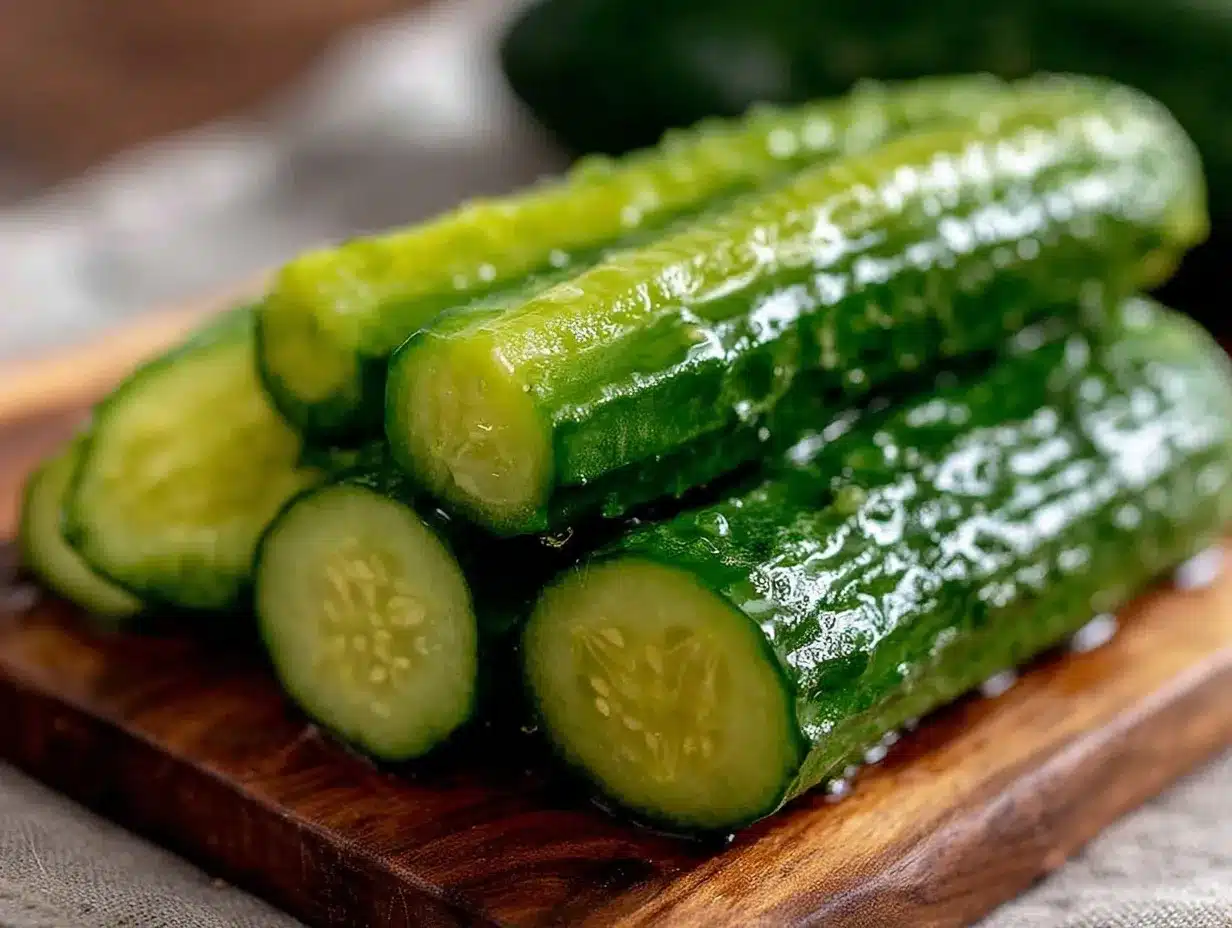
- Fresh English cucumber: long, slender, thin-skinned, and usually seedless (no peeling needed)
- Regular garden cucumber: shorter, with thicker skin and larger seeds (peeling recommended for milder taste)
- Mixed salad greens: romaine, baby spinach, arugula, or your favorite blend
- Cherry tomatoes: halved for bursts of sweetness
- Red onion: thinly sliced for a hint of sharpness
- Fresh herbs: dill, parsley, or mint to brighten flavors
For the Dressing
- Extra virgin olive oil: I like Colavita for its smooth taste
- Fresh lemon juice: adds vibrant acidity
- Garlic clove: minced, optional for a little kick
- Salt and black pepper: to taste
- Honey or agave: a touch of sweetness balances the acidity
Seasonal or regional variations work great too—like adding radishes in spring or swapping herbs based on what’s fresh at the farmer’s market. One tip from my experience: if you’re using regular cucumbers, peeling them reduces bitterness and prevents the salad from getting too watery.
Equipment Needed
- Sharp chef’s knife: For slicing cucumbers and chopping salad ingredients cleanly
- Cutting board: Preferably one dedicated to veggies to keep things tidy
- Large salad bowl: To toss all ingredients without spills
- Measuring spoons: For the dressing components
- Whisk or fork: To mix the dressing thoroughly
- Salad spinner (optional): Great for drying greens efficiently—makes a huge difference if you ever forgot like I did once, and ended up with a soggy salad!
Honestly, you don’t need anything fancy to get started. A simple paring knife can substitute for a chef’s knife, and a mixing bowl can stand in for a salad bowl. The key is sharp tools that make cutting easier and safer.
Preparation Method
- Wash and dry all vegetables thoroughly. This step is crucial, especially with fresh greens, to avoid a soggy salad. Using a salad spinner helps, but patting with a clean towel works too. (5 minutes)
- Prepare the cucumber: For fresh English cucumber, trim the ends and slice into thin rounds or half-moons—no peeling needed. For regular cucumber, peel first to remove thicker skin, slice lengthwise, scoop out seeds if large, then chop into bite-sized pieces. (7 minutes)
- Slice cherry tomatoes in half and thinly slice the red onion. The sharper the knife, the cleaner the cuts will be, which also helps the flavors meld better. (3 minutes)
- Chop fresh herbs: Dill, parsley, or mint—whichever you prefer—adds brightness. I usually go for dill with English cucumber; it’s a classic combo. (2 minutes)
- Combine salad ingredients: Toss the prepared cucumbers, tomatoes, onions, herbs, and mixed greens gently in your large bowl. Use a light hand to avoid bruising delicate leaves. (2 minutes)
- Make the dressing: Whisk together 3 tablespoons (45 ml) olive oil, 1 tablespoon (15 ml) fresh lemon juice, minced garlic if using, a teaspoon (5 ml) of honey or agave, and salt and pepper to taste. Taste and adjust as you like—it’s all about balance. (5 minutes)
- Drizzle the dressing over the salad just before serving and toss lightly to coat evenly. If you dress the salad too early, the cucumbers can get watery, so timing is key. (1 minute)
Pro tip: If your salad looks a little dry, add a splash more olive oil rather than more lemon juice, which can overpower the freshness. Also, I once forgot to add salt until after serving—don’t do that! Salt really wakes up the flavor.
Cooking Tips & Techniques
Even though this salad doesn’t involve cooking, technique still matters. Here are some tips I’ve gathered over time:
- Peeling regular cucumbers: If you don’t peel, the skin can be bitter and tough. Use a vegetable peeler to remove stripes of skin for a nice balance if you don’t want to peel entirely.
- Seed removal: For regular cucumbers with large seeds, scooping them out reduces extra moisture that can water down your salad.
- Slicing thinly: Thin slices of English cucumber create a silky texture, while chunkier pieces from regular cucumbers add a satisfying crunch. Choose based on your salad style.
- Timing the dressing: Dress salad right before serving to keep greens crisp and cucumbers fresh.
- Multitasking: While cucumbers rest after slicing, you can prepare the dressing or chop herbs to save time.
- Texture balance: Mixing cucumbers with crunchy ingredients like radishes or nuts adds interest and keeps the salad from feeling one-dimensional.
One mistake I made early on was over-dressing the salad, which made everything soggy. I learned to start with less and add more if needed.
Variations & Adaptations
Salads are super versatile, and cucumbers can adapt to many styles. Here are some ways to switch things up:
- Dietary: Swap olive oil for avocado oil or walnut oil for a different flavor profile. For a dairy-free twist, skip creamy dressings and go with lemon and herbs.
- Seasonal: In warmer months, add fresh berries or watermelon cubes with English cucumbers for a refreshing salad. In cooler months, toss in roasted beets and walnuts for a heartier feel.
- Flavor: Add feta cheese or goat cheese for creaminess, or some toasted seeds for crunch.
- Cooking method: Try grilling thick slices of regular cucumber for a smoky, slightly soft texture that contrasts fresh greens.
- Personal twist: I once made a cucumber salad with a touch of ginger and sesame oil—totally unexpected but so good!
Serving & Storage Suggestions
This salad shines best served chilled or at room temperature. If you’re prepping ahead, keep dressing separate and toss just before serving.
Pair this salad with grilled chicken or fish for a light meal, or serve alongside a hearty sandwich like crispy garlic chicken to add freshness to the plate.
Store leftover salad in an airtight container in the fridge for up to 24 hours. Cucumbers release water over time, so salads with regular cucumbers may get a bit watery if stored too long.
To re-crisp, drain any excess liquid and add fresh cucumber slices or greens before serving again.
Flavors tend to mellow overnight, which can be a plus if you enjoy a softer, more blended taste.
Nutritional Information & Benefits
Cucumbers are low in calories but high in hydration—about 95% water—which makes them perfect for summer salads. English cucumbers have slightly fewer seeds and less bitterness, making digestion easier for some people.
Both types provide vitamin K, antioxidants, and fiber, contributing to heart and bone health. Pairing cucumbers with olive oil and lemon juice adds healthy fats and vitamin C.
This salad is naturally gluten-free, low-carb, and vegan-friendly when dressing excludes honey.
Personally, I love how this simple salad feels light but satisfying—a perfect balance for anyone watching their diet without sacrificing flavor.
Conclusion
So, there you have it—the fresh English cucumber vs regular salad difference laid out simply. Whether you prefer the delicate, seedless crunch of the English cucumber or the robust texture of the regular one, knowing these details helps you craft salads that actually taste better and feel fresher.
Feel free to mix and match based on what’s available or what you’re craving. I keep coming back to English cucumbers for their ease and flavor, but sometimes the regular ones sneak their way into my dishes when I want more bite.
I’d love to hear about your experiences and any twists you try with cucumbers in salads—drop a comment or share your recipe adaptations! Remember, the best salad is the one you enjoy eating.
Happy salad making!
FAQs About Fresh English Cucumber vs Regular Salad Difference
What makes English cucumbers different from regular cucumbers?
English cucumbers are longer, thinner, have thinner skin, and fewer seeds, making them milder and less bitter than regular cucumbers.
Do I need to peel English cucumbers before eating?
Nope! Their skin is thin and edible, so you can slice and eat them without peeling.
Why might a salad with regular cucumber get watery?
Regular cucumbers have more seeds and higher water content, which can release moisture into your salad if prepared or stored improperly.
Can I use English cucumbers for cooking, not just salads?
Absolutely! They work well in sandwiches, cold soups, and even quick pickles where a mild flavor is needed.
Are English cucumbers more expensive than regular ones?
Usually, yes—they tend to cost more due to packaging and import costs, but their convenience and flavor often make them worth it.
Pin This Recipe!
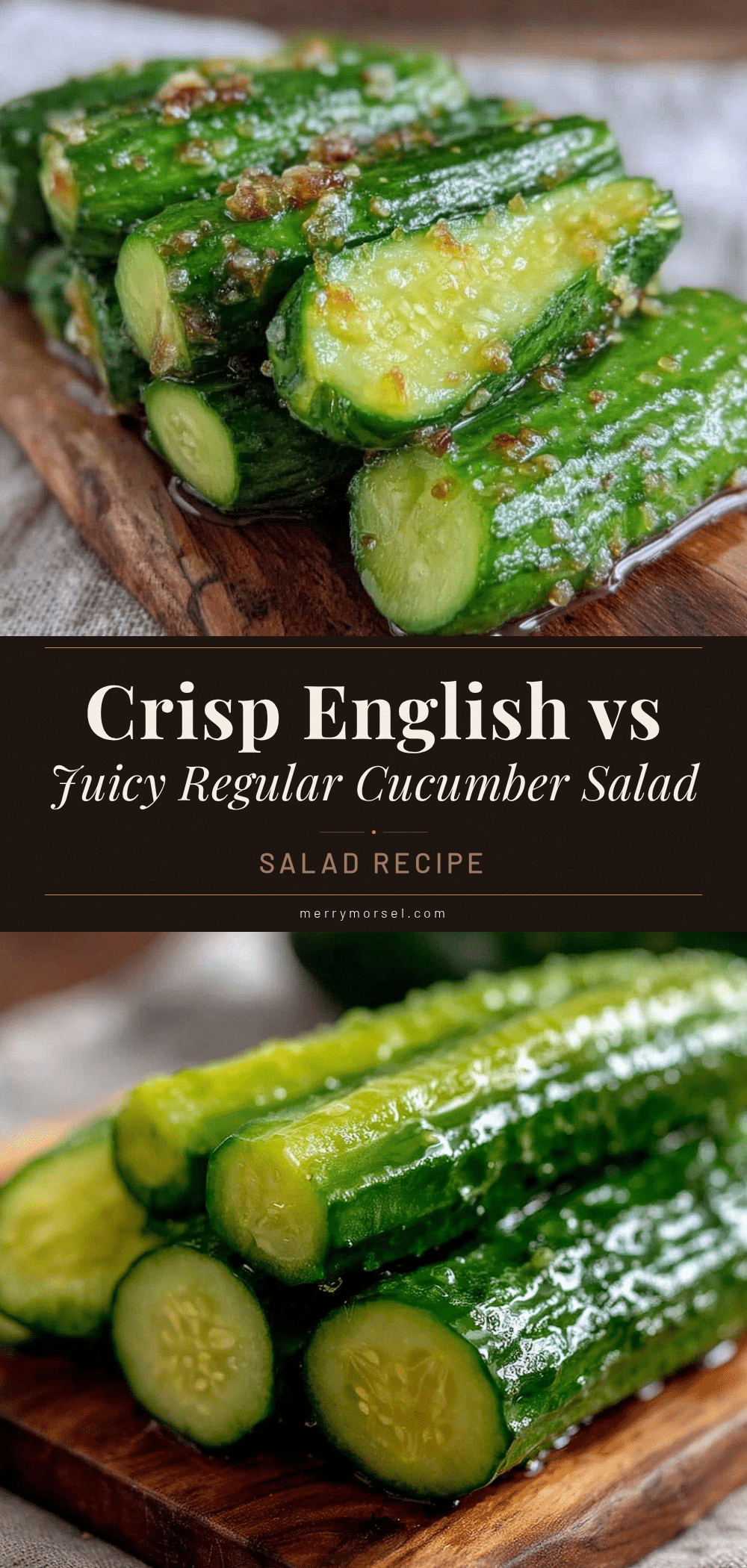
Fresh English Cucumber vs Regular Salad Differences Explained Easily

A detailed guide comparing fresh English cucumbers and regular garden cucumbers in salads, highlighting their differences, preparation tips, and how to choose the best for your salad.
- Prep Time: 10 minutes
- Cook Time: 0 minutes
- Total Time: 18 minutes
- Yield: 4 servings
- Category: Salad
- Cuisine: American
Ingredients
- Fresh English cucumber: long, slender, thin-skinned, and usually seedless (no peeling needed)
- Regular garden cucumber: shorter, with thicker skin and larger seeds (peeling recommended for milder taste)
- Mixed salad greens: romaine, baby spinach, arugula, or your favorite blend
- Cherry tomatoes: halved for bursts of sweetness
- Red onion: thinly sliced for a hint of sharpness
- Fresh herbs: dill, parsley, or mint to brighten flavors
- Extra virgin olive oil: 3 tablespoons (45 ml)
- Fresh lemon juice: 1 tablespoon (15 ml)
- Garlic clove: minced, optional
- Salt and black pepper: to taste
- Honey or agave: 1 teaspoon (5 ml), optional
Instructions
- Wash and dry all vegetables thoroughly using a salad spinner or clean towel. (5 minutes)
- Prepare the cucumber: For fresh English cucumber, trim ends and slice into thin rounds or half-moons—no peeling needed. For regular cucumber, peel first, slice lengthwise, scoop out seeds if large, then chop into bite-sized pieces. (7 minutes)
- Slice cherry tomatoes in half and thinly slice the red onion. (3 minutes)
- Chop fresh herbs such as dill, parsley, or mint. (2 minutes)
- Combine salad ingredients: Toss cucumbers, tomatoes, onions, herbs, and mixed greens gently in a large bowl. (2 minutes)
- Make the dressing: Whisk together olive oil, lemon juice, minced garlic (if using), honey or agave, salt, and pepper. Adjust to taste. (5 minutes)
- Drizzle the dressing over the salad just before serving and toss lightly to coat evenly. (1 minute)
Notes
Peel regular cucumbers to reduce bitterness and moisture. Dress salad just before serving to avoid sogginess. Use a salad spinner to dry greens thoroughly. Adjust dressing ingredients to taste and add more olive oil if salad seems dry.
Nutrition
- Serving Size: 1 bowl (approximatel
- Calories: 120
- Sugar: 3
- Sodium: 150
- Fat: 10
- Saturated Fat: 1.5
- Carbohydrates: 6
- Fiber: 2
- Protein: 1
Keywords: English cucumber, regular cucumber, salad, fresh cucumber, cucumber salad, healthy salad, easy salad recipe, summer salad, vegan salad, gluten-free salad