Love this? Save it for later!
Share the inspiration with your friends
“I once found myself staring down at a pan full of sizzling steaks, heart pounding—not from the heat, but because I had zero idea if they were cooked right,” I confessed to a friend just last week. This was during a casual dinner party at my place. You know that feeling when everyone’s eyes are on you, expecting a perfectly cooked steak, but your trusty thermometer is nowhere in sight? Yeah, been there.
It all started on a random Thursday evening. I had bought these beautiful filet mignons from my local butcher, planning to impress a couple of friends. Just as I was about to start cooking, I realized my digital thermometer had vanished—probably buried somewhere under a pile of kitchen gadgets. Panic? Maybe a little. But honestly, this was the push I needed to finally master filet mignon the old-school way.
With no gadget to save me, I relied purely on touch, sound, and sight—skills often overshadowed by fancy tools. After some trial, error, and a little kitchen chaos (I might have slightly overcooked one steak and made a mess with the pan), I nailed a foolproof process that lets anyone cook a perfect filet mignon every single time without a thermometer.
Maybe you’ve been there too—wanting that restaurant-quality steak but feeling tied down by gadgets or complicated instructions. This recipe is for you. It’s simple, reliable, and honestly, a bit freeing to cook by feel. Plus, it’s a guaranteed crowd-pleaser that’ll have your guests asking for seconds (and your secret!).
Let me tell you, this method stayed with me because it turned a stressful moment into a proud achievement. And you might find it becomes your go-to approach too, no matter the occasion.
Why You’ll Love This Recipe
After perfecting this filet mignon recipe over numerous dinners and sharing it with family and friends, I can say it’s a keeper. Here’s why it stands out:
- Quick & Easy: You can have a juicy, tender filet mignon sizzling in just about 15 minutes—ideal for busy weeknights or unexpected guests.
- Simple Ingredients: No exotic spices or hard-to-find cuts—just quality filet mignon, salt, pepper, and butter. That’s it.
- Perfect for Special Occasions: Whether it’s date night, a celebratory dinner, or just because, this recipe brings that touch of elegance without stress.
- Crowd-Pleaser: I’ve watched skeptics become fans after tasting this steak. Kids, adults, everyone loves it.
- Unbelievably Delicious: The crust and buttery interior create a flavor combo that’s rich, tender, and satisfying.
What sets this recipe apart is the no-thermometer approach. Instead of relying on gadgets, it focuses on sensory cues—like the steak’s feel, the sound of the sear, and the sizzling aroma. This technique respects tradition but makes it accessible. It’s comfort food with a touch of finesse, and honestly, once you get the hang of it, you’ll feel a lot more confident in the kitchen.
What Ingredients You Will Need
This recipe uses simple, high-quality ingredients to highlight the natural flavor of the filet mignon without fuss. Most of these are pantry staples, so no last-minute grocery runs required.
- Filet Mignon Steaks: 2 pieces, about 6 ounces (170g) each, trimmed of excess fat. Look for steaks that are about 1.5 to 2 inches thick for best results.
- Salt: Kosher salt or sea salt, for seasoning. I prefer Diamond Crystal kosher salt for its clean flavor and easy pinch control.
- Black Pepper: Freshly cracked, coarse grind. Adds just the right bite and aroma.
- Unsalted Butter: 2 tablespoons (28g), for basting. Salted works too if that’s what you have on hand.
- Garlic Cloves: 2 whole, smashed. Adds a subtle, savory aroma during cooking.
- Fresh Thyme or Rosemary: A few sprigs (optional). Gives the butter basting an herby lift.
- High-Smoke Point Oil: 1 tablespoon (15ml), like canola, grapeseed, or avocado oil. This helps achieve a perfect sear without burning.
Substitution notes: For a dairy-free version, swap butter with ghee or olive oil. If you can’t find fresh herbs, dried rosemary or thyme works, but add sparingly to avoid overpowering the steak.
Equipment Needed
- Heavy Skillet or Cast Iron Pan: Cast iron is ideal because it holds and distributes heat evenly, creating that coveted crust. I’ve also used stainless steel pans successfully, but they need a bit more attention to prevent sticking.
- Tongs: A sturdy pair for flipping steaks without piercing them, which helps retain juices.
- Spoon: For basting the steaks with melted butter and aromatics.
- Plate and Foil: To rest the steaks after cooking, crucial for juicy results.
If you don’t own a cast iron, don’t worry—just preheat your pan well and use a little extra oil. For maintenance, if you have cast iron, keep it seasoned to prevent rust and sticking. Budget-friendly skillets like Lodge offer great value and last forever.
Preparation Method
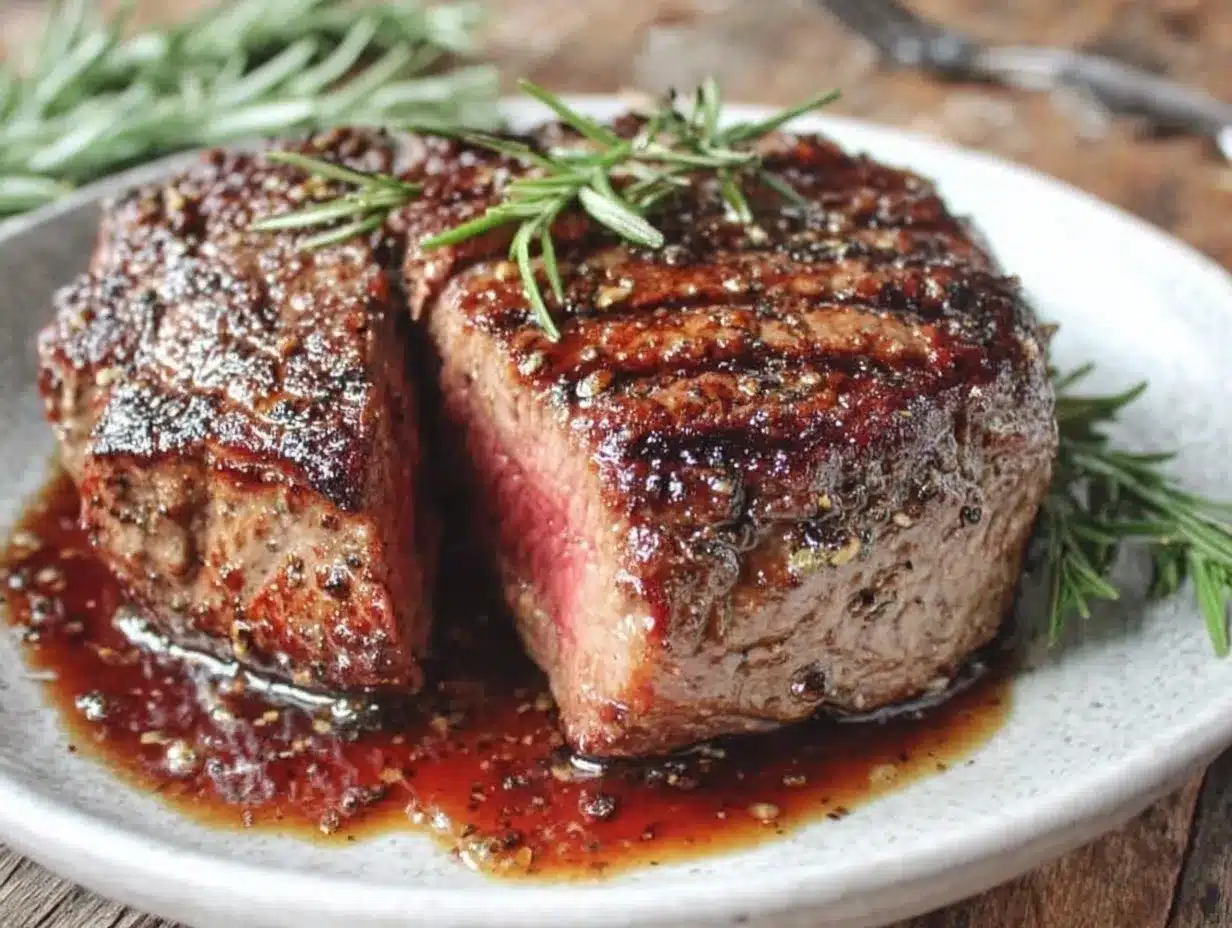
- Bring Steaks to Room Temperature (about 20-30 minutes): Remove the filet mignons from the fridge and let them sit on the counter. This step helps them cook evenly. You’ll notice the steaks lose their chill and start to soften slightly.
- Season Generously: Pat the steaks dry with paper towels. Season both sides liberally with kosher salt and freshly cracked black pepper. Don’t be shy here; the seasoning forms the flavorful crust.
- Preheat Your Pan: Place your cast iron skillet over medium-high heat and add the oil. Wait until the oil shimmers and just starts to smoke—this usually takes about 2-3 minutes. That sound of oil ready to go? That’s the cue.
- Sear the Steaks (2-3 minutes per side): Gently lay the steaks away from you into the pan. Listen for that satisfying sizzle. Don’t move them around—let the crust form. Flip after 2-3 minutes when the edges turn golden brown.
- Add Butter & Aromatics: Reduce the heat to medium-low. Add butter, smashed garlic, and thyme or rosemary. Once the butter melts, tilt the pan slightly and use the spoon to baste the steaks repeatedly. This adds rich flavor and helps cook the steak evenly.
- Check for Doneness by Touch: Here’s where you don’t need a thermometer. Press the steak gently with your finger or tongs:
- Soft and squishy = Rare
- Springy with some resistance = Medium-rare
- Firm but still has some give = Medium
I usually aim for medium-rare, which feels like pressing the fleshy part of your palm below your thumb.
- Rest the Steaks (5-7 minutes): Transfer the filet mignons to a warm plate and tent loosely with foil. This rest period lets juices redistribute, making the steak juicy and tender.
Pro tip: If you feel unsure, remember that filet mignon cooks quickly. Slightly undercooked is better than over. You can always put the steak back briefly if needed.
Cooking Tips & Techniques
Cooking filet mignon without a thermometer can feel daunting, but here are some tips I picked up from years of kitchen experiments:
- Patience with the Pan: Don’t rush the sear. The crust forms best when the pan and oil are properly heated. If the steak sticks, the crust isn’t ready yet.
- Use the Finger Test: I know it sounds weird, but pressing the steak to gauge doneness really works. Practice comparing it to the fleshy part of your palm to build confidence.
- Don’t Forget to Rest: Resting is non-negotiable. Without it, all the juices run out when you cut the steak, leaving it dry.
- Baste for Flavor: Butter basting with garlic and herbs isn’t just fancy—it adds moisture and a rich aroma that transforms the steak.
- Multitasking: While the steak rests, you can quickly whip up a simple pan sauce or steam some veggies to round out the meal.
I remember one time I skipped resting because I was hungry and impatient—the steak was noticeably less juicy, lesson learned the hard way! Trust me, the wait is worth it.
Variations & Adaptations
This foolproof filet mignon recipe is pretty versatile, but here are some ways to mix it up:
- Dietary Adaptation: For a dairy-free version, swap the butter for olive oil or ghee during basting. It’s just as tasty and perfect for those avoiding dairy.
- Seasonal Twist: In fall or winter, add a sprig of fresh sage alongside the thyme or rosemary for a cozy aroma. Summer? Try a squeeze of fresh lemon over the finished steak for brightness.
- Flavor Boost: Before cooking, rub the steaks with a touch of smoked paprika or ground coffee for a subtle smoky flavor that pairs beautifully with the beef.
- Cooking Method Variation: If you don’t want to use the stove, you can finish the seared steak in a 400°F (200°C) oven for 3-5 minutes to reach your desired doneness.
- Personal Favorite: I sometimes throw in a small knob of blue cheese on top of the resting steak—it melts slightly and adds a punch of savory richness that’s hard to beat.
Serving & Storage Suggestions
Serve your filet mignon immediately after resting for the best experience. It’s perfect on its own or alongside classic sides like garlic mashed potatoes, roasted asparagus, or a fresh arugula salad. A full-bodied red wine or a crisp sparkling water completes the meal beautifully.
If you have leftovers (rare, but it happens!), wrap them tightly in plastic wrap or foil and store in the refrigerator for up to 2 days. When reheating, gently warm the steak in a low oven (around 250°F/120°C) to avoid overcooking, or briefly pan-sear to refresh the crust.
Keep in mind the flavors deepen as the steak rests and cools, so some people even prefer it slightly chilled in slices for steak salads or sandwiches.
Nutritional Information & Benefits
Each 6-ounce (170g) filet mignon serving contains approximately 350 calories, 40 grams of protein, and about 20 grams of fat, depending on trimming. It’s a great source of iron, zinc, and vitamin B12—nutrients important for energy and immune function.
This recipe is naturally gluten-free and fits well into low-carb or keto diets. Just watch the butter portions if you’re monitoring fat intake.
From my own wellness perspective, I appreciate how this recipe balances indulgence and simplicity. The rich protein keeps me full and satisfied without complicated ingredients or heavy sauces, making it a smart choice for a special treat that doesn’t leave me sluggish.
Conclusion
So, if you’ve ever hesitated to cook filet mignon because you don’t own a thermometer, this recipe is your new best friend. It’s a straightforward way to get restaurant-quality results by trusting your senses, not gadgets.
Feel free to tweak the seasoning or herbs to suit your taste—cooking is all about what feels right to you. Honestly, I love this recipe because it reminds me that sometimes the simplest methods bring the most satisfying results.
Give it a try, and I’d love to hear how your first no-thermometer filet mignon turns out! Drop a comment below or share any creative twists you discover. Happy cooking!
Frequently Asked Questions
How can I tell when filet mignon is cooked without a thermometer?
Use the finger test by pressing the steak and comparing its firmness to the fleshy part of your palm below the thumb. Softer means rare; firmer means medium or well done.
Can I use this method for other steak cuts?
Yes! While filet mignon is forgiving because it’s tender, this approach works well for ribeye, sirloin, or New York strip steaks too.
What if my steak is too thick or thin?
Adjust cooking time accordingly—thinner steaks need less time, thicker ones may need an oven finish after searing.
Is it necessary to rest the steak?
Absolutely. Resting helps redistribute juices, making the steak juicier and more flavorful.
Can I prepare this recipe ahead of time?
Season steaks ahead but cook just before serving for the best texture and flavor. You can prep sides in advance to save time.
Pin This Recipe!
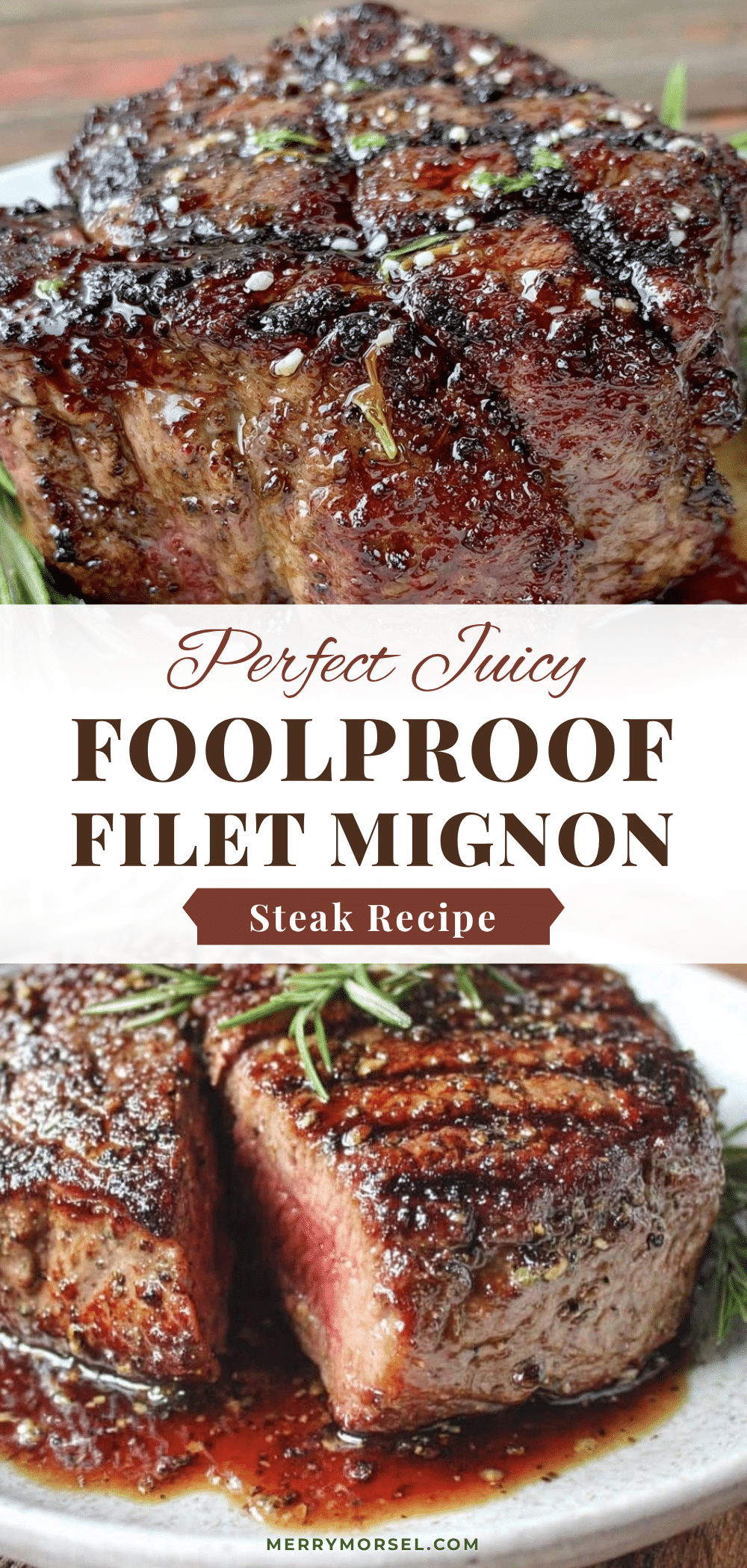
Perfect Foolproof Filet Mignon Recipe No Thermometer Needed Easy
A simple and reliable method to cook perfect filet mignon steaks without a thermometer, using sensory cues like touch, sound, and sight for a juicy, tender result.
- Prep Time: 25 minutes
- Cook Time: 10 minutes
- Total Time: 35 minutes
- Yield: 2 servings 1x
- Category: Main Course
- Cuisine: American
Ingredients
- 2 filet mignon steaks, about 6 ounces (170g) each, trimmed of excess fat, 1.5 to 2 inches thick
- Kosher salt or sea salt, for seasoning
- Freshly cracked black pepper, coarse grind
- 2 tablespoons (28g) unsalted butter (or ghee/olive oil for dairy-free)
- 2 whole garlic cloves, smashed
- A few sprigs of fresh thyme or rosemary (optional)
- 1 tablespoon (15ml) high-smoke point oil (canola, grapeseed, or avocado oil)
Instructions
- Bring steaks to room temperature by letting them sit on the counter for 20-30 minutes.
- Pat steaks dry with paper towels and season both sides liberally with kosher salt and freshly cracked black pepper.
- Preheat a cast iron skillet over medium-high heat and add the oil. Wait until the oil shimmers and just starts to smoke (about 2-3 minutes).
- Gently lay the steaks away from you into the pan and sear for 2-3 minutes per side without moving them, until edges turn golden brown.
- Reduce heat to medium-low. Add butter, smashed garlic, and thyme or rosemary. Once butter melts, tilt the pan and baste steaks repeatedly with a spoon.
- Check doneness by touch: soft and squishy = rare; springy with some resistance = medium-rare; firm but still has some give = medium. Aim for medium-rare by pressing the fleshy part of your palm below your thumb.
- Transfer steaks to a warm plate and tent loosely with foil. Rest for 5-7 minutes to let juices redistribute before serving.
Notes
For dairy-free, substitute butter with ghee or olive oil. Use the finger test to check doneness instead of a thermometer. Rest steaks for 5-7 minutes after cooking to retain juices. If unsure, slightly undercook and finish cooking as needed. Optional oven finish at 400°F for 3-5 minutes for thicker steaks.
Nutrition
- Serving Size: 1 filet mignon steak
- Calories: 350
- Sodium: 150
- Fat: 20
- Saturated Fat: 9
- Protein: 40
Keywords: filet mignon, steak, no thermometer, easy steak recipe, pan-seared steak, butter basted steak, medium-rare steak, foolproof steak