Love this? Save it for later!
Share the inspiration with your friends
Introduction
“You won’t believe how good this steak is,” my friend Mark said, tossing a thick ribeye onto the grill at our neighborhood cookout last summer. Now, I’ve had my fair share of steaks, but something about the way that ribeye sizzled and smoked caught my attention — it wasn’t just any backyard BBQ. The crust was perfectly charred, locking in a juicy, medium-rare center that almost melted in your mouth. Honestly, I was skeptical at first, given how tricky ribeyes can be to nail just right.
That night, between the hum of conversation and the occasional clink of beer bottles, I watched Mark work his magic. He wasn’t a chef or anything, just a guy who’d learned a few tricks from his grandfather, a butcher from a small town. The secret? Simple techniques, patience, and a bit of intuition. I remember the cracked cast iron skillet he used, the way the fat rendered and popped, and even how he let the steak rest — no rushing, no fuss.
Maybe you’ve been there, craving a steak that’s juicy inside but with that unbeatable charred crust outside, only to end up with something overcooked or dry. That’s exactly why this recipe stuck with me. It’s not just about cooking meat; it’s about capturing that perfect balance of flavor and texture that makes every bite memorable. I’ve since adapted Mark’s approach in my own kitchen, tweaking it here and there, but the heart of the method remains the same. Let me tell you, once you try this perfect medium-rare ribeye steak recipe, you’ll want it on repeat — whether it’s a casual weeknight or a special occasion.
Why You’ll Love This Recipe
After testing this ribeye steak recipe countless times — sometimes under the pressure of unexpected guests or an impromptu dinner — I can confidently say it hits all the right notes. Here’s why you’re going to want to make this your go-to steak method:
- Quick & Easy: The entire process takes under 30 minutes, perfect for busy weeknights or last-minute cravings when you want something fancy but fuss-free.
- Simple Ingredients: You only need a handful of pantry staples and a quality ribeye. No obscure spices or complicated marinades required.
- Perfect for Special Occasions: Whether it’s a date night or a family dinner, this steak feels like a restaurant-quality treat without the price tag.
- Crowd-Pleaser: Family, friends, or even picky eaters will rave about the juicy center and the irresistible charred crust.
- Unbelievably Delicious: The contrast of the crispy, caramelized crust with the tender, medium-rare interior is just next-level comfort food.
This recipe isn’t just another steak method — it’s the result of real kitchen trials, that moment when you realize you don’t need fancy gadgets or long marinades to get a steak that tastes like a million bucks. The trick lies in proper seasoning, mastering the sear, and letting the meat rest just right. Honestly, this recipe makes me close my eyes with satisfaction every time.
What Ingredients You Will Need
This perfect medium-rare ribeye steak recipe relies on straightforward, wholesome ingredients that pack a punch without any fuss. Most of these are likely already in your pantry or fridge, making it super accessible and easy to whip up.
- Ribeye steak, about 1 to 1½ inches thick (choose well-marbled, USDA Choice or Prime for best flavor)
- Coarse kosher salt (helps create that crispy crust and seasons deeply)
- Freshly ground black pepper (adds a subtle heat and aroma)
- High smoke point oil like avocado oil or grapeseed oil (for searing)
- Unsalted butter, 2 tablespoons (adds richness during basting)
- Fresh garlic cloves, 2 smashed (infuses butter with flavor)
- Fresh thyme or rosemary sprigs, 2-3 (for aromatic basting)
Optional but recommended:
- Finishing sea salt like Maldon flakes (sprinkled after cooking for texture)
- Lemon wedge (to brighten the flavor if desired)
For substitutions, if you’re avoiding butter, you can use ghee or a plant-based butter alternative. And if you don’t have fresh herbs, dried ones can work in a pinch, though fresh really lifts the flavor. I usually pick a ribeye from my trusted local butcher, but high-quality supermarket cuts can work well too — just look for good marbling and firm texture.
Equipment Needed
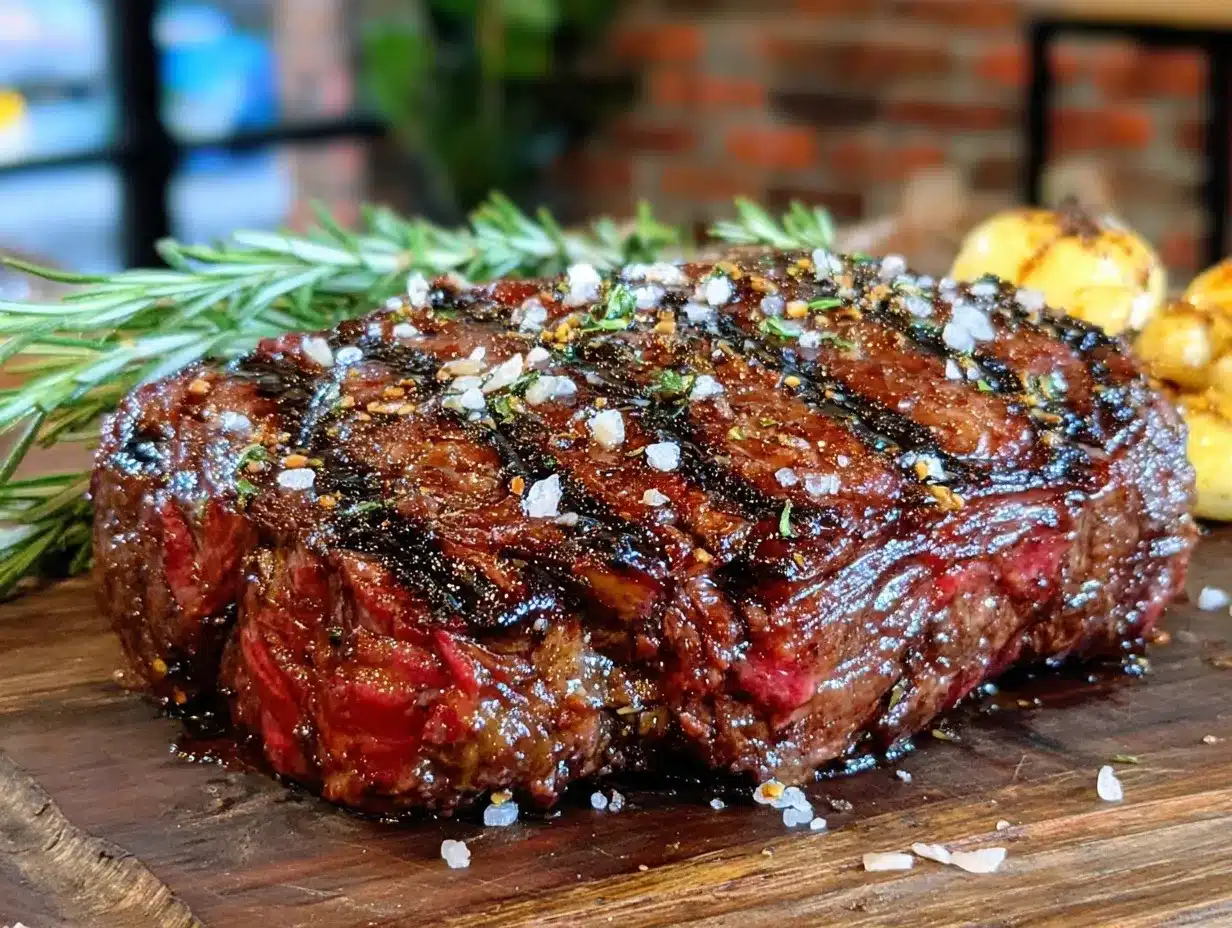
- Heavy cast iron skillet — This is my favorite for getting that perfect sear. If you don’t have cast iron, a stainless steel pan can work, but you might miss out on some of that crust.
- Tongs — Essential for flipping without piercing the meat (trust me, don’t use a fork).
- Instant-read meat thermometer — The best way to nail medium-rare without guessing (aim for 130°F to 135°F / 54°C to 57°C).
- Small spoon — For basting the steak with butter and herbs during cooking.
- Cutting board — Preferably one with grooves to catch juices.
- Sharp chef’s knife — To slice the steak beautifully after resting.
If you’re on a budget, a cast iron skillet is a worthwhile investment that lasts forever and can be found affordably online or at local stores. I’ve tried non-stick pans for this, but they don’t quite get that same crust. Also, keep your thermometer handy — it’s saved me from overcooking more times than I’d like to admit.
Preparation Method
- Bring steak to room temperature (about 30 minutes): Take your ribeye out of the fridge and let it sit on the counter. This helps it cook more evenly. Pat it dry with paper towels — moisture is the enemy of a good crust.
- Season generously: Sprinkle coarse kosher salt and freshly ground black pepper on both sides. Don’t be shy — this is key for flavor and crust development. I usually do this just before cooking to avoid drawing out too much moisture.
- Preheat your cast iron skillet: Place it over medium-high heat and let it get smoking hot — this takes about 5 minutes. You want the pan so hot that a drop of water sizzles and evaporates instantly.
- Add oil and sear steak: Pour a tablespoon of high smoke point oil into the pan, swirling to coat. Carefully place the ribeye in the skillet, laying it away from you to avoid splatter. Sear without moving for 3-4 minutes until a deep brown crust forms.
- Flip and add butter, garlic, and herbs: Turn the steak over using tongs. Immediately add butter, smashed garlic cloves, and fresh thyme or rosemary sprigs to the pan. As the butter melts, tilt the pan slightly and use a spoon to baste the steak with the melted butter and herb-infused juices. This adds flavor and helps cook the top.
- Check internal temperature: After another 3-4 minutes of searing and basting, check with your instant-read thermometer. For medium-rare, aim for 130°F to 135°F (54°C to 57°C). If it’s not quite there, you can lower the heat and cook a minute or two longer, flipping and basting as needed.
- Rest the steak: Transfer the ribeye to a cutting board and tent loosely with foil. Rest for 5-10 minutes. This allows juices to redistribute so the steak stays juicy when sliced.
- Slice and serve: Cut against the grain into thick slices. Sprinkle with finishing sea salt for texture if you like, and add a squeeze of lemon for brightness if desired.
Pro tip: if your crust isn’t as dark as you want, you can finish the steak with a blast under a hot broiler for 1-2 minutes, but watch it closely to avoid overcooking. Also, don’t skip the resting — I learned that the hard way after slicing too soon and losing all the juices onto the plate.
Cooking Tips & Techniques
Mastering the perfect medium-rare ribeye with that juicy charred crust takes a little practice, but a few key tips can help you get it right every time.
- Don’t overcrowd the pan: Cook one or two steaks at a time to keep the temperature high and avoid steaming.
- Use high smoke point oils: Oils like avocado or grapeseed stand up better to the intense heat than olive oil, which can burn and impart bitter flavors.
- Pat steak dry: Moisture on the surface creates steam and prevents that coveted crust. Always dry well before seasoning and cooking.
- Watch your timing, but trust the thermometer: Thickness varies, so rely on temperature rather than a strict timer.
- Butter basting: Basting adds flavor and helps develop the crust’s color. Use fresh herbs and garlic for an aromatic boost.
- Rest the meat: I can’t stress this enough — resting keeps the steak juicy and tender. If you cut too soon, all those flavorful juices spill out.
I once ruined a ribeye by flipping it too early because I got distracted by a phone call. Lesson learned: patience is the real secret weapon here. Also, don’t be afraid to experiment with herb combinations or even a splash of bourbon in the butter for unique flavors.
Variations & Adaptations
Every kitchen and palate is different, so here are some ways to tweak this ribeye steak recipe to suit your preferences or dietary needs.
- Herb and spice variations: Swap rosemary for fresh sage or add a pinch of smoked paprika to the seasoning for a smoky twist.
- Cooking method adaptations: If you don’t have a stovetop-friendly skillet, you can reverse-sear your steak in the oven first, then finish with a quick pan sear for crust.
- Dietary considerations: For a dairy-free version, omit the butter and baste with olive oil or a vegan butter alternative infused with herbs.
- Different cuts: Although ribeye is ideal for marbling and flavor, you can use this method on New York strip or sirloin steaks with slight timing adjustments.
- Personal favorite: I sometimes finish the steak with a pat of blue cheese butter for a rich, tangy contrast that’s just divine.
Serving & Storage Suggestions
This ribeye steak is best served immediately after resting, sliced thick and juicy. I like to pair it with classic sides like garlic mashed potatoes, roasted asparagus, or a crisp green salad to balance the richness.
For beverages, a bold red wine like Cabernet Sauvignon or a Malbec complements the steak’s charred flavor beautifully.
If you have leftovers (which honestly don’t last long in my house), store them in an airtight container in the fridge for up to 3 days. Reheat gently in a skillet over low heat or wrap in foil and warm in a low oven to avoid drying out.
Over time, the steak’s flavors actually deepen, so sometimes I enjoy cold slices on a sandwich with horseradish mayo for a quick, satisfying lunch.
Nutritional Information & Benefits
A 6-ounce (170g) ribeye steak typically contains around 450 calories, 35 grams of protein, and 35 grams of fat, making it a hearty, protein-packed meal. The marbling provides healthy saturated fats and essential nutrients like iron, zinc, and vitamin B12.
This recipe is naturally gluten-free and low in carbohydrates, fitting nicely into many dietary plans. For those watching fat intake, trimming excess fat before cooking or choosing leaner cuts can help.
From my wellness perspective, enjoying a perfectly cooked ribeye steak occasionally is a satisfying way to nourish your body without feeling deprived — especially when paired with nutrient-rich sides.
Conclusion
Perfecting the medium-rare ribeye steak with a juicy charred crust might seem intimidating, but with a little patience and these straightforward steps, you can make an unforgettable steak right at home. I hope you find this recipe as rewarding to cook and eat as I do — it’s one of those dishes that turns a simple meal into something special.
Feel free to customize the seasoning or sides to match your taste and occasion. And hey, if you try it out, drop a comment below to share how it went or any twists you loved. I’m always excited to hear about your kitchen adventures!
Now, go on — treat yourself to that perfect steak, and enjoy every juicy, flavorful bite.
Frequently Asked Questions (FAQs)
How do I know when my ribeye steak is medium-rare?
Use an instant-read thermometer and remove the steak from heat when it reaches 130°F to 135°F (54°C to 57°C). It will continue to cook slightly as it rests.
Can I cook ribeye steak without a cast iron skillet?
Yes, you can use a heavy stainless steel pan or even a grill, but cast iron is best for an even, high heat sear that creates the signature crust.
Should I marinate ribeye steak before cooking?
This recipe relies on simple seasoning because ribeye is flavorful on its own. Marinating is optional, but not necessary for a juicy, tasty steak.
How long should I let the steak rest after cooking?
Rest the steak for about 5 to 10 minutes, loosely tented with foil, to allow juices to redistribute and keep the meat tender.
Can I prepare this recipe on a grill instead of a skillet?
Absolutely! Preheat your grill to high heat, sear the steak directly over the flames for 3-4 minutes per side, then finish over indirect heat until it reaches medium-rare.
By the way, if you enjoy this ribeye recipe, you might also appreciate the rich flavors of my crispy garlic chicken or the comforting depth of slow cooker beef stew—both fantastic options for hearty dinners.
Pin This Recipe!
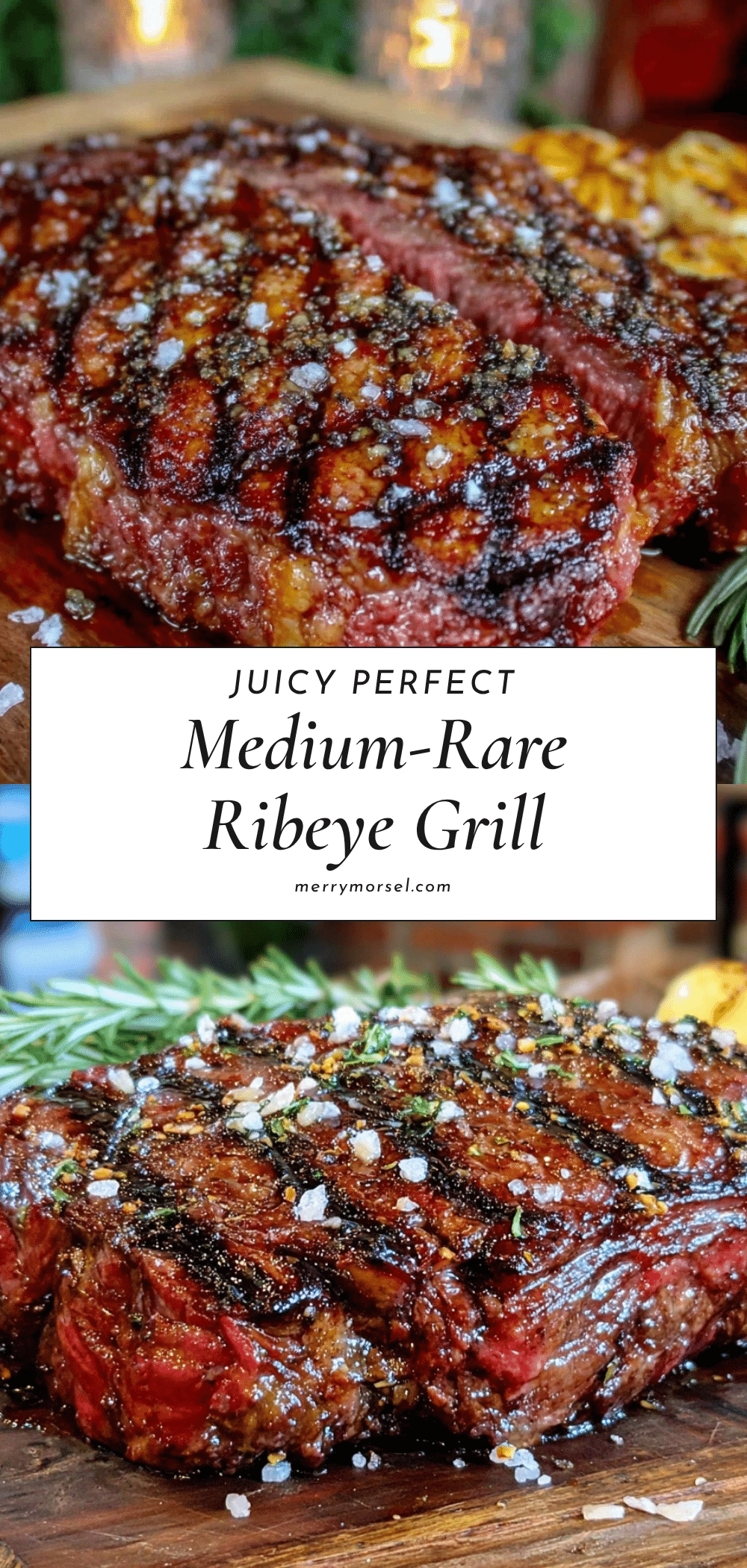
Perfect Medium-Rare Ribeye Steak Recipe Easy Juicy Charred Crust
This recipe delivers a perfectly seared ribeye steak with a juicy medium-rare center and a flavorful charred crust, using simple ingredients and straightforward techniques.
- Prep Time: 30 minutes
- Cook Time: 10 minutes
- Total Time: 40 minutes
- Yield: 1 serving 1x
- Category: Main Course
- Cuisine: American
Ingredients
- 1 ribeye steak, about 1 to 1½ inches thick (well-marbled, USDA Choice or Prime)
- Coarse kosher salt
- Freshly ground black pepper
- 1 tablespoon high smoke point oil (avocado oil or grapeseed oil)
- 2 tablespoons unsalted butter
- 2 fresh garlic cloves, smashed
- 2–3 sprigs fresh thyme or rosemary
- Optional: finishing sea salt (like Maldon flakes)
- Optional: lemon wedge
Instructions
- Bring steak to room temperature (about 30 minutes). Pat dry with paper towels.
- Season generously with coarse kosher salt and freshly ground black pepper on both sides just before cooking.
- Preheat a heavy cast iron skillet over medium-high heat until smoking hot, about 5 minutes.
- Add 1 tablespoon of high smoke point oil to the skillet and swirl to coat.
- Place the ribeye in the skillet away from you and sear without moving for 3-4 minutes until a deep brown crust forms.
- Flip the steak using tongs. Immediately add butter, smashed garlic cloves, and fresh thyme or rosemary sprigs to the pan.
- Tilt the pan slightly and baste the steak with the melted butter and herb-infused juices using a spoon for another 3-4 minutes.
- Check internal temperature with an instant-read thermometer aiming for 130°F to 135°F (54°C to 57°C) for medium-rare. Cook a bit longer if needed, flipping and basting as necessary.
- Transfer the steak to a cutting board and tent loosely with foil. Rest for 5-10 minutes to allow juices to redistribute.
- Slice against the grain into thick slices. Sprinkle with finishing sea salt and add a squeeze of lemon if desired before serving.
Notes
If the crust isn’t dark enough, finish under a hot broiler for 1-2 minutes watching closely to avoid overcooking. Do not skip resting the steak to keep it juicy. Use high smoke point oils like avocado or grapeseed oil for best searing results. Avoid overcrowding the pan to maintain high heat.
Nutrition
- Serving Size: 6 ounces (170 grams)
- Calories: 450
- Sodium: 600
- Fat: 35
- Saturated Fat: 14
- Protein: 35
Keywords: ribeye steak, medium-rare steak, cast iron skillet steak, juicy steak, steak recipe, easy steak, grilled steak, pan-seared steak