Love this? Save it for later!
Share the inspiration with your friends
Introduction
“You have to try this,” my friend Jiho said, sliding a steaming bowl across the counter during a casual Friday night hangout. I wasn’t expecting much, honestly—just another takeout dish. But that first spoonful of his homemade Korean bibimbap bowl was a revelation. The way the warm rice mingled with spicy gochujang sauce, crisp veggies, and a perfectly fried egg on top—it hit all the right notes. I mean, who knew a simple bowl could pack so much punch?
That night, I forgot all about my plans to eat light. Watching Jiho effortlessly toss together this colorful, flavor-packed bowl made me realize that quick meals don’t have to be boring or bland. Maybe you’ve been there—rushing through the week, craving something satisfying but not complicated. This easy flavor-packed Korean bibimbap bowl recipe nails that balance.
Since then, I’ve made it countless times, tweaking the veggies and proteins depending on the fridge’s mood. It’s become one of my go-to meals when I want something vibrant but fuss-free. And let me tell you, it’s not just about the taste—it’s the way the colors and textures come alive in one bowl that keeps me coming back. If you’ve never tried bibimbap or thought it was too tricky to make at home, trust me, this recipe will change your mind.
Why You’ll Love This Recipe
- Quick & Easy: Comes together in about 30 minutes, perfect for busy weeknights or last-minute cravings.
- Simple Ingredients: Uses everyday pantry staples plus fresh veggies, no specialty shopping required.
- Perfect for Meal Prep: Make the components ahead of time and assemble when you’re ready to eat.
- Crowd-Pleaser: The balance of spicy, savory, and fresh flavors always gets compliments from family and friends.
- Unbelievably Delicious: The combination of textures—from the crunchy veggies to the creamy egg yolk—is next-level comfort food.
This isn’t just any bibimbap bowl. What sets this version apart is the fuss-free sauce blending sweet and heat in just the right ratio, plus the method of sautéing veggies separately to keep their individual flavors popping. I’ve tested this recipe over and over—sometimes with kimchi, sometimes without—and it always delivers that satisfying, soulful bite. Honestly, it’s the kind of dish that makes you close your eyes after the first bite and think, “Yep, I nailed it.”
Whether you’re new to Korean cooking or a seasoned fan, this recipe brings vibrant flavors to your table without the hassle. Plus, it’s super flexible—swap ingredients based on what you have, and you’re good to go.
What Ingredients You Will Need
This recipe uses simple, wholesome ingredients to deliver bold flavor and satisfying texture without the fuss. Most of these are pantry staples or fresh produce you can find year-round, but I’ve included some substitution options to keep it accessible.
- For the Base:
- 2 cups cooked short-grain white rice (or brown rice for a nuttier flavor)
- For the Vegetables:
- 1 cup julienned carrots (adds sweetness and crunch)
- 1 cup spinach, blanched and squeezed dry
- 1 cup bean sprouts, blanched
- 1 small zucchini, thinly sliced and sautéed
- 4 shiitake mushrooms, sliced and sautéed (shiitakes add earthy depth, but button mushrooms work too)
- For the Protein:
- 1/2 lb ground beef (or ground turkey for a leaner option)
- 2 teaspoons soy sauce (I like Kikkoman for consistent flavor)
- 1 teaspoon sesame oil (to finish the beef)
- For the Sauce:
- 3 tablespoons gochujang (Korean chili paste; adjust to taste)
- 1 tablespoon sesame oil
- 1 tablespoon honey or sugar
- 1 tablespoon rice vinegar
- 1 teaspoon minced garlic
- For Garnish:
- 2 large eggs (fried sunny side up)
- 1 tablespoon toasted sesame seeds
- 2 green onions, thinly sliced
Ingredient tips: Look for firm, fresh vegetables to keep that crisp texture. If you want a vegetarian option, swap the beef for marinated tofu or tempeh. And if you can’t find gochujang locally, some Asian markets carry it online.
Equipment Needed
- Large non-stick skillet or frying pan (for sautéing veggies and cooking beef)
- Small bowl (for mixing the sauce)
- Medium pot (for blanching spinach and bean sprouts)
- Rice cooker or saucepan (to cook rice)
- Spatula and wooden spoon
- Fine mesh strainer (handy for washing and blanching veggies)
If you don’t have a rice cooker, no worries—cooking rice on the stovetop works just fine. I used to use my trusty old non-stick pan, but a cast-iron skillet also gives a nice sear to the beef. For budget-friendly options, any basic sauté pan will do. Just make sure it’s wide enough to cook veggies separately without crowding.
Preparation Method
- Cook the Rice: Prepare 2 cups of short-grain rice according to package instructions (or use a rice cooker). This usually takes about 20 minutes. Once cooked, keep it covered and warm.
- Blanch Vegetables: Bring a medium pot of water to a boil. Blanch 1 cup of spinach and 1 cup of bean sprouts separately for about 1-2 minutes each. Drain and gently squeeze out excess water. Set aside.
- Sauté Veggies: Heat a non-stick skillet over medium heat with a splash of oil. Sauté julienned carrots, sliced zucchini, and shiitake mushrooms separately for 3-4 minutes each until tender but still crisp. Season lightly with salt. Keep each veggie separate to maintain distinct flavors.
- Cook the Beef: In the same skillet, add ground beef and cook over medium-high heat for 5-7 minutes until browned. Season with 2 teaspoons soy sauce and finish with 1 teaspoon sesame oil. Break the meat into small pieces while cooking.
- Make the Sauce: In a small bowl, whisk together 3 tablespoons gochujang, 1 tablespoon sesame oil, 1 tablespoon honey, 1 tablespoon rice vinegar, and 1 teaspoon minced garlic until smooth. Adjust sweetness or heat to taste.
- Fry the Eggs: In a clean skillet, fry 2 large eggs sunny side up, leaving the yolks runny—this adds creaminess to the bowl.
- Assemble the Bowl: Divide the warm rice into two bowls. Arrange the cooked veggies and beef on top in separate sections for visual appeal. Place the fried egg in the center. Drizzle with the sauce and sprinkle with toasted sesame seeds and sliced green onions.
- Serve: Let everyone mix their bowl before eating to combine all the flavors and textures. Enjoy immediately.
Pro tip: If you want to speed things up, prep the veggies and sauce in advance and store them in the fridge. Then, just reheat and assemble when ready. Also, keep an eye on the eggs so the yolks stay runny—it’s a small detail but makes a big difference!
Cooking Tips & Techniques
Honestly, one of the trickiest parts is getting the veggies just right. You want them cooked enough to be tender, but not mushy—keeping that slight crunch is key. I learned this the hard way after overcooking my carrots once (what a mess!). So, cook the veggies separately and keep a close watch.
Another tip is to season the ground beef well but don’t overdo it. The sauce packs enough punch, so a light soy sauce and sesame oil combo works best. This prevents overpowering the other flavors.
When frying eggs, low and slow is your friend. Use medium-low heat to avoid crispy edges and to keep yolks runny. If you mess up, you can quickly scramble a backup, but the sunny side up is worth the extra care.
Timing is everything. I usually start the rice first, then blanch veggies while the rice cooks. Then, sauté veggies and cook beef simultaneously if you have two burners. This multitasking cuts down total prep time.
Don’t skimp on the sauce—gochujang can be spicy, so adjust according to your heat tolerance. Also, mixing the sauce thoroughly ensures every bite has that perfect balance of sweet, tangy, and spicy.
Variations & Adaptations
- Vegetarian Version: Replace the beef with marinated tofu or grilled tempeh. Use a vegan gochujang sauce if needed.
- Seasonal Veggie Swap: In summer, swap zucchini and carrots for fresh cucumber and cherry tomatoes. In winter, add sautéed kale or roasted sweet potatoes.
- Spice Level: Add more gochujang or a sprinkle of crushed red pepper flakes for extra heat, or tone it down with a drizzle of honey.
- Grain Alternatives: Use quinoa or cauliflower rice for a gluten-free or low-carb variation.
- Protein Options: Try shrimp, chicken, or even a soft-boiled egg instead of fried for a different texture.
One personal favorite is adding a spoonful of kimchi on the side for a tangy kick. It adds that authentic Korean touch and layers the flavors beautifully.
Serving & Storage Suggestions
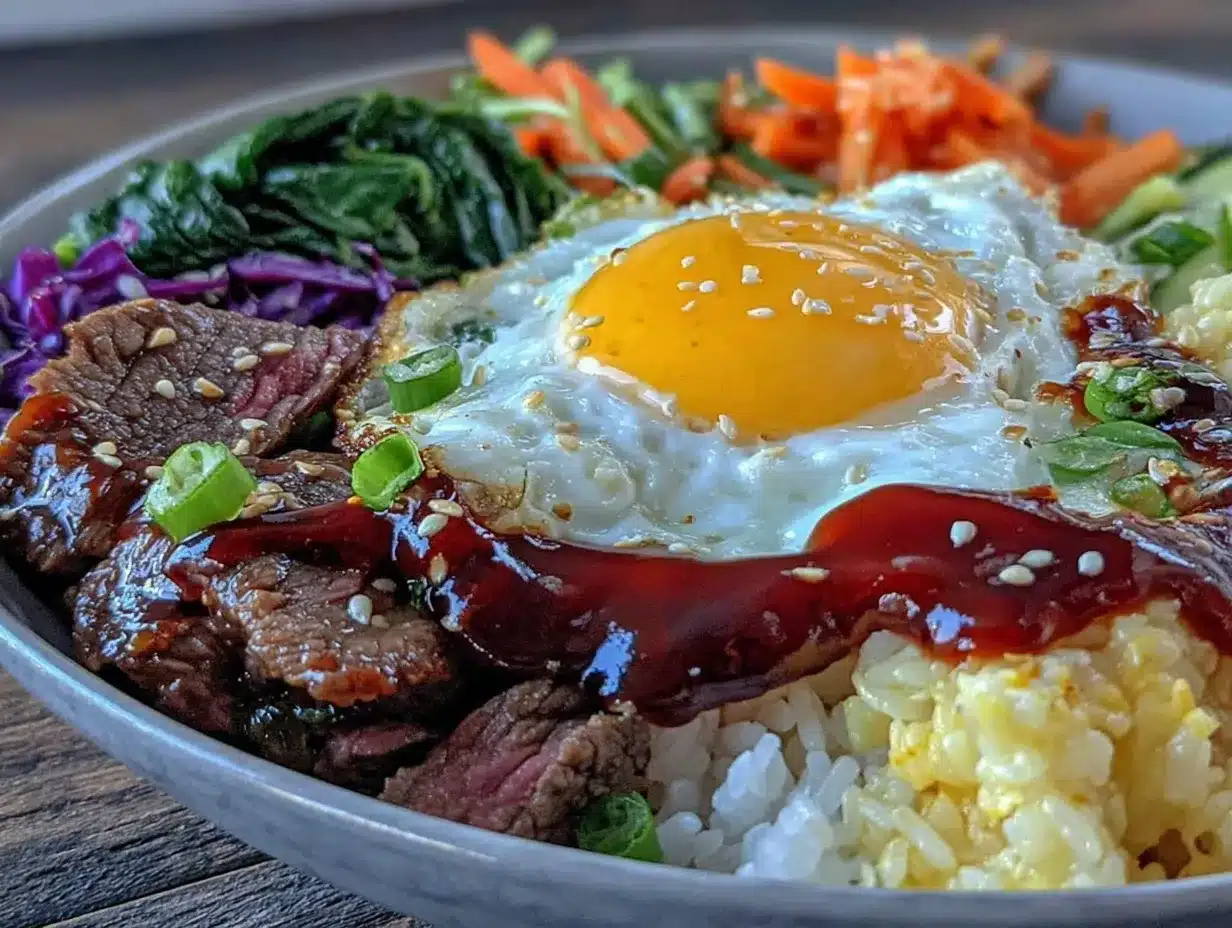
This bibimbap bowl is best served warm, right after assembly, so the egg yolk mixes in beautifully with the rice and veggies. For presentation, use a wide bowl to showcase the colorful ingredients arranged in separate sections.
Pair it with a light cucumber salad or miso soup to keep the meal balanced. For beverages, a chilled barley tea or a crisp lager complements the flavors nicely.
Leftovers keep well in the fridge for up to 2 days if stored separately (rice, veggies, protein, and sauce). When reheating, warm the rice and veggies gently in the microwave or stovetop, then re-fry the egg fresh for best results.
Flavors tend to meld and deepen after sitting, so bibimbap can taste even better the next day—though the fresh egg is always a highlight.
Nutritional Information & Benefits
This easy flavor-packed Korean bibimbap bowl is a balanced meal rich in protein, fiber, and vitamins from fresh vegetables. The spinach and bean sprouts offer iron and vitamin C, while the gochujang sauce provides antioxidants from chili peppers.
Using lean ground beef or turkey keeps the dish lower in saturated fat. For those watching carbs, substituting cauliflower rice lowers the glycemic load. This bowl is naturally gluten-free if you check your soy sauce and gochujang labels carefully.
Personally, I appreciate how this dish nourishes without feeling heavy—perfect when you want something wholesome but not overstuffing.
Conclusion
In short, this easy flavor-packed Korean bibimbap bowl is a wonderful way to bring vibrant, satisfying flavors to your table with minimal fuss. It’s flexible, approachable, and genuinely delicious—a rare combo in quick meals. I love how it turns simple ingredients into something so visually stunning and tasty.
Feel free to customize the veggies, protein, or sauce to suit your taste buds. Honestly, that’s part of the fun! Whether you’re cooking for one or feeding a crowd, this recipe is a winner.
If you try it, I’d love to hear how you made it your own. Drop a comment below or share your tweaks. Let’s make this dish a staple for anyone craving something fresh, fast, and full of flavor.
Happy cooking, and enjoy every bite!
FAQs
What is bibimbap?
Bibimbap is a Korean mixed rice dish topped with assorted sautéed vegetables, protein, a fried egg, and spicy gochujang sauce. It’s traditionally served in a bowl where you mix everything together before eating.
Can I make bibimbap ahead of time?
You can prep the rice, veggies, and protein in advance and store them separately in the fridge. Assemble and add the fried egg just before serving for best taste and texture.
Is gochujang very spicy?
Gochujang has a moderate heat with a sweet and savory flavor. If you’re sensitive to spice, start with less and add more gradually to suit your preference.
Can I use other grains instead of rice?
Absolutely! Quinoa, barley, or even cauliflower rice work well for different textures and dietary needs.
How do I store leftovers?
Store components separately in airtight containers in the fridge for up to 2 days. Reheat gently and fry a fresh egg when ready to eat.
For a twist on Korean dishes, try pairing this with crispy garlic chicken or enjoy alongside a refreshing Korean cucumber salad to complete your meal.
Pin This Recipe!
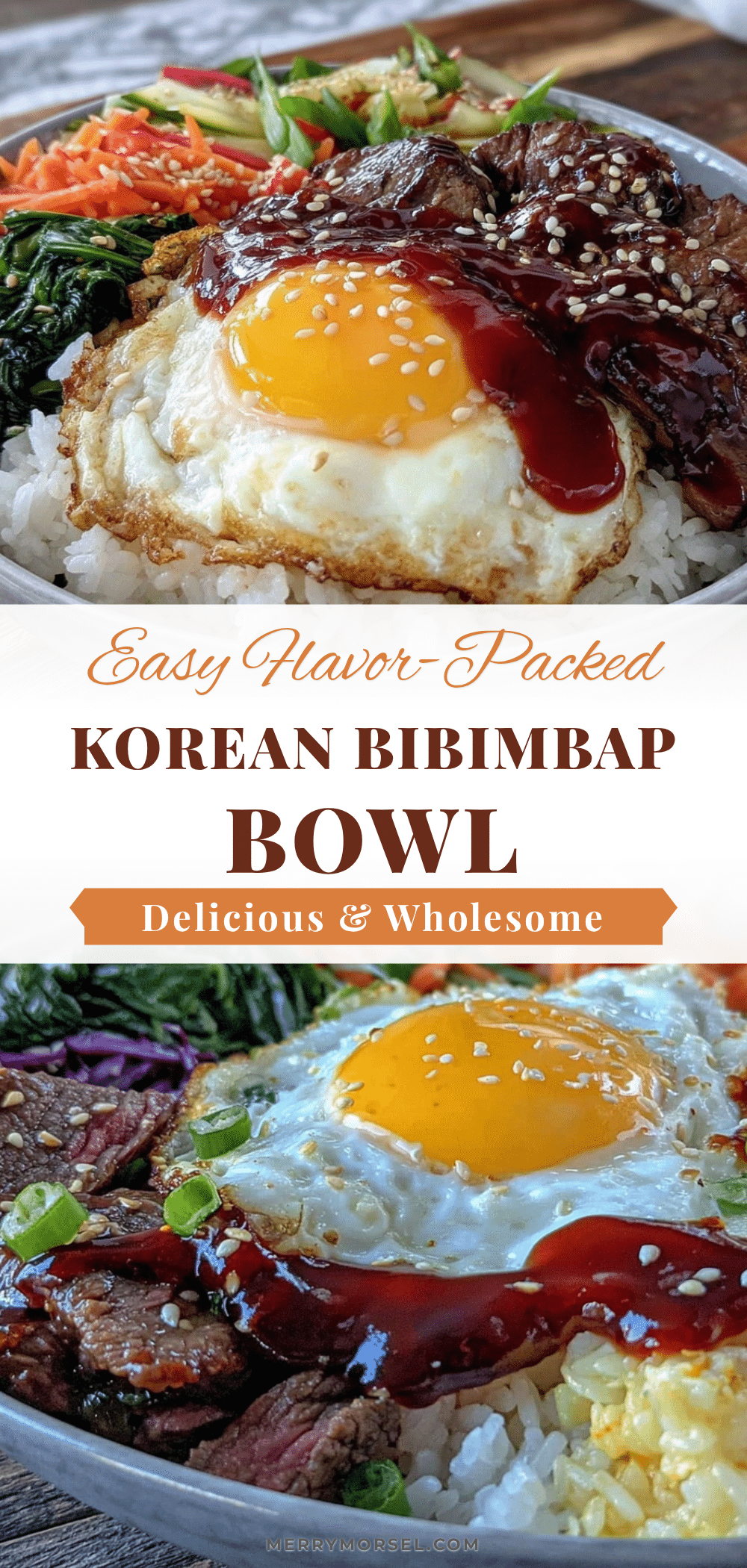
Easy Flavor-Packed Korean Bibimbap Bowl Recipe Perfect for Quick Meals
A quick and easy Korean bibimbap bowl featuring warm rice, sautéed veggies, seasoned ground beef, a spicy-sweet gochujang sauce, and a perfectly fried egg. This vibrant and flavorful dish is perfect for busy weeknights or meal prep.
- Prep Time: 10 minutes
- Cook Time: 20 minutes
- Total Time: 30 minutes
- Yield: 2 servings 1x
- Category: Main Course
- Cuisine: Korean
Ingredients
- 2 cups cooked short-grain white rice (or brown rice for a nuttier flavor)
- 1 cup julienned carrots
- 1 cup spinach, blanched and squeezed dry
- 1 cup bean sprouts, blanched
- 1 small zucchini, thinly sliced and sautéed
- 4 shiitake mushrooms, sliced and sautéed (or button mushrooms)
- 1/2 lb ground beef (or ground turkey)
- 2 teaspoons soy sauce
- 1 teaspoon sesame oil (to finish the beef)
- 3 tablespoons gochujang (Korean chili paste)
- 1 tablespoon sesame oil (for sauce)
- 1 tablespoon honey or sugar
- 1 tablespoon rice vinegar
- 1 teaspoon minced garlic
- 2 large eggs (fried sunny side up)
- 1 tablespoon toasted sesame seeds
- 2 green onions, thinly sliced
Instructions
- Cook 2 cups of short-grain rice according to package instructions or using a rice cooker, about 20 minutes. Keep covered and warm.
- Bring a medium pot of water to a boil. Blanch 1 cup spinach and 1 cup bean sprouts separately for 1-2 minutes each. Drain and squeeze out excess water. Set aside.
- Heat a non-stick skillet over medium heat with a splash of oil. Sauté julienned carrots, sliced zucchini, and shiitake mushrooms separately for 3-4 minutes each until tender but still crisp. Season lightly with salt. Keep veggies separate.
- In the same skillet, cook ground beef over medium-high heat for 5-7 minutes until browned. Season with 2 teaspoons soy sauce and finish with 1 teaspoon sesame oil. Break meat into small pieces while cooking.
- In a small bowl, whisk together 3 tablespoons gochujang, 1 tablespoon sesame oil, 1 tablespoon honey, 1 tablespoon rice vinegar, and 1 teaspoon minced garlic until smooth. Adjust sweetness or heat to taste.
- In a clean skillet, fry 2 large eggs sunny side up on medium-low heat, keeping yolks runny.
- Divide warm rice into two bowls. Arrange cooked veggies and beef on top in separate sections. Place fried egg in the center. Drizzle with sauce and sprinkle with toasted sesame seeds and sliced green onions.
- Serve immediately, mixing all ingredients before eating.
Notes
Cook veggies separately to maintain texture and flavor. Keep egg yolks runny for creaminess. Prep veggies and sauce ahead to save time. Adjust gochujang amount to control spice level. Use firm fresh vegetables for best texture.
Nutrition
- Serving Size: 1 bowl
- Calories: 550
- Sugar: 10
- Sodium: 850
- Fat: 22
- Saturated Fat: 5
- Carbohydrates: 58
- Fiber: 6
- Protein: 28
Keywords: bibimbap, Korean recipe, quick meals, gochujang, ground beef, sautéed vegetables, easy dinner, healthy bowl, spicy sauce