Love this? Save it for later!
Share the inspiration with your friends
“You sure you want to eat that?” my roommate asked, eyeing the steaming bowl I just ladled into my favorite oversized soup mug. I shrugged, a little skeptical myself, but honestly craving something soothing after one of those mornings where the alarm fails you and your brain feels like fogged glass. That bowl of creamy Taiwanese congee with ginger scallion and a perfectly poached egg was supposed to be a quick fix—just some rice simmered down to softness, jazzed up with a fragrant ginger scallion sauce and a runny egg on top.
Turns out, it was the kind of comfort that sticks. The kind that makes you pause between bites, noticing the gentle heat from the ginger, the silky texture of the rice that’s almost like a warm hug, and that egg yolk slowly merging into the whole bowl like a secret weapon. I ended up making this congee multiple mornings in a row that week—an accidental obsession, really—because it felt like a reset button for the soul on chaotic days.
This recipe isn’t flashy or complicated; it’s the kind of humble dish that quietly earns a spot in your go-to rotation. And if you’ve ever been hesitant about making congee because it sounds time-consuming or tricky, this version with ginger scallion and a poached egg will turn you into a believer. It’s creamy, flavorful, and surprisingly easy to pull together with just a few pantry staples.
Honestly, it’s become my little secret for mornings when I want to feel cared for without fuss. I’m excited to share it with you—not because it’s fancy, but because it’s real, satisfying, and a little reminder that simple can be extraordinary.
Why You’ll Love This Creamy Taiwanese Congee Recipe
Over the years, I’ve tried countless congee recipes, but this creamy Taiwanese congee with ginger scallion and poached egg stands out for a few key reasons. It’s a recipe I trust to deliver comfort and flavor every time, whether I’m rushing out the door or settling in for a slow morning.
- Quick & Easy: Comes together in about 40 minutes, which is pretty quick for a rice porridge that tastes like it’s been simmering all day.
- Simple Ingredients: No need for exotic items—just rice, ginger, scallions, eggs, and a handful of pantry basics you probably have on hand.
- Perfect for Cozy Mornings: Ideal for chilly days, lazy weekends, or anytime you want to feel like you’re getting a warm hug from your food.
- Crowd-Pleaser: Whether you’re making breakfast for yourself or feeding a small group, it’s a dish that always gets nods of approval—even from those who don’t usually go for porridge.
- Rich and Comforting: The creamy texture paired with the zing of ginger scallion sauce and the luscious poached egg makes this congee anything but boring.
What really sets this recipe apart is the ginger scallion sauce, which brings a fresh kick that cuts through the creaminess without overpowering it. Plus, the poached egg adds a silky richness that feels indulgent but is surprisingly simple to make. I’ve tweaked the cooking time and liquid ratio to get that perfect balance—creamy but not mushy, with every spoonful tasting like you took your time, even if you didn’t.
In a way, this recipe has become my go-to comfort food that doesn’t require a lot of fuss or weird ingredients—just genuine, honest flavor that hits the spot when you need it most.
What Ingredients You Will Need
This creamy Taiwanese congee recipe uses straightforward, wholesome ingredients that come together to create a bowl full of flavor and texture. Most are pantry staples, and substitutions are easy if you need them.
- For the Congee:
- Long-grain white rice, 1 cup (about 190g) – I prefer jasmine rice for the subtle aroma, but regular long-grain works fine
- Water or low-sodium chicken broth, 8 cups (1.9 liters) – broth adds extra depth, but water works for a lighter version
- Salt, ½ teaspoon – to taste
- For the Ginger Scallion Sauce:
- Fresh ginger, 2 tablespoons finely minced – the star for that bright zing
- Scallions, 4 stalks thinly sliced (both white and green parts) – fresh and fragrant
- Neutral oil (like canola or vegetable), ½ cup (120 ml) – I like grapeseed oil for a clean flavor
- Salt, a pinch – to balance
- For the Poached Eggs:
- Fresh large eggs, 2 (or more if feeding a crowd)
- White vinegar, 1 teaspoon (optional) – helps eggs hold their shape when poaching
- Optional Garnishes:
- Light soy sauce, for drizzling
- White pepper, freshly ground
- Chopped cilantro or toasted sesame seeds for texture
If you want a gluten-free option, check your soy sauce labels or use tamari instead. For a vegan twist, swap the poached egg with pan-fried tofu cubes, which I’ve done before when craving that creamy mouthfeel without eggs. When fresh ginger isn’t available, frozen minced ginger works in a pinch, but fresh is definitely the way to go here. And if you like a bit more richness, a splash of sesame oil after cooking the sauce adds a lovely toasted note.
Equipment Needed
Making this creamy Taiwanese congee doesn’t require fancy equipment, but a few kitchen tools make the process easier and more enjoyable.
- Medium to Large Pot: For simmering the rice mixture slowly. A heavy-bottomed pot helps prevent sticking and burning.
- Fine Mesh Strainer or Sieve: Useful if you want to rinse the rice before cooking, which I recommend for a cleaner flavor.
- Small Saucepan or Heatproof Bowl: To make the ginger scallion sauce with hot oil safely.
- Slotted Spoon or Spider Strainer: Helpful for removing the poached eggs from water without breaking them.
- Small Bowls or Ramekins: To crack eggs into before poaching, ensuring gentle handling.
If you don’t have a slotted spoon, a fine mesh spider strainer or even a large slotted spoon works just fine. For poaching eggs, some folks swear by silicone egg poachers, but I personally find the gentle swirling method in simmering water works better for getting that silky white wrapped around the yolk. Also, using a non-stick pot can help with cleaning up, but a seasoned stainless steel pot is great too—just keep an eye on the heat.
Preparation Method

- Rinse the Rice: Place 1 cup (190g) of long-grain rice in a fine mesh strainer and rinse under cold water until the water runs clear. This removes excess starch and keeps the congee from getting gluey. Let it drain for a minute.
- Start the Congee: In a large pot, combine the rinsed rice with 8 cups (1.9 liters) of water or low-sodium chicken broth. Bring to a boil over medium-high heat, then reduce to a gentle simmer. Stir occasionally to prevent the rice from sticking to the bottom. This simmering will take about 40 to 50 minutes.
- Simmer Until Creamy: Keep cooking the rice until it breaks down and the mixture becomes thick and creamy, resembling a porridge. You want the grains to be soft but not completely dissolved—think of a thick oatmeal consistency. If it gets too thick, add small amounts of hot water to loosen.
- Season the Congee: When the texture is just right, stir in ½ teaspoon of salt (or to taste). Keep it warm on the lowest heat while you prepare the sauce and eggs.
- Make the Ginger Scallion Sauce: In a heatproof bowl, combine 2 tablespoons minced fresh ginger, 4 thinly sliced scallions (white and green parts), and a pinch of salt. Heat ½ cup (120 ml) of neutral oil in a small saucepan over medium heat until it’s shimmering but not smoking (about 350°F/175°C). Carefully pour the hot oil over the ginger and scallions—this will sizzle and release a beautiful aroma. Stir to combine and set aside.
- Poach the Eggs: Fill a medium saucepan with water and bring to a gentle simmer. Add 1 teaspoon white vinegar to help the egg whites coagulate. Crack each egg into a small bowl, then gently slide them one at a time into the simmering water. Cook for 3 to 4 minutes until the whites are set but the yolks remain runny. Use a slotted spoon to remove eggs and drain on a paper towel.
- Assemble the Dish: Ladle the creamy congee into bowls. Top each with a poached egg and drizzle generously with the ginger scallion sauce. Add a light splash of soy sauce and a sprinkle of freshly ground white pepper if desired. Garnish with cilantro or toasted sesame seeds for an extra touch.
Keep in mind, stirring the congee occasionally during cooking is key to avoiding sticking or burning. Also, if you find the egg whites are spreading too much, swirling the water gently before adding the egg helps keep it together. I always prep the sauce first so it’s ready to pour over the moment the congee is done.
Cooking Tips & Techniques for Perfect Congee
Getting congee just right can feel tricky, but a few tips make it much easier.
- Patience is your friend: Low and slow simmering brings out that creamy texture. Resist the urge to crank the heat—it will cook unevenly and risk burning.
- Stir often but gently: Stirring every 10 minutes or so prevents rice from sticking without breaking down the grains too much.
- Use broth for more flavor: Water works, but chicken or vegetable broth adds depth that makes this simple dish feel special.
- Fresh ginger is essential: The raw zing balances the mellow creaminess. Don’t skimp here—frozen won’t give the same brightness.
- Master the poached egg: Fresh eggs give the best shape. Crack them into a bowl first before sliding into simmering water to avoid broken yolks.
- Make the ginger scallion sauce last minute: Hot oil releases the aromatics beautifully, but it’s best served fresh to keep the scallions vibrant.
I once tried rushing the congee by adding more water and turning up the heat—and ended up with a watery mess that lacked body. Lesson learned: slow simmering really pays off. Also, a tip I picked up from a chef friend is to add a little bit of salt late in the cooking process so the rice doesn’t toughen up early on.
Variations & Adaptations to Suit Your Taste
This recipe is pretty flexible and easy to tweak depending on your preferences or dietary needs.
- Protein Options: Swap poached eggs with shredded chicken or tofu cubes for a different texture and added protein. I’ve even stirred in leftover pulled pork for a heartier meal.
- Vegetarian/Vegan Version: Omit the egg and replace the chicken broth with vegetable broth. Add sautéed mushrooms or roasted squash for extra depth.
- Seasonal Twists: In spring, toss in fresh peas or asparagus tips near the end of cooking. In fall, stir in a spoonful of pumpkin puree for a creamy, earthy note.
- Spice It Up: Add a drizzle of chili oil or a sprinkle of crushed red pepper flakes to the ginger scallion sauce for some heat.
- Flavor Boosters: A splash of toasted sesame oil right before serving adds a nutty aroma that pairs beautifully with the ginger scallion sauce.
Personally, I tried a version with a soft-boiled egg instead of poached once—same creaminess, but the yolk texture was a little different. If you like texture contrast, adding some crispy fried shallots on top gives a delightful crunch. Also, if you’re curious about different grains, short-grain rice works well here, but avoid brown rice unless you have a long time to simmer.
Serving & Storage Suggestions
This creamy Taiwanese congee is best served hot and fresh, ideally right after you assemble the bowl. The warmth brings out the aroma of the ginger scallion sauce and keeps the egg silky.
For presentation, I like to serve it in deep bowls with a small side dish of pickled vegetables or steamed greens to add brightness. A cup of jasmine tea complements the savory flavors nicely, rounding out a cozy meal.
If you have leftovers, store the congee in an airtight container in the refrigerator for up to 3 days. It thickens as it cools; simply reheat gently on the stovetop with a splash of water or broth to loosen it back to that creamy consistency.
Poached eggs are best made fresh, but if you want to prep ahead, hard-boiled or soft-boiled eggs can substitute. When reheating, avoid microwaving eggs directly on top to keep textures intact—heat the congee separately and add eggs just before serving.
Flavors tend to meld and mellow a bit overnight, so sometimes I find the congee tastes even better the next day with a quick stir and fresh sauce drizzle. It’s a simple dish that rewards patience and thoughtful reheating.
Nutritional Information & Benefits
This bowl of creamy Taiwanese congee with ginger scallion and poached egg is not just comforting but nourishing. A typical serving (about 1.5 cups) provides approximately:
| Nutrient | Amount |
|---|---|
| Calories | 280-320 kcal |
| Protein | 12-15 grams |
| Carbohydrates | 40-45 grams |
| Fat | 7-9 grams (mostly from oil and egg) |
| Fiber | 1-2 grams |
The ginger offers anti-inflammatory properties and digestive benefits, while scallions provide vitamins A and C. Eggs contribute high-quality protein and essential nutrients like choline. Using broth instead of water boosts the mineral content and umami flavor. This recipe can be tailored for gluten-free diets by selecting tamari instead of soy sauce, and is naturally low in added sugars.
From a wellness perspective, I find this congee easy on the stomach and satisfying without heaviness—perfect for recovering from a late night or settling into a calm morning.
Conclusion
This creamy Taiwanese congee with ginger scallion and poached egg is a humble recipe that quietly delivers big on comfort, flavor, and ease. It’s the kind of dish that makes you feel taken care of without complicated steps or exotic ingredients—just real, honest food that warms you from the inside out.
Feel free to tweak the toppings or broth based on what you have around. It’s forgiving and flexible, perfect for those days when you want something nourishing but simple. I keep coming back to it when I need a reset, a little calm on a plate, or just a reason to slow down.
If you try it, I’d love to hear how you make it your own—maybe with a splash of chili oil or a side of quick pickled veggies. And if mornings are your thing, pairing it with a cup of tea or something from my flavorful baked oats recipe might just make your routine extra cozy.
Happy cooking and savor every spoonful!
Frequently Asked Questions about Creamy Taiwanese Congee
What type of rice is best for making Taiwanese congee?
Long-grain white rice such as jasmine rice is ideal for this recipe because it breaks down nicely while maintaining a creamy texture. Short-grain rice also works but avoid brown rice unless you have plenty of time to simmer.
Can I make congee ahead of time?
Yes, you can prepare congee in advance and store it in the refrigerator for up to 3 days. When reheating, add a bit of water or broth to loosen the texture and warm gently on the stove.
How do I poach eggs perfectly for this dish?
Use fresh eggs and simmer water gently with a splash of vinegar. Crack eggs into a small bowl first, then slide them into simmering water. Cook for 3-4 minutes for runny yolks, and remove with a slotted spoon.
What if I don’t have fresh ginger or scallions?
Fresh ginger is best, but frozen minced ginger can be used in a pinch. Scallions add freshness, but thinly sliced mild onion or chives can substitute if needed.
Is this recipe suitable for vegetarians or vegans?
For vegetarians, simply omit the poached egg or replace it with tofu. For vegans, use vegetable broth and add plant-based protein options like mushrooms or tofu. Adjust the ginger scallion sauce accordingly and skip any animal-derived ingredients.
Pin This Recipe!
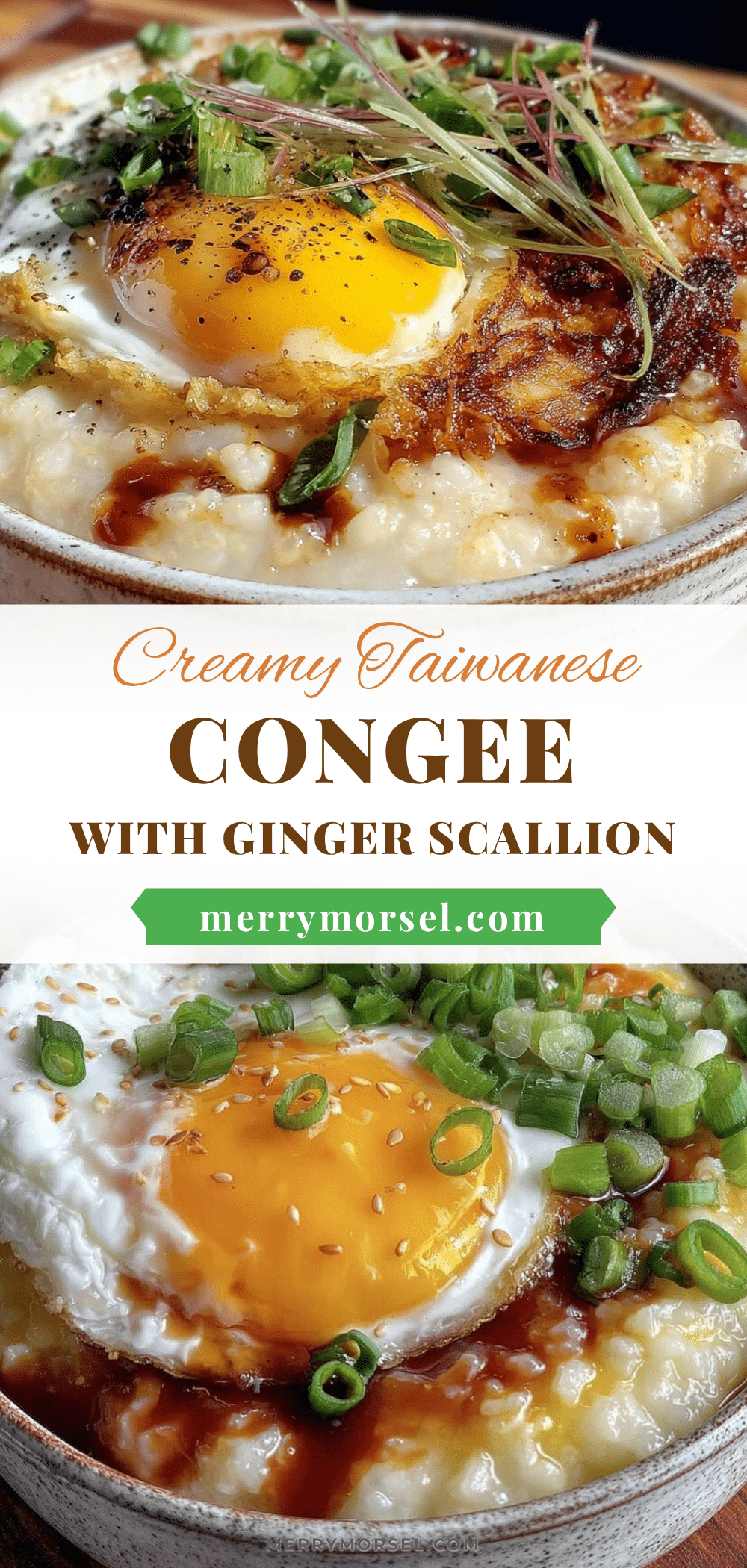
Creamy Taiwanese Congee Recipe Easy Homemade Ginger Scallion Poached Egg

A comforting and creamy Taiwanese congee made with long-grain rice simmered to a porridge consistency, topped with a fragrant ginger scallion sauce and a silky poached egg. Perfect for cozy mornings and easy to prepare with simple pantry staples.
- Prep Time: 10 minutes
- Cook Time: 40 minutes
- Total Time: 50 minutes
- Yield: 2 servings 1x
- Category: Main Course
- Cuisine: Taiwanese
Ingredients
- 1 cup long-grain white rice (preferably jasmine rice)
- 8 cups water or low-sodium chicken broth
- ½ teaspoon salt (to taste)
- 2 tablespoons fresh ginger, finely minced
- 4 scallions, thinly sliced (white and green parts)
- ½ cup neutral oil (canola, vegetable, or grapeseed oil)
- Pinch of salt (for sauce)
- 2 large fresh eggs
- 1 teaspoon white vinegar (optional, for poaching eggs)
- Light soy sauce (optional, for drizzling)
- Freshly ground white pepper (optional)
- Chopped cilantro or toasted sesame seeds (optional garnish)
Instructions
- Rinse the rice under cold water in a fine mesh strainer until the water runs clear. Drain well.
- In a large pot, combine the rinsed rice with 8 cups of water or low-sodium chicken broth. Bring to a boil over medium-high heat, then reduce to a gentle simmer.
- Simmer the rice, stirring occasionally, for 40 to 50 minutes until the mixture is thick and creamy with a porridge-like consistency. Add hot water if it becomes too thick.
- Stir in ½ teaspoon salt to taste and keep warm on low heat.
- Prepare the ginger scallion sauce by combining minced ginger, sliced scallions, and a pinch of salt in a heatproof bowl.
- Heat ½ cup neutral oil in a small saucepan over medium heat until shimmering (about 350°F/175°C). Carefully pour the hot oil over the ginger and scallions, stir to combine, and set aside.
- Fill a medium saucepan with water and bring to a gentle simmer. Add 1 teaspoon white vinegar if using.
- Crack each egg into a small bowl, then gently slide them one at a time into the simmering water. Poach for 3 to 4 minutes until whites are set but yolks remain runny.
- Remove eggs with a slotted spoon and drain on paper towels.
- Ladle the creamy congee into bowls, top each with a poached egg, and drizzle generously with the ginger scallion sauce.
- Add a splash of soy sauce and a sprinkle of white pepper if desired. Garnish with cilantro or toasted sesame seeds.
Notes
Stir the congee occasionally to prevent sticking and burning. Use fresh ginger for best flavor. Poach eggs gently with a splash of vinegar to keep whites intact. Prepare ginger scallion sauce last minute for freshness. Reheat leftovers gently with added water or broth to loosen texture. For vegan version, replace eggs with pan-fried tofu cubes and use vegetable broth.
Nutrition
- Serving Size: About 1.5 cups per s
- Calories: 280320
- Sugar: 12
- Sodium: 300400
- Fat: 79
- Saturated Fat: 1.52
- Carbohydrates: 4045
- Fiber: 12
- Protein: 1215
Keywords: Taiwanese congee, creamy congee, ginger scallion sauce, poached egg, rice porridge, easy breakfast, comfort food